
10 Day Shikoku Itinerary: Discover Art & Nature on Japan’s Least-Visited Island
Unsure where to begin planning for a 10 day Shikoku itinerary? From my regular exploration off the beaten track in Japan spanning over a decade, my tried-and-tested Shikoku travel itinerary is perfect place to start for fellow nature, art and culture lovers!
Comprising Ehime, Kochi, Tokushima and Kagawa Prefectures, the name Shikoku 四国 reflects its origins of “Four Provinces” coming together as one. Although the least-visited of Japan’s major islands and well off the beaten path, Shikoku is the most underrated.
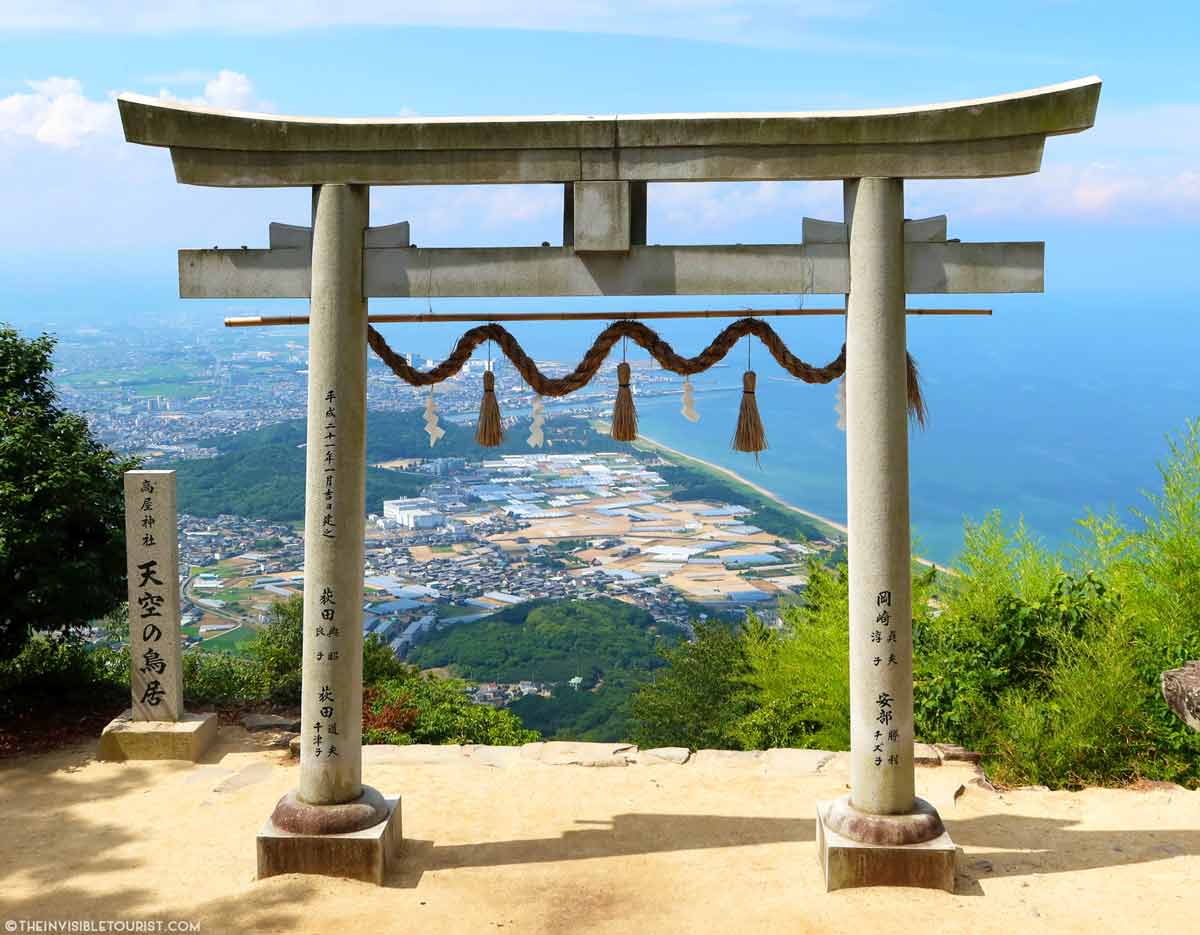
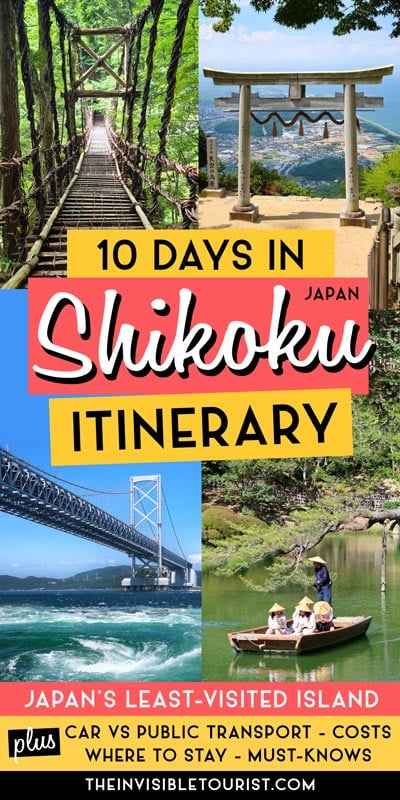
Only during my 10 days in Shikoku did I discover it’s possible to climb bridges made of vines, have a photo next to the Mona Lisa without other people, come up close to boat-sized whirlpools, walk in a village of scarecrows, witness a torii in the sky and much more… Keep reading so you can, too!
This post contains affiliate links at no extra cost to you. I may earn a small commission if you click through and make a purchase.
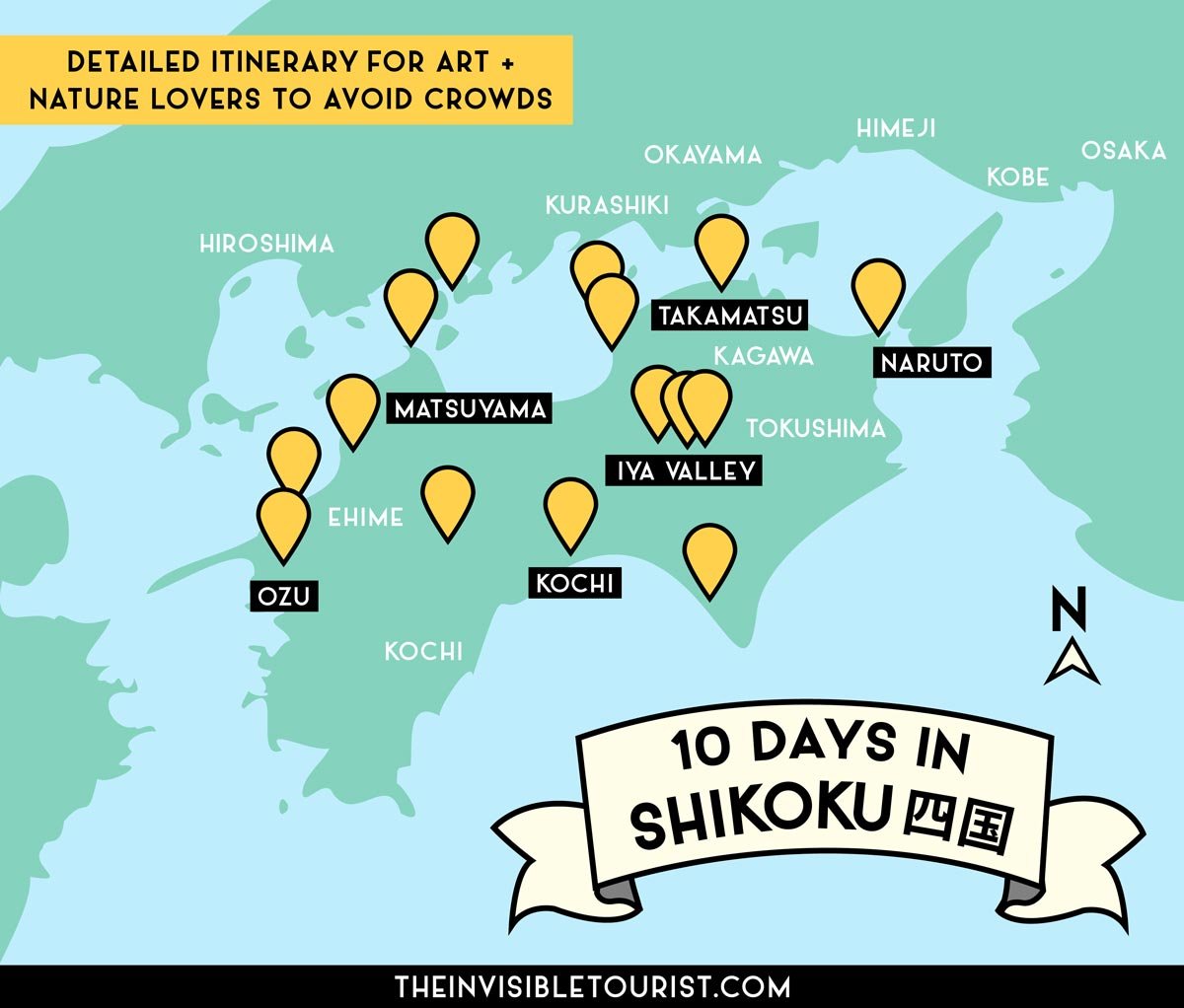
Arriving in Shikoku Japan & how to get around
- Start/End: This itinerary starts in Matsuyama and ends in Takamatsu. With numerous daily flights into Matsuyama Airport, this is easiest if you’ve arrived in Japan from Tokyo or Osaka. We then have the option to fly out from Takamatsu Airport or to continue over to Honshu.
- Public Transport vs Car: Shikoku is Japan’s least-populated island, so public transport can be limited and infrequent (here is the JR Shikoku rail map). Instead of planning a Shikoku trip by train, I highly recommend hiring a car. If car hire isn’t an option for you, I’ve also included day tours to some locations below.
TIP: My guide to driving in Japan for foreigners covers everything you need to know, and I’ve shared parking and toll costs for this itinerary down the page. - Private tour package: Prefer someone else to drive? Explore with a stand-alone private transfer or customised tour package at five of the locations I’m sharing down the page. Check out sample itineraries or request a customised one at Japan Food Travels and use code INVISIBLE5 for 5% off!
- Japan Rail Passes: While it is possible to enjoy parts of this 10-day Shikoku itinerary with the JR Pass or JR All Shikoku Rail Pass using public transport, hiring a car from Matsuyama Airport allows for flexibility and to reach the most offbeat spots. Be sure to calculate whether a pass will be worth it to you financially and practically.
Where to stay in Shikoku
To execute this itinerary in the most efficient way, we’ll use three bases for Shikoku accommodation and explore beyond by car as day trips. This saves packing up and changing hotels every night or two which can get exhausting.
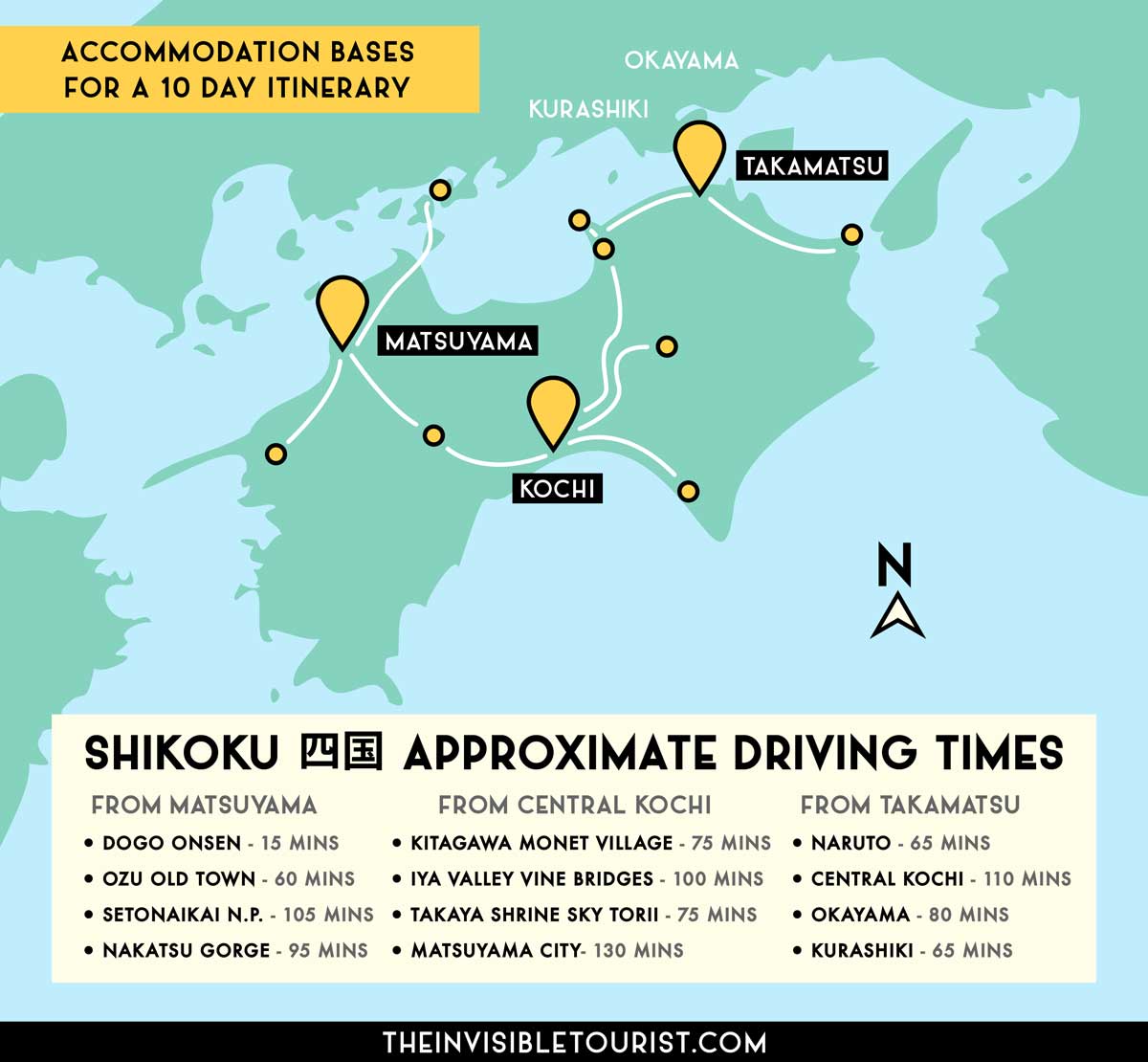
These are the hotels I stayed in and highly recommend each for their central locations, nearby parking, restaurants, konbini and proximity to attractions. I’ll share more details under the corresponding cities in this itinerary:
- Matsuyama – Daiwa Roynet Hotel
- Kochi – Kochi Sunrise Hotel
- Takamatsu – RIHGA Zest Hotel
Shikoku Itinerary 10 Days: Least-Visited Island of Art & Nature
In the form of ancient routes along the 88 Temple Pilgrimage and modern art spaces, Shikoku blends the old seamlessly with the new. The Seto Inland Sea against half the island’s coastline creates postcard-worthy viewpoints, while lush forest and gorges are found within its heart.
My itinerary covers all these aspects of Shikoku island and more. At the end, I’ve shared some recommendations extending your Shikoku trip itinerary with day tips or how to take part in the 88 Temple Pilgirimage. With all that said, let’s begin!

DAY 1 – Dogo Onsen
Welcome to Ehime Prefecture! Let’s begin this Shikoku itinerary by picking up a rental car from Matsuyama Airport. On the way into Matsuyama city we can visit Dogo Onsen 道後温泉 before checking into our hotel.
While the multi-level dark wooden buildings were built in 1894, Dogo Onsen’s origins date back 3,000 years – making it one of the oldest onsen in Japan. Notable guests include the Japanese Imperial Family, and today you can bathe for a fee if not staying in the adjoining ryokan.
Ehime Prefecture’s local specialty is mikan, a mandarin-like citrus fruit. This refreshing flavour is a must-try in the form of jellies, drinks, sweet and savoury food items.

Things to do in Dogo Onsen
- Botchan Karakuri Clock – On the hour, this cute wooden clock features characters from a centuries-old Japanese novel that emerge from behind the clock’s face and dance to music.
- Botchan Train – Also named after the Japanese novel, this restored locomotive from 1888 transports passengers through Matsuyama city to Dogo Onsen.
- Dogo Onsen Sky Walkway & Footbath – A free public footbath beside Botchan Karakuri Clock. Take off your shoes and give it a try… Note the water is exceptionally hot, so be careful!
- Shop along the Shotengai – I thoroughly enjoyed picking up local souvenirs here including everything mikan. Gundam Pokemon-style manhole covers are dotted along this undercover shopping street, so don’t forget to look down.
- Ishiteji Temple – the 51st Temple of the Shikoku 88 Pilgrimage, its main gate is flanked with two giant sandals. Pilgrims have left one yen coins in the woven fibres for luck. Don’t miss yet another beautiful cave here, lined with Jizo and paintings of deities. I picked up a lovely omamori here to commemorate my visit. This cave truly feels off the beaten path.
TIP: The cave is not as well-lit as the one at Kousanji. The floor is wet and a little slippery, with tiny bats inside too. - Isaniwa Shrine – Intrigued by its 135 stone steps and its 1,000 year-old origins, I learnt two emperors are enshrined in this Important Cultural Property.
- Keijoen – Enjoy dinner at this good-value yakiniku restaurant, where you can cook delicious cuts of meat yourself.


DAY 2 – Setonaikai National Park & Kousan-ji
Day 2 takes us on an adventure through the small islands connecting Honshu and Shikoku, spanning across stunning Seto Inland Sea. 3,000 islands make up Setonaikai National Park, so we’ll get a taste of a few!
We’ll enjoy scenic viewpoints, cross some of Japan’s longest bridges including the 2nd Kurushima-Kaikyo Bridge, Hakata-Ōshima Bridge, Omishima Bridge, and the Tatara Bridge.
These bridges form part of the Shimanami Kaido, a popular cycling route that begins in Onomichi on Honshu and ends in Imabari in Shikoku. We’ll also visit a stunning temple with an unusual cave.
TIP: This day could also be separately paired with a day trip to Onomichi as an extension, my Onomichi itinerary has all the details.

Here’s where I recommend visiting:
- Kousanji Temple, Ikuchi Island – Gorgeously ornate temple filled with a sea of lotus flowers at the entrance in summer. Buildings here resemble Nikko’s famous Toshogu Shrine and Uji’s Byodo-in, featured on the back of the 10 yen coin. Don’t miss the Cave of 1000 Buddhas here. I’d wanted to visit for many years, and it was absolutely worth it for me!
- Hill of Hope – Towards the rear of Kousan-ji, this white marble landscape spans 5,000 square metres with stunning views over the Seto Inland Sea. The marble was imported from Italy for a Mediterranean feel, and the sculptures make for unique photos.
- Caffé Coure – On the grounds of the Hill of Hope, pop into this cafe to grab a drink or dessert. I tried the local specialty of a mikan sorbet and it was delicious – especially with views like this!
- Kirosan Observatory Park, Oshima Island – At Mt Kirosan’s peak, this observatory designed by renowned architect Kengo Kuma boasts 360-degree views over the Seto Inland Sea. From here, it really puts the scale of the bridges into perspective! Sunset is a popular time to visit.
- Kurashima Strait Observatory, Imabari – Now you’ve seen the 2nd Kurushima-Kaikyo Bridge from afar, head to the beach to see it up close and relax! The beach is on the southern side of the bridge.
TIP: Swimming is best at high tide when the water is higher on the sand. I learnt it’s stony at low tide and uncomfortable underfoot.

DAY 3 – Matsuyama Castle & Surrounds
We’ll spend Day 3 of this Shikoku itinerary exploring impressive Matsuyama Castle and its surroundings. It’s one of Japan’s twelve remaining original castles and dates back to 1602.

I was surprised this castle was much bigger than I was expecting. I’ve visited eleven castles throughout Japan, and Matsuyama is definitely one of the larger ones – it’s easy to spend half a day here if you wish.
- Chojyaganaru Station Chair + Ropeway Station – As Matsuyama Castle is 132 metres above sea level, you have the option of taking a ropeway cable car or single chair lift to reach it from the city centre. This is a novelty in itself, the ticket includes either option so you can mix-and-match. I took the cable car up and chairlift down. These single-chair lifts are also found at Mt Omuro and Mt Komuryama on the Izu Peninsula. Children above 6 can ride the single-chair lift.
- Matsuyama Castle – Spanning the summit of Mt Katsuyama and one a last line of defence, the interior of Matsuyama Castle features interactive exhibits such as the opportunity to try on samurai armour and hold katana and muskets. Shiroyama Park Honmaru Square near the castle entrance is surrounded by cherry blossom trees, perfect for a Japan spring visit.
TIP: It’s shoes off inside, there are lockers to store them and your bags. Bring socks or wear the supplied green slippers. - Ninomaru Historical Garden – Its geometric shapes act as a blueprint for a former feudal lord’s palace.
- Ehime Museum of Art – Housing 12,000 artworks from great masters such as Monet and Cezanne to Japanese art and more contemporary styles, it’s a great rainy-day option.
- Matsuyama Ropeway Shopping District – I recommend walking to or from your hotel to the castle along this lively street. Lined with little art galleries, eateries and specialty stores, it maintains a Showa Period vibe (1926 – 1989).
- Towel Museum – About an hour outside of Matsuyama city, I have only heard surprisingly great things about this museum in Imabari!
- Himawari Grill – For dinner, try this izakaya with the mitsuhamayaki specialty dish. It’s Matsuyama’s local twist on okonomiyaki (savoury pancake with meat and vegetables, which Hiroshima and Osaka are more widely known for.

DAY 4 – Ozu & Shimonada Station
I first learnt about the lovely small town of Ozu 大洲 at a Japan Tourism Roadshow in Sydney and knew I had to add it to my itinerary for Shikoku! I actually think it’s a lovely lesser-known alternative to Kyoto without the crowds.
Built around the castle and Hijikawa River during the Edo Period (1603 – 1868), Ozu is known as the “Little Kyoto of Iyo” for its preserved buildings.
Much like Uji and near Gujo Hachiman, Ozu is one of the three remaining towns where the ancient tradition of cormorant fishing is still practiced.
TIP: On Google Maps, navigate to “Municipal the 1st tourist parking” lot as it’s free. Ozu is compact and is easy to explore on foot from here.
Things to do in Ozu
- Garyu Sanso Garden House – One of my inspirations for visiting Ozu. This century-old merchant villa took 9,000 artisans to complete! Beneath its thatched roof, it’s packed with attention to detail at every turn. In perfect English, a lovely staff member happily explained special features in each room hiding in plain sight. The Japanese style garden is full of moss and shady maple trees, ideal for an autumn visit. I loved sitting in the Furoan at the end of the garden, an undercover tatami room overlooking the river.
- Omoide Warehouse – A retro museum filled with Westernised items from the Sowa Period, such Coca-Cola memorabilia, old-fashioned electronics, nostalgic toys, books and much more.
- Pokopen Yokocho – Just outside Omoide Warehouse, this antique market with food stalls operates on Sundays.
- Ozu Akarenga-Kan – Western-style red brick building looks a little out of place amongst the Edo Period streets that surround it. It reminded me of the similar structures in Yokohama.
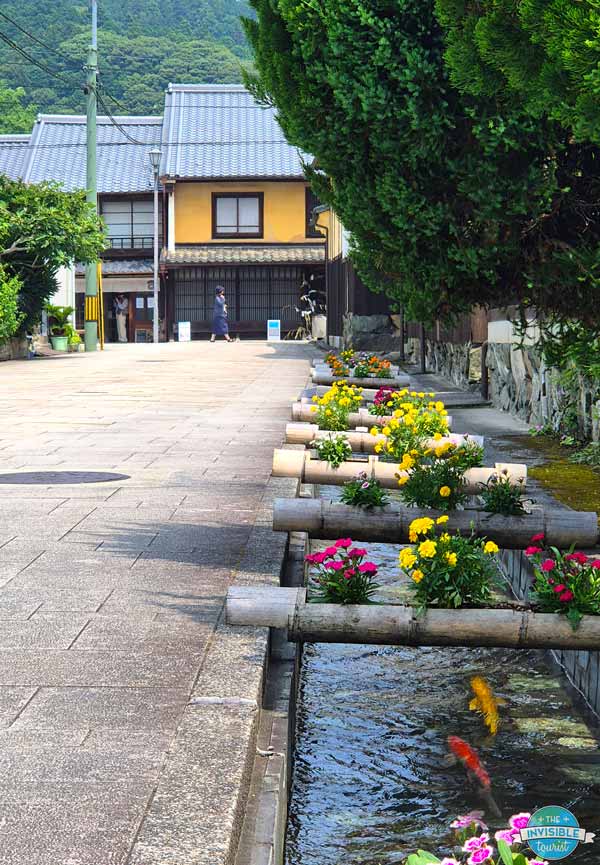
- Ohanahan Street – With koi swimming in its streetside canal and lined with flowers, this picturesque street is a lovely photo spot. It’s slightly reminiscent of the samurai district in Kanazawa.
- Ozu Castle – As part of the Nipponia Hotel today, you can stay overnight at Ozu Castle — an unforgettable experience for a special occasion to feel treated like royalty! I decided to just see it from the outside this time, hehe.
- Shimonada Station – On the way back north to Matsuyama, drop Japan’s closest station to the ocean. It’s popular with anime fans and the colourful Iyonada Monogatari sightseeing train that passes through. A pop-up coffee cart is opposite if you need a pick-me-up. Park in the temporary parking area to take photos, it fits about 8 cars.
- Goichi – This casual dining restaurant specialises in Japanese chicken dishes. For dinner back in Matsuyama, enjoy a set including miso soup and rice for under 1,000 yen. Cheap and cheerful!

DAY 5 – Nakatsu Gorge
Today we’ll make our way from Matsuyama to our next base in Kochi, visiting Nakatsu Gorge 中津渓谷 along the way.
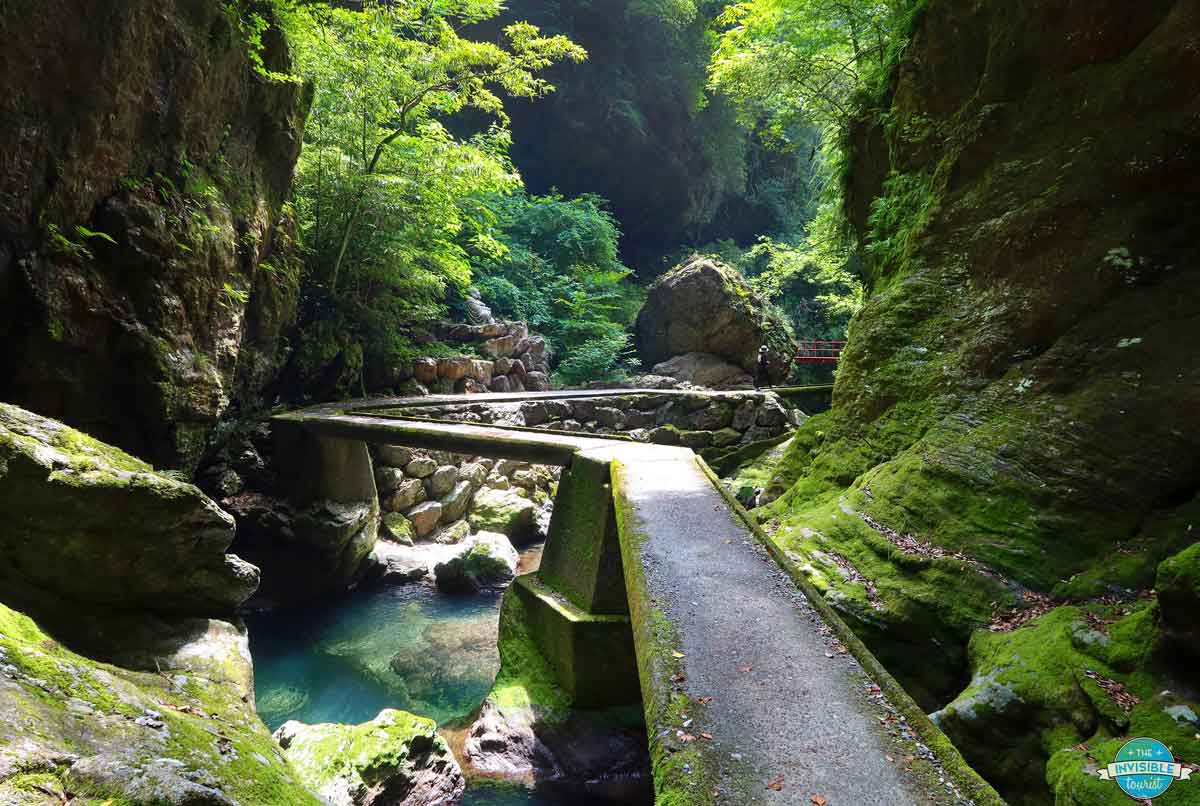
This stunning location was easily one of the highlights of my Shikoku 10 day itinerary. The water here is so exquisitely turquoise it even has a special name, Niyodo Blue. Welcome to Kochi Prefecture!
Things to see in Nakatsu Gorge
- Nakatsu Valley Hike – I thoroughly enjoyed this 2.3 kilometre hike through the valley, traversing stairs, small bridges, tree roots and stone steps along the way. So many beautiful spots to slow down and enjoy the scenery.
- Shichifukujin – Find small statues of the Seven Lucky Gods in Japanese folklore, they’re dotted along the pathway.
- Momiji Falls – Meaning “red maple leaves” in Japanese, these falls are surrounded by the iconic autumn scenery in late Novemver.
- Uryu Falls – Known as the Dragon’s Spout due to its appearance, this lovely waterfall is 20 metres high and framed by surrounding cliffs.
- Ryogubuchi – Above Uryu Falls is an observation point looking down on it, famed for autumn leaf colours in November.
- Stone Pillars – Formed by water erosion from 60,000 years ago, these pillars are 20 meters tall. They are a bit awkward to spot at first as they’re under the bridge you’re standing on. This reminded me a little of Takachiho Gorge in Kyushu.
- TIP: If you make it to the hike’s end beyond the Stone Pillars, to save time walk 20 mins back to parking down the main 363 road rather than trekking back through the gorge to your parking spot.
- TIP: Wear shoes with good grip. The pathway is well marked but is slippery with leaf litter in parts. There is also a suspension bridge to cross, quite similar to the Kawazu Seven Waterfalls hike in the Izu Peninsula.
- NOTE: This hike isn’t possible for those with mobility issues. There aren’t many food options in this area aside from a small restaurant as the start of the gorge’s hike, so bring lunch, snacks and water.
- TIP: You can also enjoy canyoning and packrafting through Nakatsu Gorge! While I haven’t done it personally, Niyodo Adventure can show you the hidden side of the valley.


DAY 6 – Monet Kitagawa Village & Kochi
Not mentioned in other Shikoku travel guides, Kitagawa Monet Village is a must for fellow art and garden lovers. I was SO excited to visit, having seen Monet’s House & Garden in Giverny, France some years ago!!
In the afternoon and evening, we’ll enjoy a few sights in Kochi city near our hotel.
What to see at Monet Martmotten Kitagawa Village
Dotted throughout the gardens are large easels with some of Monet’s most well-known masterpieces. The different areas are the:
- Water Garden – The centrepiece is the iconic Japanese bridge covered in wisteria against a colourful water lily pond.
- Bordighera Garden – Italian-inspired garden with a very Mediterranean feel. Don’t miss the walk up to the Yuzu Grove for a stunning view over Kochi! This area also has a playground for kids.
- Flower Garden – On the opposite side of the car park, manicured roses, archways and greenhouses making the Flower House Nursery.
- Art Gallery – I loved the miniature dioramas of Monet’s house in Giverny and the artworks along its walls, including Japanese inspired ukiyo-e art.
- Gift Shop – I could have gone crazy here with all kinds of local specialty items and Monet inspired gifts. There’s also a cafe if you need a light lunch or snack.

Things to do in Kochi city
- Tosa Dentetsu – Kochi’s streetcars or trams are the oldest in Japan (and you can tell!) They began service in 1904, but today’s streetcars date back to the 1950’s.
- Downtown Kochi – Nicely illuminated in the evening, see the vermilion Harimayabashi bridge, and the Harimayabashi Shopping Arcade.
- Ushioe Tenmagu Shrine – Most famous shrine in Kochi dating back 1,000 years dedicated to the god of learning.
- Hirome Market – A welcoming maneki neko greets visitors to this outdoor market featuring fresh fish stores, souvenirs, and other specialty stores.
- Dinner at Hinode – This brilliant wagyu restaurant is near the hotel, absolutely 10/10.
- Kochi Castle – Pop over in the evening to see it illuminated. An adjacent museum is open during the day.
- More activities in and around Kochi here.

DAY 7 – Iya Valley & Vine Bridges
For a number of years I’ve had a calling to these vine bridges in Tokushima Prefecture… And my goodness, this area is spectacular. It truly feels like the heart and soul of Shikoku.
While it is debated whether the bridges were built by Kobo Daishi to help village residents easily cross the river (more on him in my Shuzenji Onsen itinerary) or so villagers could easily cut them off as a defence mechanism, we can agree these bridges are unique!

There are three main areas with vine bridges in the Iya Valley today, but there were once thirteen. Don’t worry – beneath the twisting vines is modern suspension bridge material or structural support on each, and the vines are replaced every three years.
NOTE: Drive cautiously on the 439 highway running through the valley. It changes haphazardly from two lanes down to one lane, with shoulders on occasion for passing. You may need to back up to a shoulder for oncoming traffic. Pay attention to roadside mirrors too.
Things to do in the Iya Valley
TIP: Read my detailed Iya Valley itinerary for more. I recommend visiting these spots in the following order:
- Iya no Kazurabashi Bridge – This is the first vine bridge at 45m long and 14 metres above the river below. In my opinion the scariest of them all, hehe. To cross costs 550 yen each.
TIP: Parking costs 300 yen. If there are tour groups, hang back and allow them to cross first so you can take your time and get photos without anyone on the bridge. - Kazurabashi Yumebutai – Opposite the parking lot, this rest stop and market of sorts selling all kinds of specialties from Tokushima Prefecture. I bought some Naruto salt potato chips. There is also a gallery with explanations of how the vine bridges are maintained.
- National Heritage Area Ochiai Village Observatory – En route to the next vine bridge, enjoy the valley views over this remote village sprawling almost 400 meters up the mountainside. Dating back to the mid-Edo Period with some thatched buildings in original condition, little seems to have changed over the centuries!
TIP: It is possible to enjoy a farm stay in this village. More details for spending an overnight in a traditional farmhouse here. - Lunch at Kouzanka – Sensational tonkatsu set! This humble restaurant is run by a lovely elderly couple. There’s no other food or konbini in this area, so I recommend stopping by here for a meal.
- Nagoro Scarecrow Village – Also known as Kakashi no Sato, over 300 life-sized yet friendly scarecrows populate the village (10x more than the number of people). This quirky attraction is heartwarming yet a little sad as it highlights Japan’s aging population. The artist Tsukimi Ayano created each scarecrow based on an individual resident she once knew to bring life back into the village. It’s free to enter.
- Oku-Iya Double Vine Bridge – Also known as Oku-Iya Niju-Kazura Bridges, these two are named Male (12 metres high) and Female (4 metres high) bridges. It costs 550 yen each to access them both. Their origins date back 800 years, and there are picnic tables overlooking them to enjoy a break. The wooden rope-pulled cart over the Iya River was out of action during my visit.
- Statue of a P*ssing Boy – If you have time, take a small detour to see this cheeky sculpture relieving himself over the valley on the way back to Kochi.
- TIP: With an early start, you can include an Oboke Gorge sightseeing boat cruise, more information here.

DAY 8 – Takaya Shrine, Mt Shidue & Takamatsu
Day 8 of this Shikoku itinerary is all about breathtaking views. Today we’ll drive from our base in Kochi up to our next hotel in Takamatsu, driving past Shikoku’s “Mt Fuji” with a few of Shikoku’s best scenic spots along the way.
Takaya Shrine
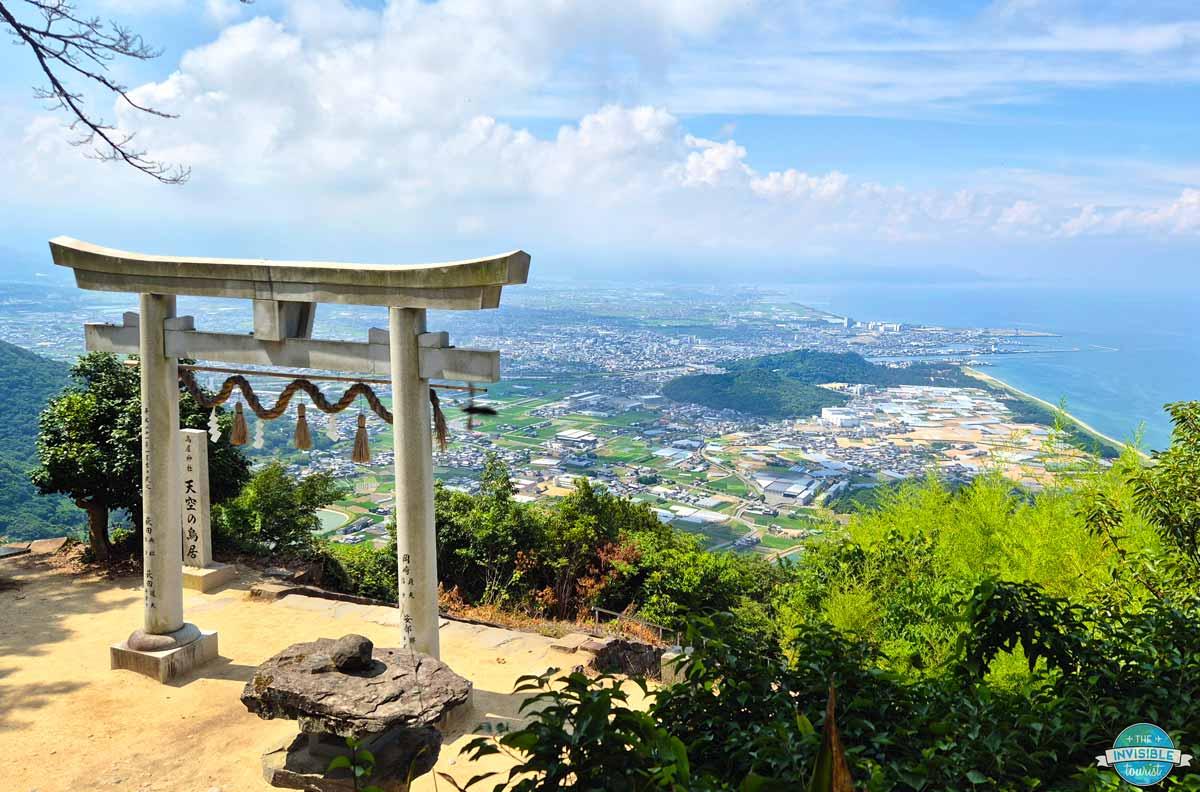
Start at one of the most jaw-dropping viewpoints in Japan at the “Torii in the Sky,” Takaya Shrine. Standing 404 metres above sea level on Mount Inazumi, I enjoyed some of the most incredible views over the Seto Inland Sea here.
There is a vending machine for ema (wishing plaques), goshuin, instant udon noodles and other local snacks. This is the shrine to wish for business prosperity.
TIP: I recommend driving to the top parking lot north of the shrine, otherwise the walk up including 270 steep stone steps is about an hour!
Mount Shidueyama
Next, we’ll drive to nearby Mt Shiudeyama, part of Setonaikai National Park. This location is adored by locals during the cherry blossom season (it’s so popular with locals then you’ll need to reserve a timeslot for parking in advance!)
However it is an absolute beauty during ajisai (hydrangea) season and barely any visitors. Not only is the outlook stunning, but the view from the Mt. Shiude Archaeological Museum and Café is gorgeous. Stop for a little while and enjoy an iced coffee overlooking the ocean, then head outside to see the replicas of 2000-year old dwellings from this area.


Takamatsu
From Mt Shiude, we’ll make our way over to Takamatsu in Kagawa Prefecture. Enjoy a leisurely stroll around Ritsurin Garden 栗林公園 in the afternoon, considered one of Japan’s finest landscaped gardens.
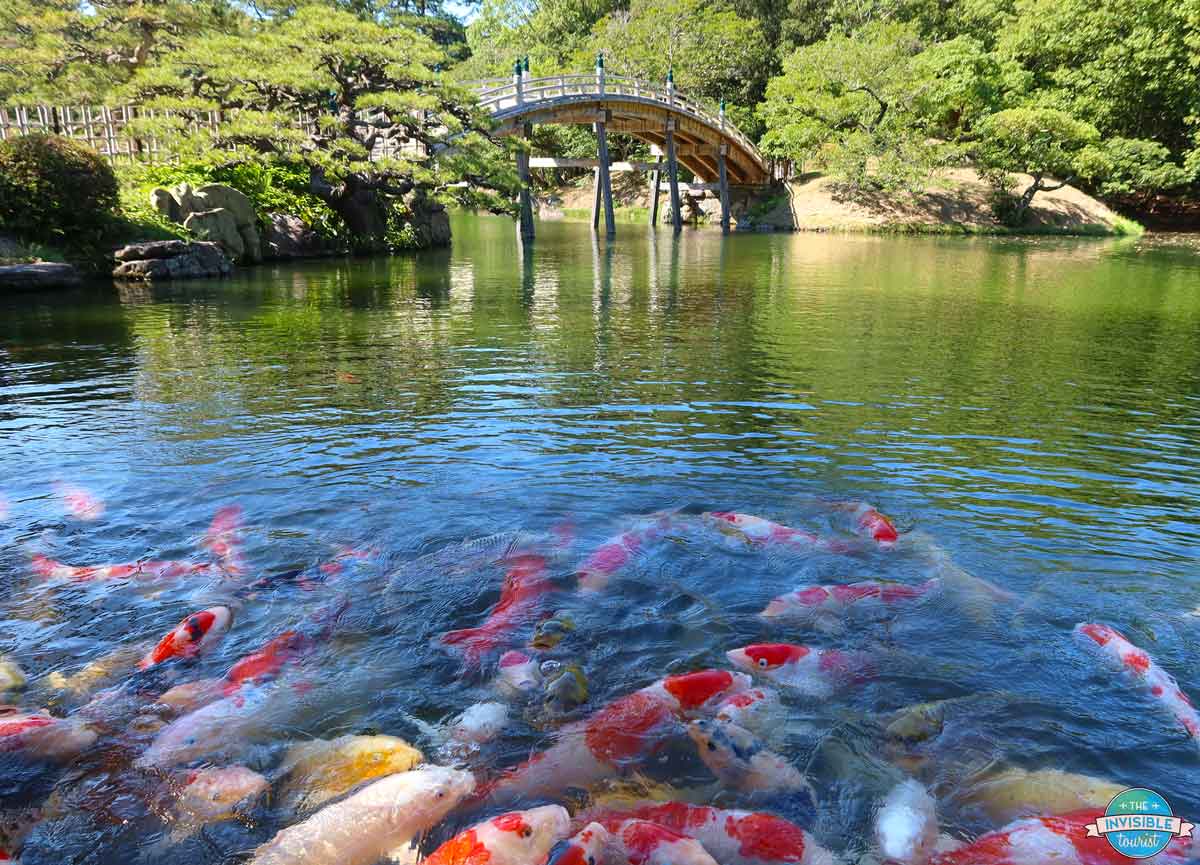
Completed in 1745, Its main focal point is a wooden arched bridge with Mt Shiun in the background. Traditional boats glide visitors around the pond. Enjoy matcha from the teahouse overlooking the water and seasonal flowers.
Finally for wagyu fans, enjoy dinner at Ito Loin yakiniku in the Marugamemachi shotengai (undercover shopping arcade). This was one of the best meals I enjoyed in Shikoku!
TIP: Keep a lookout for cone-shaped Mt Iino on the right side of the E11 highway, known as Shikoku’s little “Fuji.”

DAY 9 – Otsuka Museum of Art & Naruto Whirlpools
Day 9 of our 10 day Shikoku itinerary will see us drive from Takamatsu to Naruto in Tokushima Prefecture, home to the incredible Otsuka Museum of Art and renowned Naruto Whirlpools.
TIP: I recommend checking the tide timetable for the whirlpools first. This is so you can plan your ferry ride out to the whirlpools at peak time, which depends on the tide. Visit the Otsuka Museum of Art before or after the whirlpool ferry for the optimum experience.
TIP: Follow the signage to the Otsuka Museum of Art parking lot. It is about 15mins walk away, but a complimentary shuttle bus comes every few minutes to take visitors to the museum.
Otsuka Museum of Art
Have you ever wanted to see the Mona Lisa without crowds all squeezed around her? You can for any famous artwork at the Otsuka Museum of Art! At over 29,400 sqm, this is one of the largest exhibition spaces in Japan – and it shows – there was waaaay more here than I was expecting.
Imagine taking the world’s finest artefacts/artworks from Antiquity through the Middle Ages until the 20th century, creating life-sized ceramic replicas and housing them all in one space… That’s this museum in a nutshell.
I loved every moment here, re-living the joy of how I felt when seeing the real-deal artworks around the world in the past. But this was better in a way as it wasn’t crowded. I spent 2 hours here before my Naruto Whirlpool ferry trip, and could have easily stayed much longer. An absolute must for my fellow art lovers.

Naruto Whirlpools
Witness a natural phenomenon occur where the Seto Inland Sea powerfully merges with the Pacific Ocean on Shikoku’s east coast. I’d planned to visit the Naruto Whirlpools 鳴門の渦潮 before the Otsuka Museum of Art, but after checking the tide I switched it around to ensure a ferry ride at peak time. Check the whirlpool timetable here.
The Uzusio Sightseeing Boat rides last for 30 mins, getting you up-close to whirlpools that can reach up to 20 meters in diameter!
NOTE: There’s quite a difference in ticket prices: 1,800 yen for economy, 2,800 yen for first class (upper deck). You can see fine from the lower deck, but if you want to see deeper inside the whirlpools maybe the upper deck would suit. Just turn up when you’re ready and purchase tickets.
TIP: Tokushima Prefecture is also known for aizome, indigo dyeing in the traditional way.

DAY 10 – Optional Island Day Trip from Takamatsu
Takamatsu is a gateway to some stunning Shikoku island day trips! Select one and make a day of it:
- Naoshima – Giant dotted pumpkins and artworks to be found on Japan’s “Art Island.”
- Shodoshima – A short ferry ride away, windmills, Greek Island vibes and the location of Japan’s first olives were cultivated await.
- Awaji Island – Zipline into an enormous Godzilla mouth at Nijigen no Mori, the Godzilla theme park. For a quirky extension, add on Onion Island miniature theme park.
- Teshima – Home to a contemporary art museum, once every three years the rural island is part of the Setouchi Trienniale outdoor art festival.
Or if you prefer to head over to the mainland:
- Hiroshima 2 hours – There is so much to see aside from the A-bomb Dome, I always say everyone should visit once if given the chance. My guide to Hiroshima attractions covers many lesser-known spots and things hiding in plain sight.
- Kurashiki 1 hour – A “Little Venice of Japan” with an impressive Western Art museum, traditional boat rides, the home of denim, museums… My guide to Kurashiki Bikan Historical Quarter details more.
- Okayama 1 hour 20 mins – Striking Okayama Castle is compact but has a great museum inside, while Korakuen is one of Japan’s Three Great Gardens. You NEED to have lunch at Kitchen Horiguchi – the chef was SO kind and explained all the menu items, crumbed chicken is the specialty and it is incredible.
- Kobe 2 hours – Indulge in wagyu beef, visit lesser-known shrines and enjoy a day along the scenic harbour.
- Himeji 2 hours 30 mins – Featuring one of Japan’s finest, the “White Heron” Himeji Castle is half a day in itself. Don’t miss the gorgeous Kokoen Gardens, they stun in every season.
- Tomonoura 2 hours – It’s said Ghibli’s “Ponyo” anime was inspired by this sleepy seaside town.
- Takehara 2 hours 20 mins – The “Little Kyoto of Hiroshima,” this preserved old town is known for salt and sake (Japanese rice wine).

Shikoku Travel Tips
Here’s everything you need to know when planning this itinerary year round. If I’ve missed something you’d like to know, please ask in the comment section:
- Car hire: Including ETC card & full insurance, approx 100,000 yen.
- Tolls: The entire cost of tolls for this Shikoku travel itinerary was approx 19,000 yen.
- Petrol/Gas: My hybrid car needed two tanks of fuel costing close to 10,000 yen altogether.
- Parking: In cities, parking will be in towers. For the hotels I stayed in, parking cost 8,800 yen altogether. Overall I spent approx 10,000 yen in parking over the course of the itinerary.
- Konbini: Not as widely available as they are in other areas of Japan. When visiting the Iya Valley and Nakatsu Gorge, bring snacks, drinks and lunch along.
- Weather: In summer, beware of typhoons and always carry an umbrella from June to early October. If you have day trips planned by ferry, have a back up plan in case of cancellations.
- Shikoku Pilgrimage: This can take 6-8 weeks to complete visiting all 88 temples on foot. See this Shikoku pilgrimage map for more information.
- Seasonal Festivals in Shikoku:
- Awa Odori Dance Matsuri, Tokushima (August)
- Yokasoi Matsuri, Kochi (August)
- Sanuki Takamatsu Matsuri Fireworks, Takamatsu (July)
- Noryo Fireworks Festival, Kochi (August)
- Saijo Matsuri, Saijo City (October)
- Setouchi Triennale, various islands every three years (April – November). [Jump back to top]
Concluding this Shikoku 10 Day Itinerary
And that’s a wrap for my massive itinerary for Shikoku! From sweeping vistas, mossy landscapes, unique places to visit for art, delicious food and much more, you could easily make this Shikoku itinerary 14 days in length. Japan’s least-visited island is sure to capture your heart, as it did mine.
Do you have any comments about this itinerary? Ask away in the comments below. While you’re here, don’t forget to read all my offbeat itineraries & travel guides throughout the country from over a decade of visiting on my extensive Japan travel blog!
Feeling social? Explore beyond the main touristy sights with my dedicated Japan Off the Beaten Path Facebook Group or come and join me on Facebook, YouTube, Pinterest, TikTok and Instagram for more travel inspiration.
Until next time,


This Shikoku itinerary contains some affiliate links. I may earn a small commission if you decide to make a purchase and if you do, thanks for your support! This helps with the costs of running my blog so I can keep my content free for you. As always, I only recommend a product or service that I genuinely love and use myself!
We’ll be in Shikoku for 6 nights in May and are still struggling with a plan taking us from Ine, Amanohashidate, Kinosaki Onsen, Matsue, Okayama, Kurashiki, Takamatsu then back to Osaka. Thank you for your helpful and honest insight on what to see and also where you’ve enjoyed dining as well. Your information really creates a better understanding of the overwhelming choices.
Hi Wanda,
Thank you so much for your kind words! That sounds like an incredible trip you are planning, I’m so glad I was able to help with your Shikoku portion of the trip. I hope you have an amazing time, and thanks so much for reading!
I’m so thankful I found your website! Been searching for places in Japan where it is not too touristy and can see beyond the usual cities. Love your recommendations with photos which made me seriously consider if these places suit our family trips. Your blogs are comprehensive with the amount of information needed by travellers. Keep up the good work! Thank you!
Hi Anna!
That is one of the nicest compliments I could receive, and why I love doing what I do 😃
Thank you so much for reading, I’m really glad you’re considering some of these gems in Shikoku for your family.
If you have any questions, just reach out 😊
Thanks again and happy planning!
This looks like a great itinerary but perhaps not do-able without a private car.
Hi Jazy!
The Dogo Onsen, Matsuyama, Ozu, Kochi, Takamatsu, and Naruto segments can be done by train and/or bus.
For the Iya Valley, I’ve shared a local taxi service as it isn’t reachable by bus or train.
Monet Kitagawa Village can be done as a day trip from Kochi by train and bus, and Kousanji Temple can be reached by bus from Matsuyama.
It will just require a bit more planning and take longer on public transport, but for the most part it is possible 😊
Thanks for reading!
What an incredible journey, this is exactly what I have been looking for. You are one of the best travel writers I’ve come across.
Hi Chris,
That is such a kind thing to say! Thank you for reading and for the lovely compliment, I appreciate it 🙌
Wow Alyse. You have done another fantastic write up on travelling to non-touristy areas in Japan. And you’ve gone into so much detail that one can just follow your steps. I will definitely be visiting and exploring these areas.
You are a gem.
Hi Catherine,
This is such lovely feedback and reminds me why I love doing what I do! The Internet is trending to favour more short-form content which had me thinking twice about this article’s length. But I have so much I want to share and tips to help my readers, I would feel I was doing them a disservice by omitting them. Thank you so much for reading, I hope you have a wonderful time in Shikoku when the time comes!