
Takaragawa Onsen Osenkaku, Gunma Review: Is it Worth it from Tokyo?
Are you hoping to try an onsen experience in Japan, but aren’t keen on sharing your birthday suit with fellow bathers just yet? This worry is eliminated at Takaragawa Onsen Osenkaku!
The unique trait? Unlike other Japanese onsen, guests are provided with a cover-up to wear in the mixed-gender, open-air springs beside the beautiful Takaragawa River.
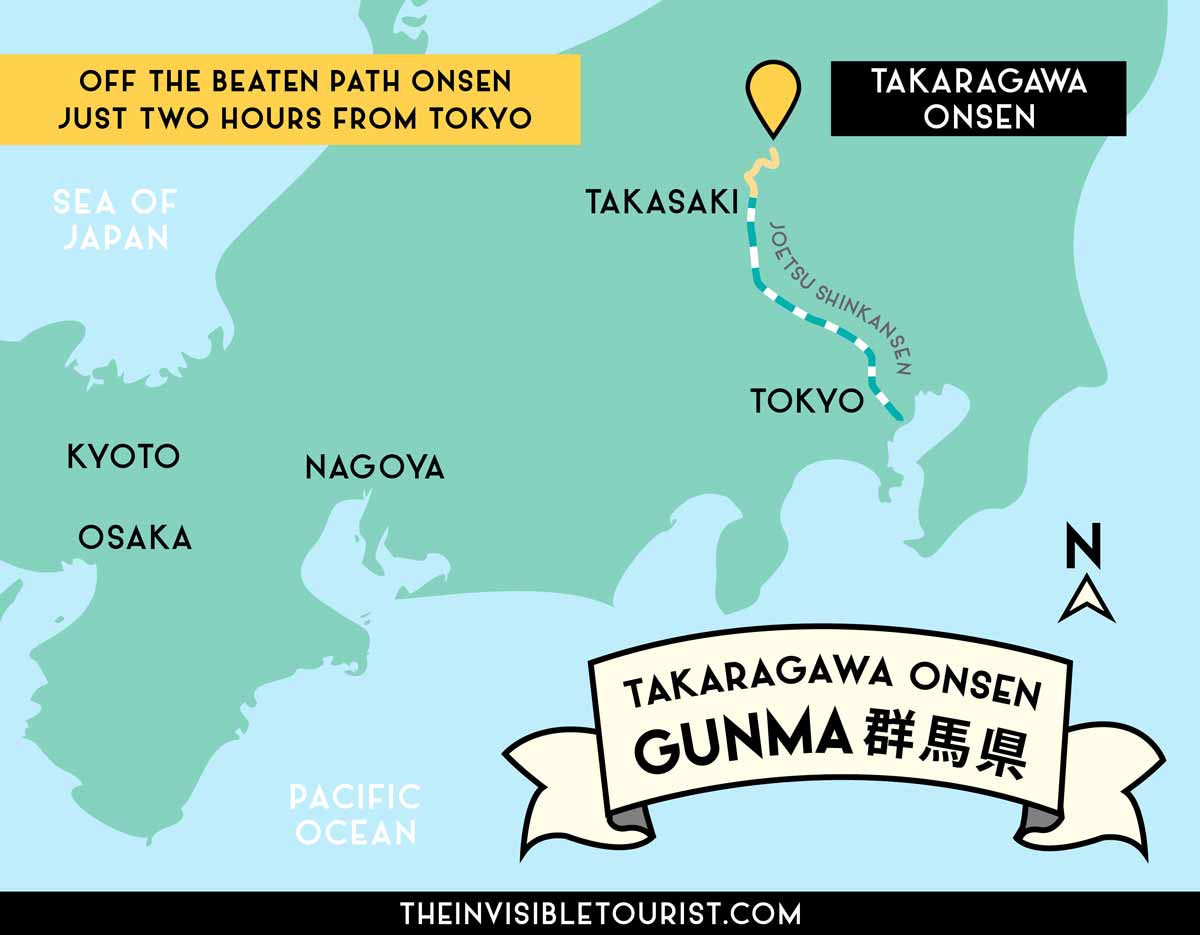
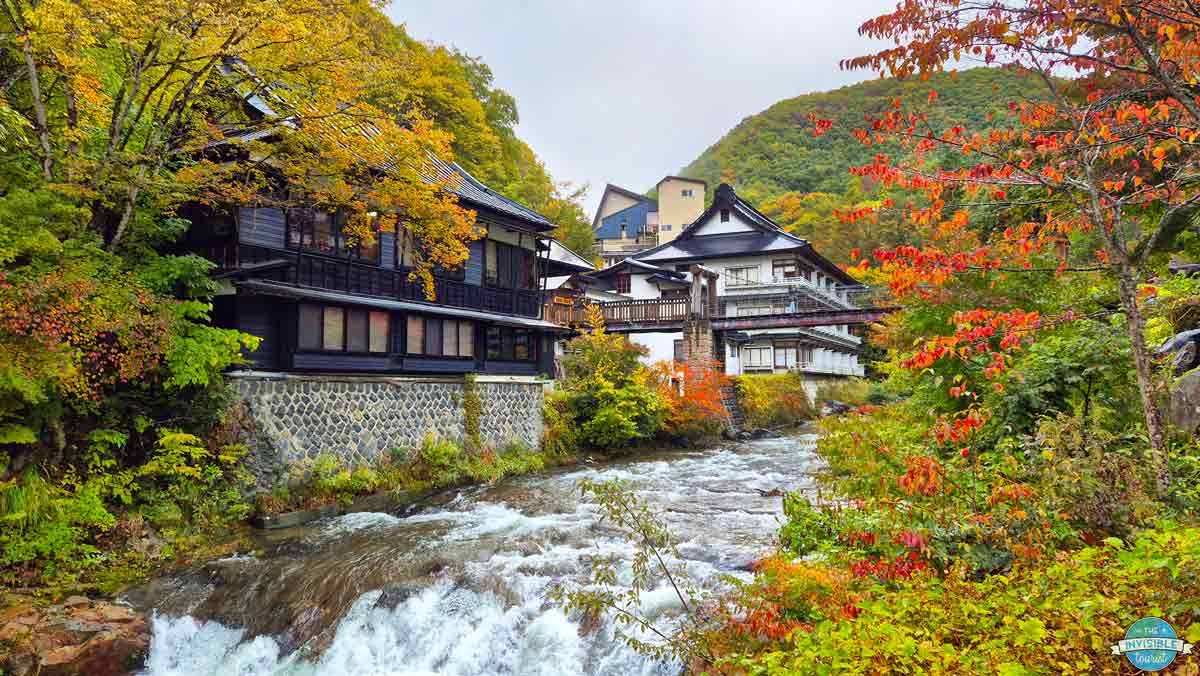
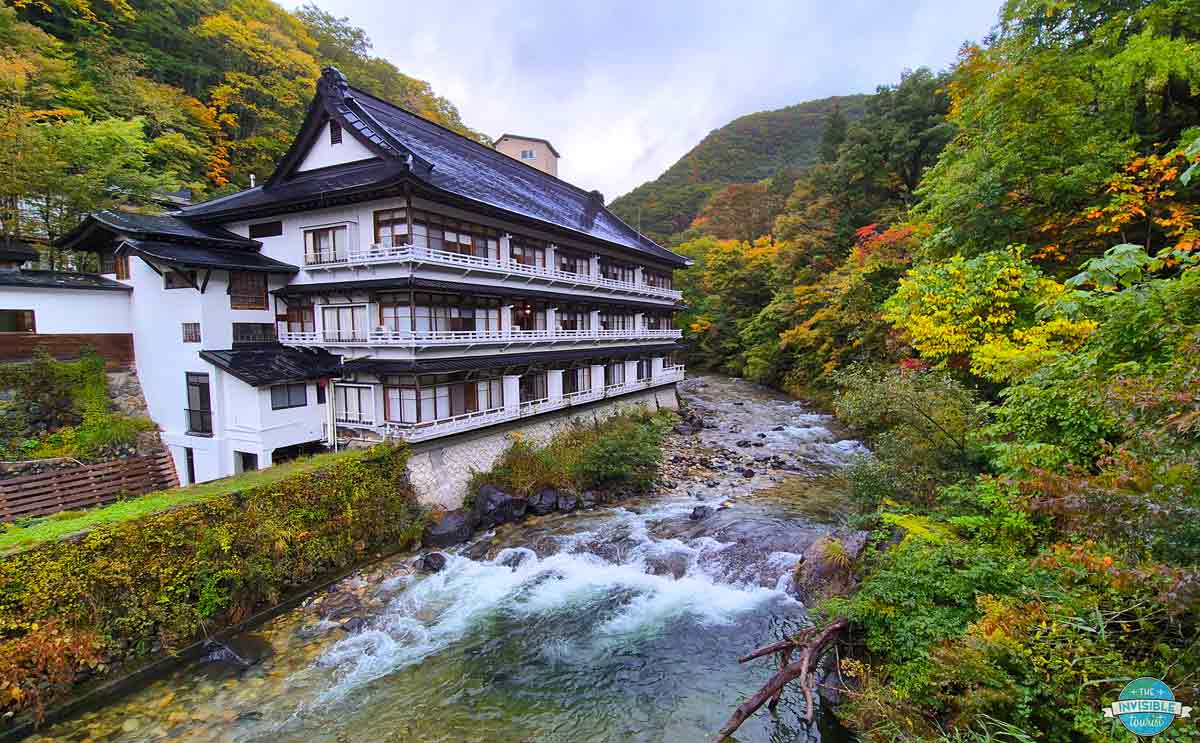
With a history spanning 100 years and nestled beneath maple trees in the mountains of Gunma Prefecture, this breathtaking location can be reached in around 2 hours from Tokyo.
The Takaragawa Onsen ryokan is one of the most beautiful accommodation settings I have ever stayed in Japan over the past decade – and that’s saying a lot. Its natural beauty is accentuated by the changing colours of each season.
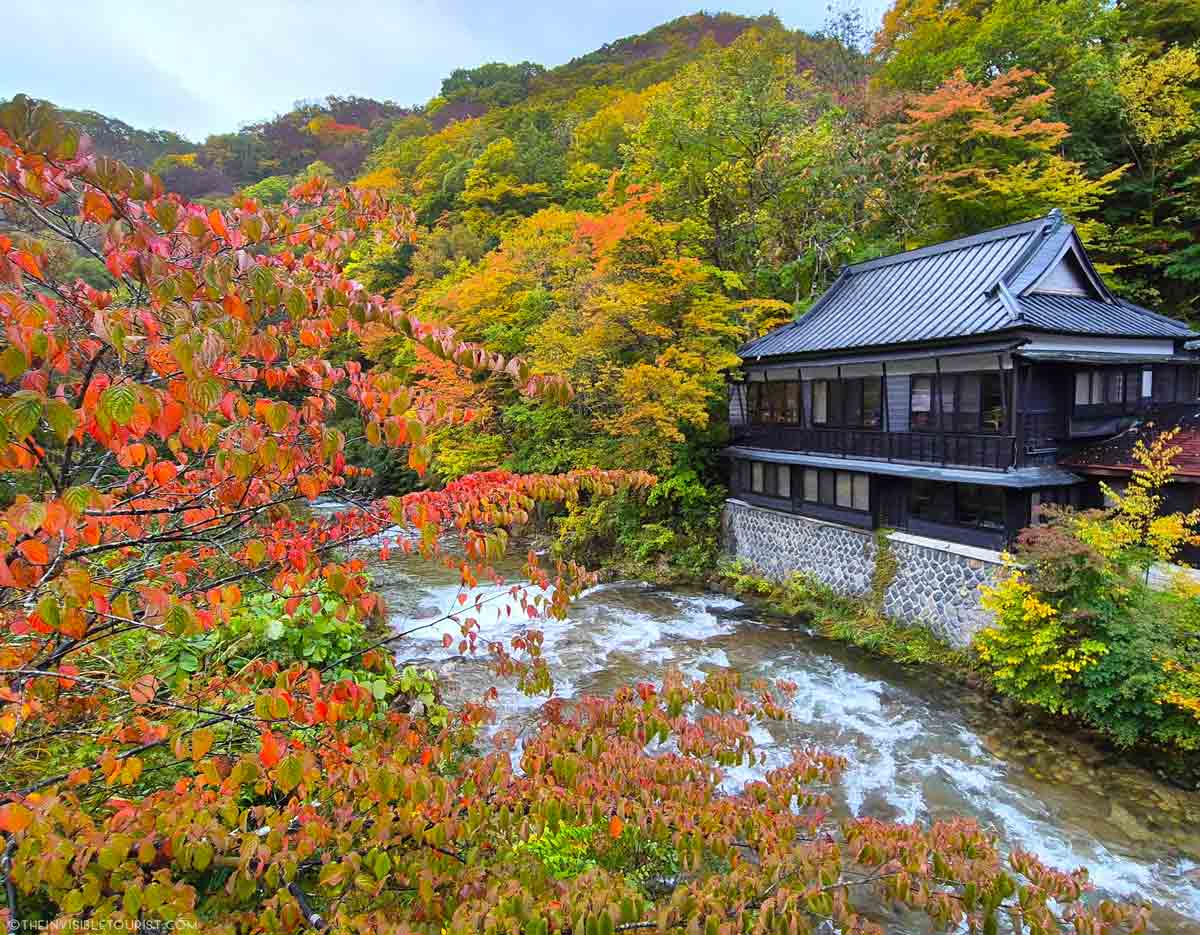
In this Takaragawa Onsen review, I’ll share everything you need to know including how to get there from Tokyo, important tips to keep in mind, and how to enjoy it as a day trip or overnight adventure so you can decide if it’s worth it for you. Read on for more!
This post contains affiliate links, at no extra cost to you. I may earn a small commission if you click through and make a purchase.
NOTE: Not to be confused with Takegawara Onsen in Beppu, Kyushu, Takaragawa Onsen in Gunma Prefecture is spelt with an extra “a” instead of “e.”
Disclaimer: This article is not sponsored in any way. I paid for my stay with my own money, and am reviewing it unbeknownst to ryokan staff or management.
Takaragawa Onsen Osenkaku Review
Sure, the picturesque open-air onsen is a major drawcard for visitors to Japan, but what else can you expect here? Is the journey from Tokyo worth it?
Here’s my honest review about spending the night or taking a day trip to Takaragawa Onsen in Gunma Prefecture, so you can decide if it’s worth it for you.
Checking In and Out
Check-in time is at 15:00. If you have your own car, check-out is at 10:00. If you’re taking the shuttle bus back to the station, check-out is at 9:15am, more details about this down the page.
On check-in, I was handed a map as the property is quite large. I kept this with me during my stay so I could remember where the shower and dining rooms were – the hallways can feel a little like a maze at first!
Room Types
Three buildings make up Takaragawa Onsen Osenkaku:
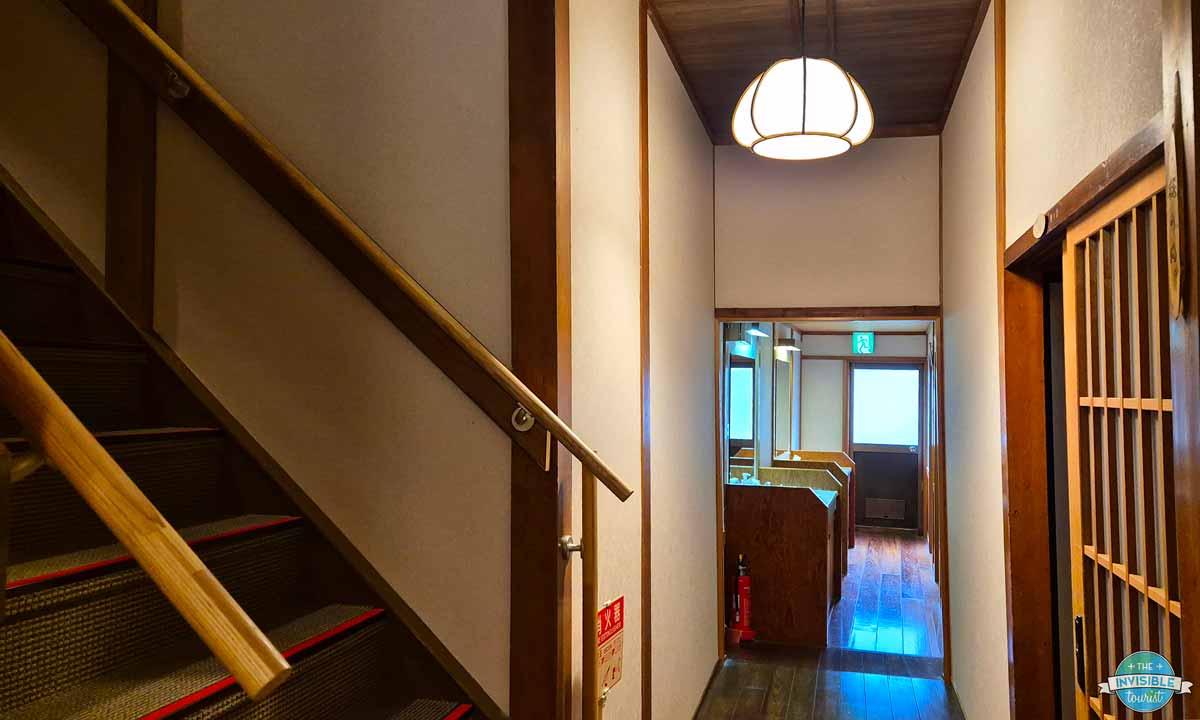
- No. 1 Annex – Oldest section of the property with 6 river view rooms (where I stayed, photos down the page). There are shared toilets and showers in the public bath rooms. Just like old times!
- Main Building – 16 rooms, some with a river view.
- East Building – Largest building of the property with 21 rooms, restaurant, reception/lobby, and inside public baths with showers.
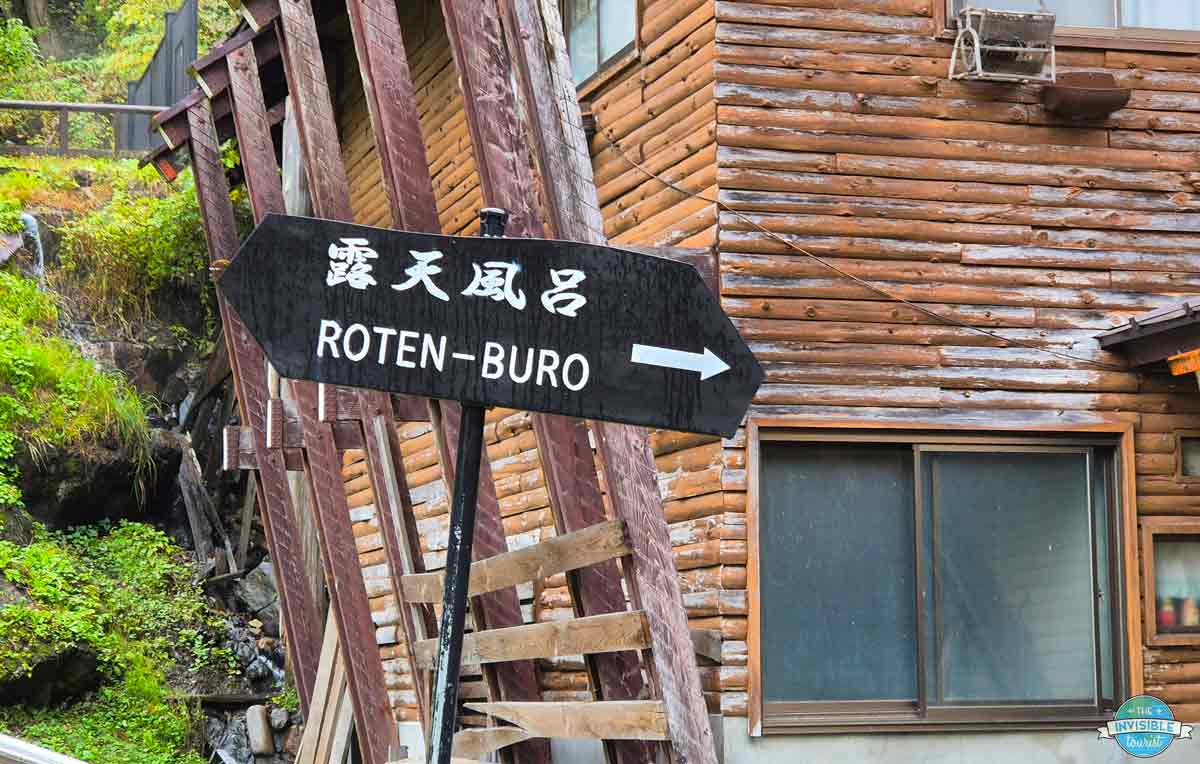
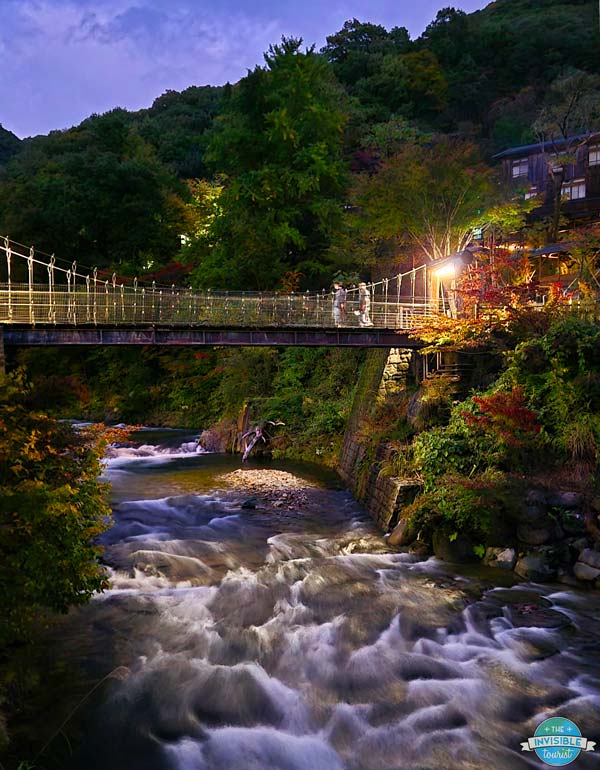
- Roten-Buro area – The open-air onsen area is connected to the buildings by a suspension bridge.
I stayed in the No. 1 Annex in the “Fuji Corner Room,” overlooking downstream. My traditional Japanese room with tatami flooring was what you’d expect from a 100 year-old ryokan (take a look at my guide to staying in a Kyoto ryokan for more).
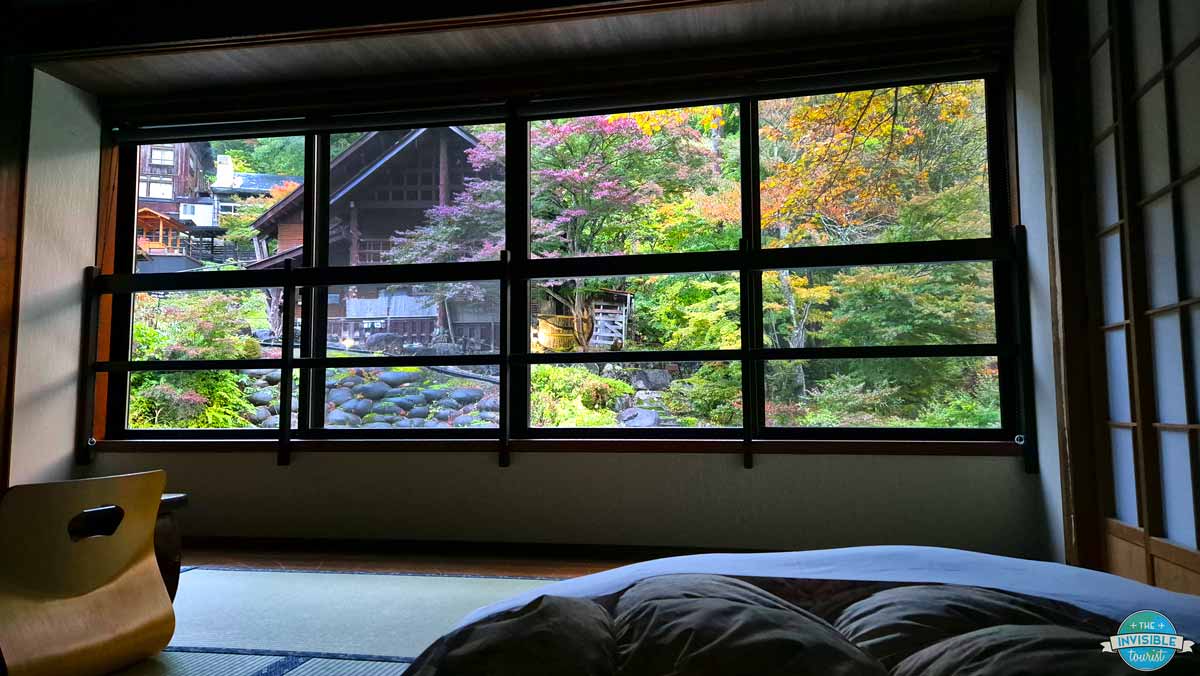
It was clean, comfortable and had beautiful large windows overlooking the river right below. There is a turndown service to set up the futons or you can do it yourself.
TIP: The futon was a bit thin for me so I ended up using two.
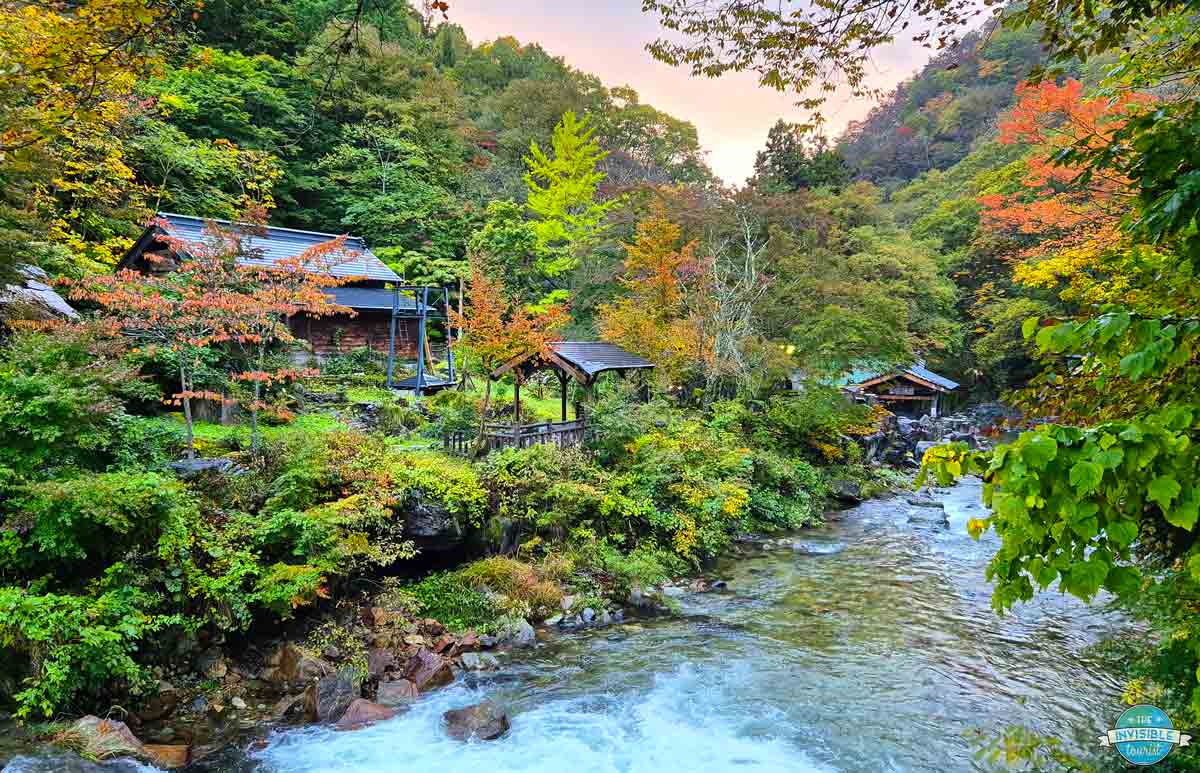
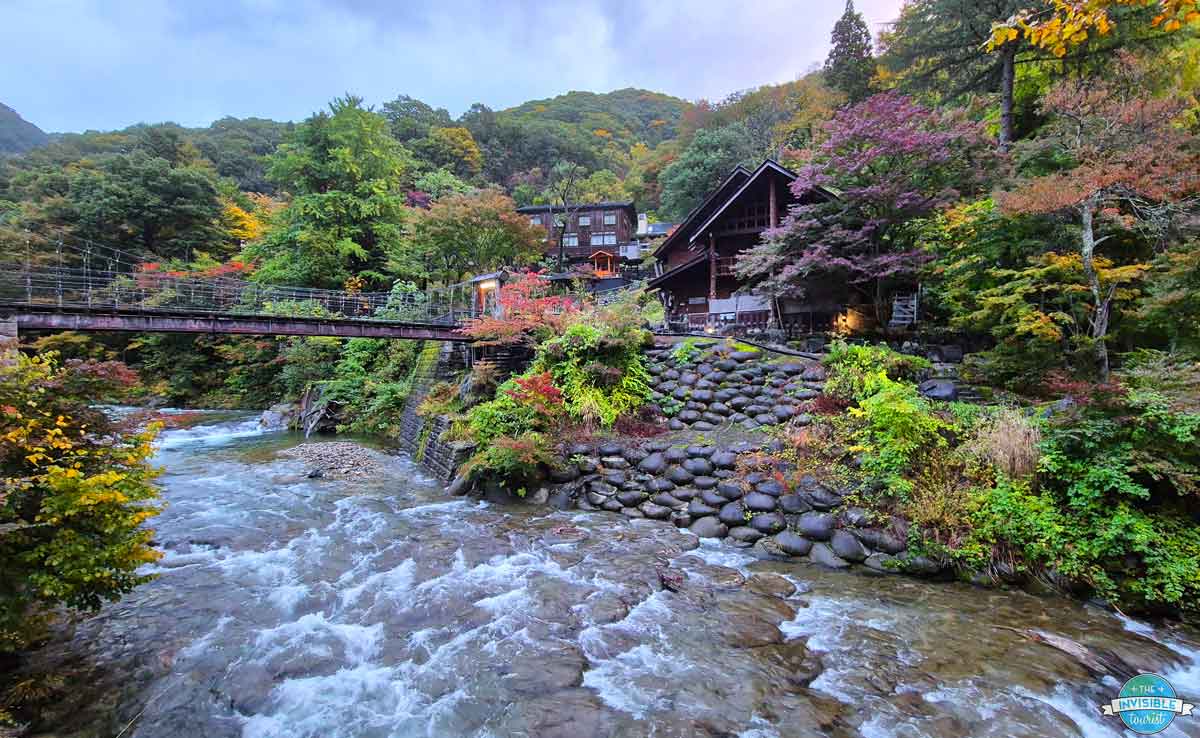
Falling asleep and waking up to the sounds of the Takara River was an absolute treat. I can honestly say I had such a great night’s sleep! These were the views from my room:
Kaiseki Meals
Depending on your room type, your meals will be served at different times. You’ll be advised at check-in.
TIP: As there are a number of little dishes, account for at least 30 – 40 mins to finish your meal.
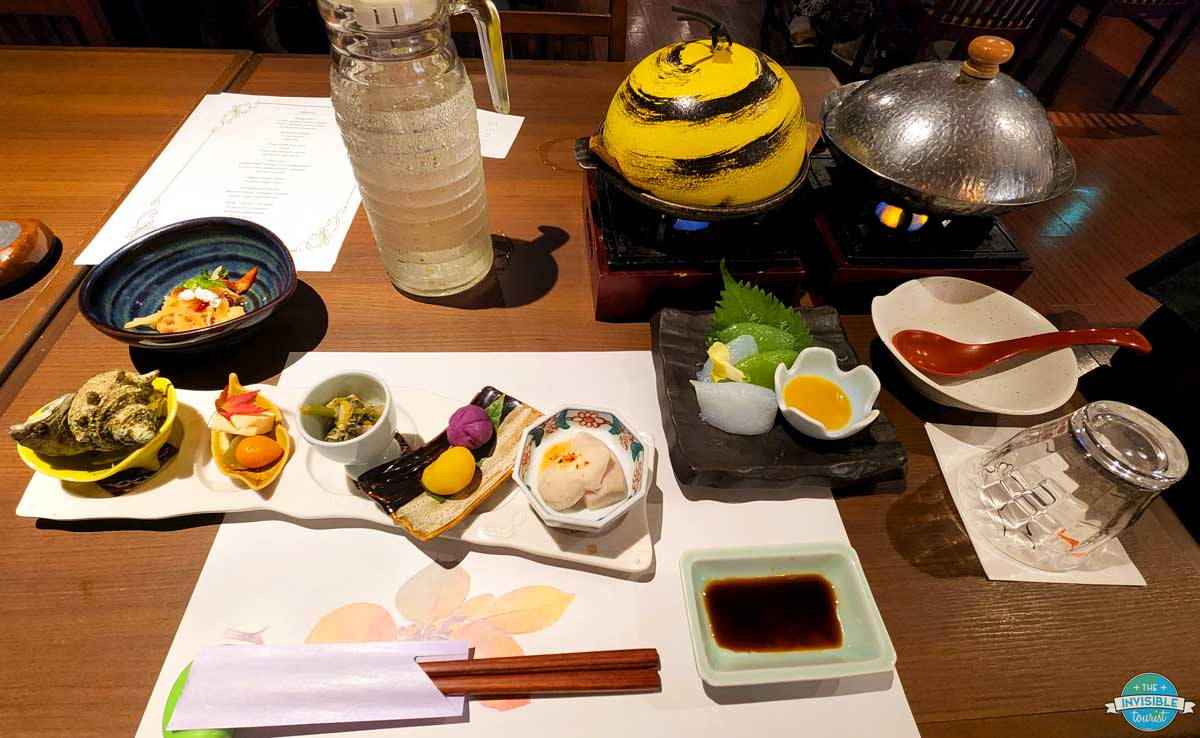
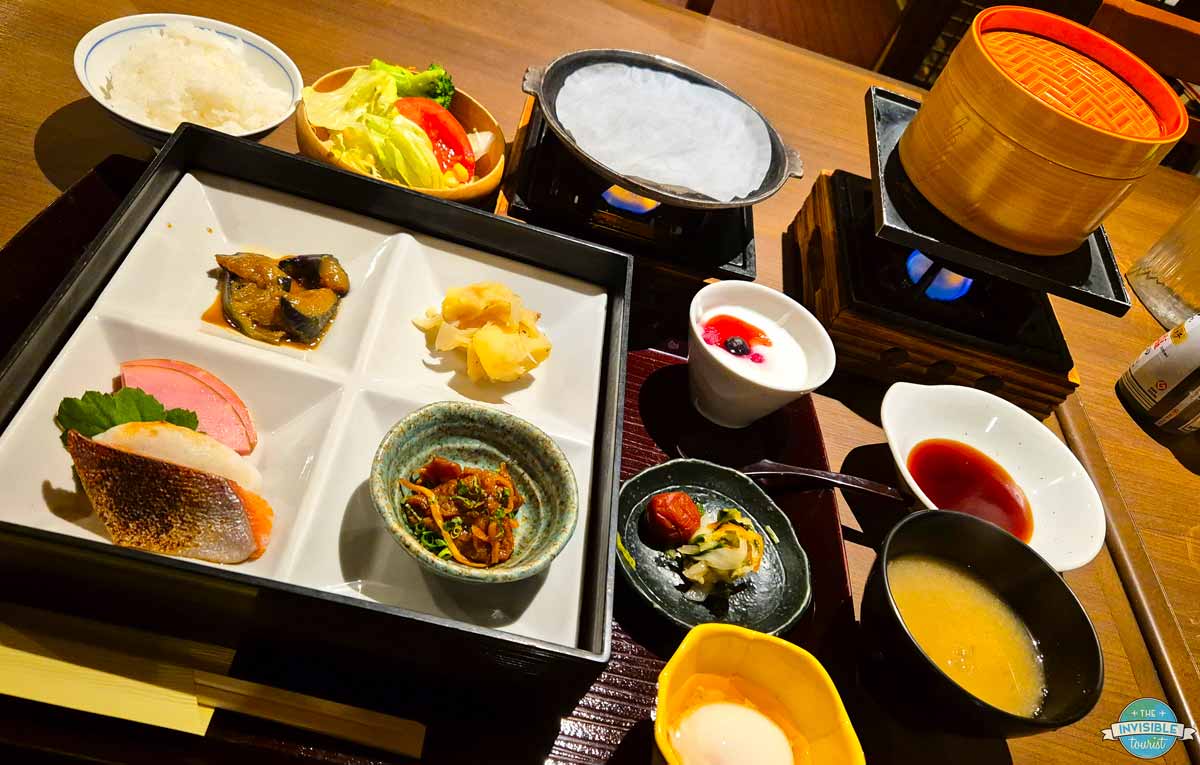
The dinner was fantastic and included seasonal vegetables, sashimi, wagyu hot pot, fried fish, rice, miso soup and pickled vegetables, plus an apple tart for dessert. Breakfast was a little more average, featuring salmon, eggplant, miso soup, ham, lettuce, tomato and a small yoghurt.
TIP: When I booked the property, they did email me to ask if I had any allergies or dietary requirements. This is a big plus for Western guests who struggle with these things in Japan.
Takagawara Onsen Tattoo Policy
As a majority of Japanese onsen don’t allow it… Does Takaragawa Onsen allow tattoos?
Yes, tattooed guests are welcome in the mixed-gender public baths even with tattoos, as long as they are not explicitly offensive or show criminal symbols. There is no need to cover them up. In saying that, some Japanese guests may stare a little, so if you prefer you can cover them up or bathe during less-busy times.
Open-Air Onsen: Roten-Buro
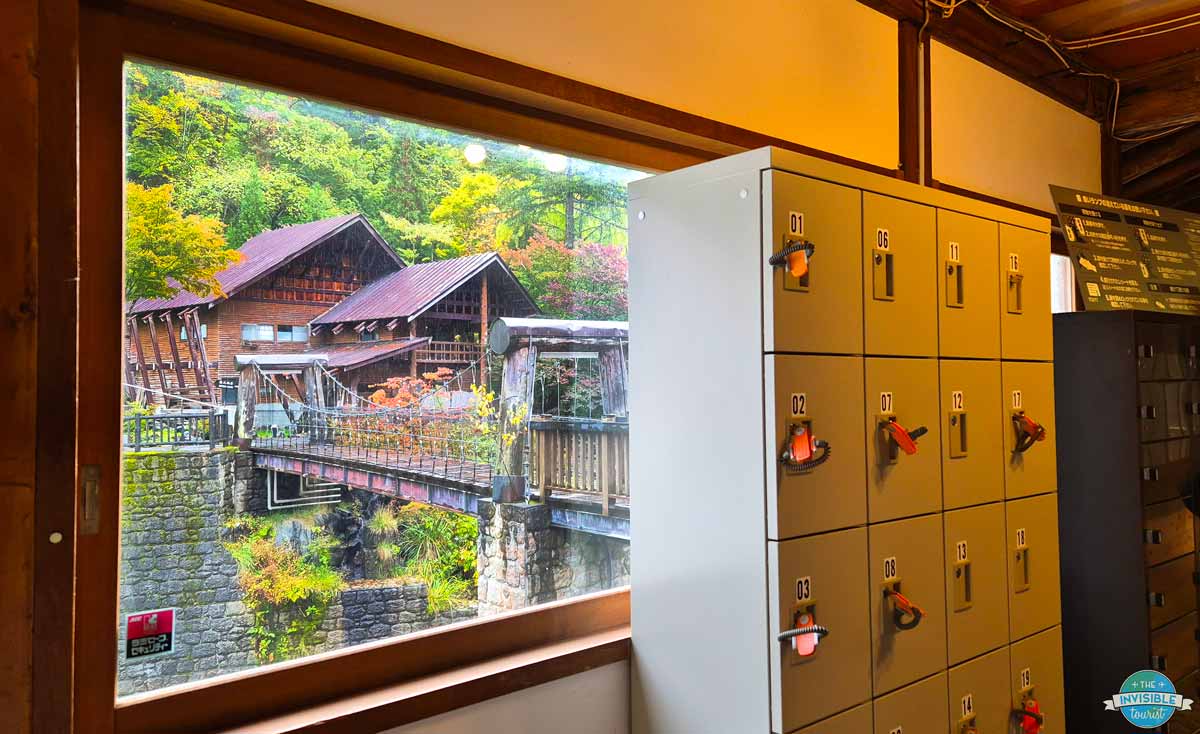
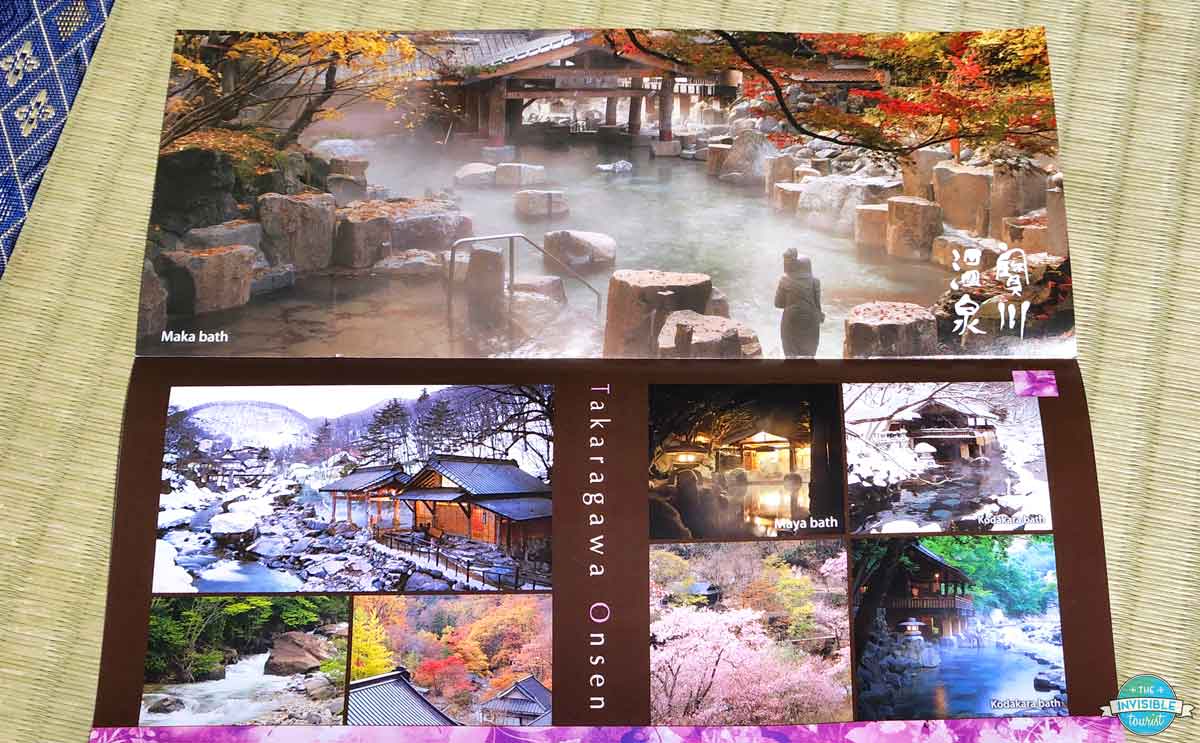
Now the part you’ve been waiting for! Takaragawa Onsen is known for its four stunning open-air baths by the river. There are also indoor onsen in the Male and Female shower rooms. There are lockers for your room key and other items just before the doorway.
TIP: The outdoor Roten-Buro area is closed from midnight until 5:00am, so make sure to get your soak in beforehand!
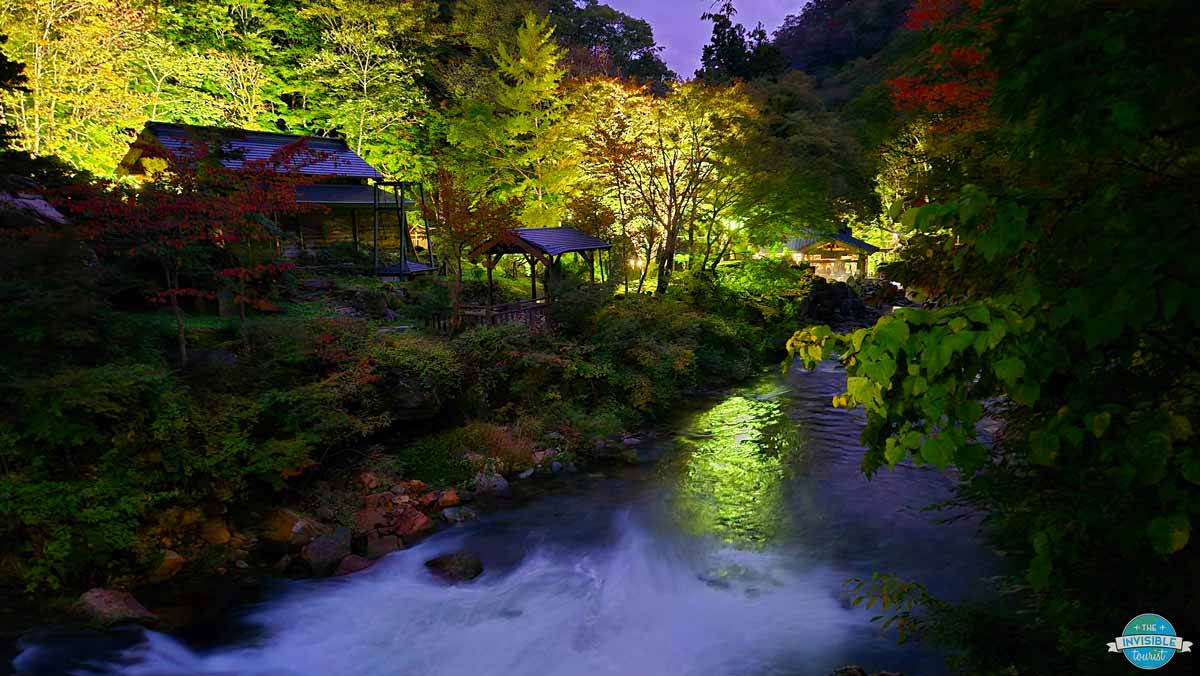
To the sounds of the river flowing beside me as steam lightly brushed against my face, I gazed up at the swaying maple leaves while I soaked in the hot spring. A wave of feeling at one with nature came over me – what a relaxing and memorable experience.
TIP: Take your onsen cover-up from nearby reception and wear your yukata to the onsen and around the property (it’s in your room wardrobe). Remember, it’s correct Japanese etiquette to have the left side folded over the right side!
Staying at Takaragawa Onsen is worth it for you if:
- You appreciate an onsen experience amongst gorgeous natural scenery!
- Don’t mind sharing a common toilet and showers segregated by gender (rooms in the oldest part of the property).
- Are able to carry your own luggage up and down a flight of 16 stairs (I can speak for rooms in the oldest part of the property where I stayed; the East Building has private ensuite bathrooms and an elevator).
- You’d like to sample traditional kaiseki meals for dinner and breakfast.
- You have dietary requirements and need meals adjusted (eg, vegan, vegetarian, don’t eat uncooked foods, allergies etc).
- Are comfortable sleeping on a futon on the floor.
TIP: If any of these points don’t align with you, perhaps you could still enjoy the day trip option from Tokyo instead, details down the page.
Tips for staying at Takaragawa Onsen Gunma
- Own car vs free shuttle – If you’re not driving your own car, the free shuttle bus to transport guests back to the station leaves quite early. Even when waking up at 5:00 or 6:00am, you’d need to hurry any last dip in the onsen and finish breakfast before checking out by 9:15am. I feel this is a bit rushed… Having that extra hour means you may have the onsen to yourself after many guests check out.
- Rental car – I recommend picking up a car from JR Takasaki Station and driving through the mountains, visiting Ikaho Onsen along the way. I saw monkeys sitting by the side of the road as I got closer to Takaragawa Onsen, so keep an eye out for wildlife along the winding mountain roads.
- Parking – If coming by car, park in the dedicated parking spots closest to the lobby instead of up on the hill near the day trip reception building.
- Photography – Photos and videos are ok around the ryokan, but not permitted in the Roten-Buro outdoor onsen area. Staff were quite insistant about this. This is to respect the privacy of other guests, a policy that recently changed.
- Bear sightings – Staff mentioned there have been bear sightings in the area, so it is not wise to bathe at dawn or dusk. I noticed there were a few bathers at dawn before they went to breakfast, so I felt comfortable doing so as well.
- Night lighting – The hallway light is on all night and is bright through the paper sliding entry door. Bring an eye mask or set up your futon in the living space behind the solid sliding doors if you need darkness to sleep (as I do).
- Daylight bathing hours – Remember that check-in begins at 15:00 and check-out is potentially 9:15am, which doesn’t leave many daylight hours to use the open-air onsen. I recommend arriving right on check-in so you can make the most of the daylight outside!
Takaragawa Onsen day trip from Tokyo
Along with Shuzenji, Atami in the Izu Peninsula and Ikaho also in Gunma, Takaragawa is one of the relatively close onsens near Tokyo.
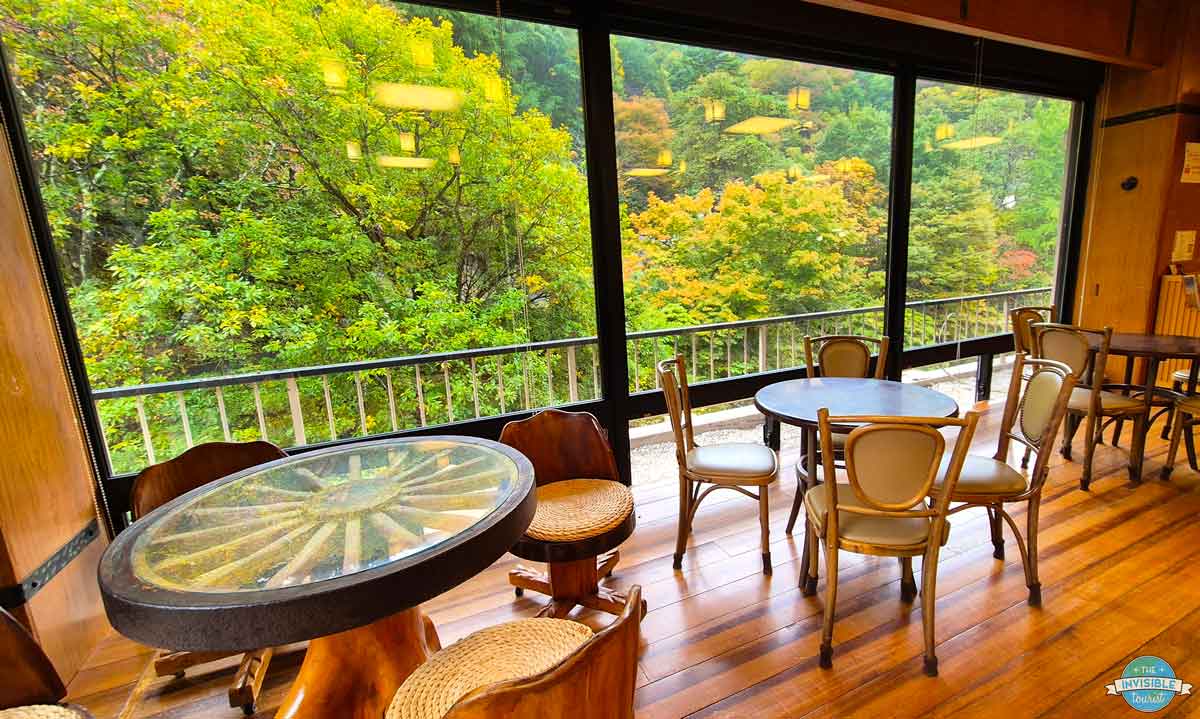
If you’d still like to enjoy the onsen experience without staying overnight, try a Takaragawa Onsen day trip from Tokyo. You can also dine at the ryokan restaurant if you wish, this is shared with ryokan guests.
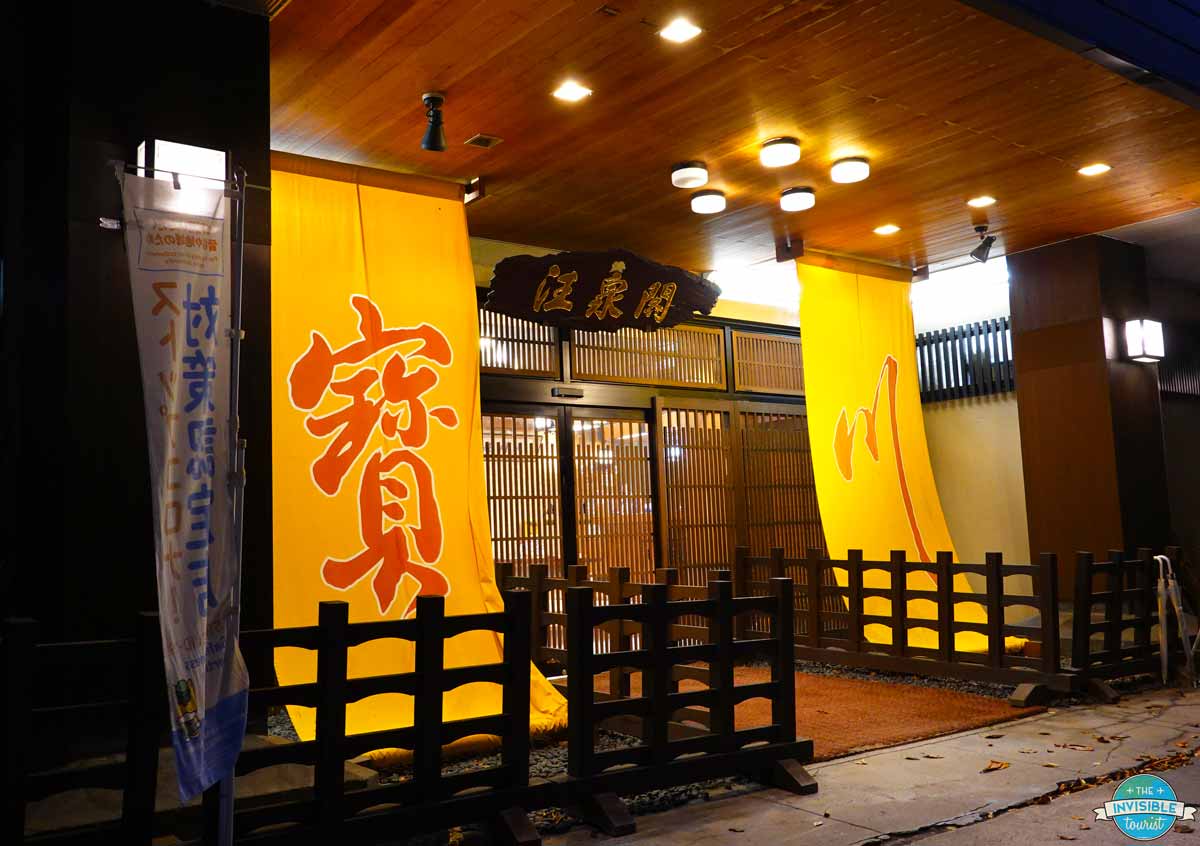
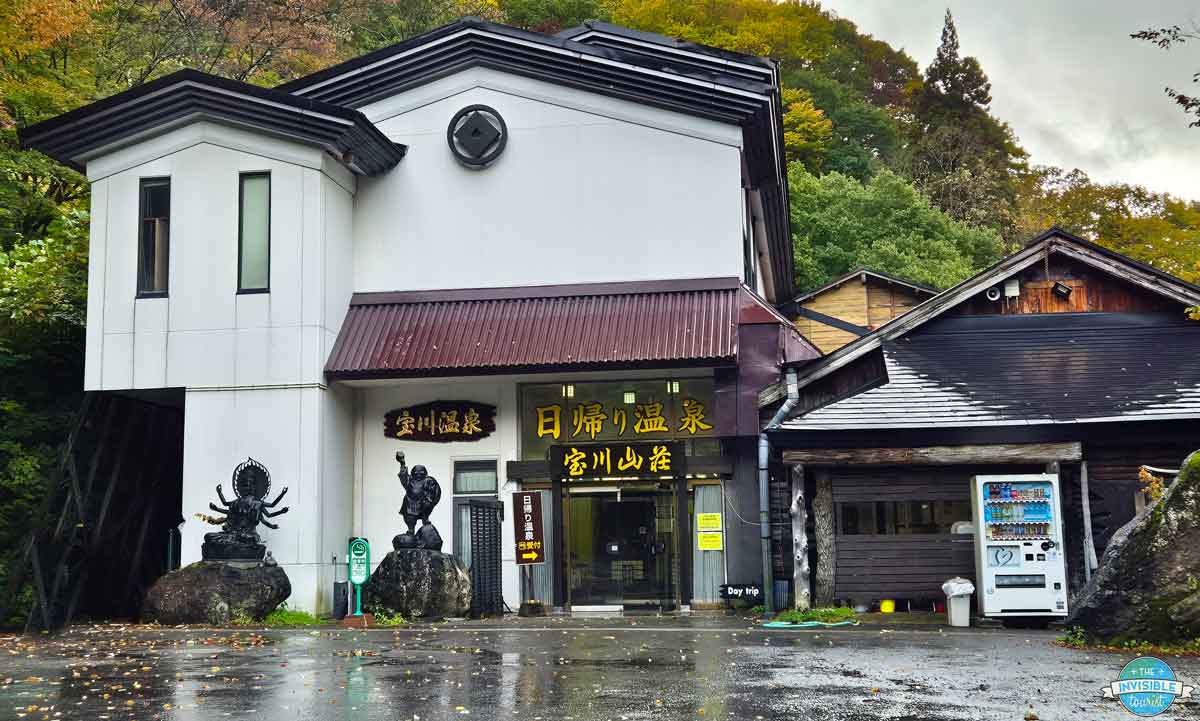
Arrive at the property’s Takaragawa Sanso building, parking out front is free. Inside are showers, lockers, and special cover-up rental for the outdoor onsen.
- Entry: Adults are 2,000 yen and children 1,000 yen each.
- Face towel rental: 100 yen each
- Bath towel rental: 200 yen each
To help preserve the natural minerals in the hot spring baths, bathing in your own swimming costume is not permitted.
TIP: For onsen bathing etiquette, please see my guide to Shuzenji Onsen, another relatively close onsen near Tokyo.
How to get to Takaragawa Onsen from Tokyo
Located in the Minakami Onsen area of Gunma, the total journey to Takaragawa Onsen from Tokyo should take around 2 hours by combining the train, and either driving yourself or taking the free shuttle bus.
Tokyo to Takaragawa onsen by car
- To save an hour of transit time each way, I don’t recommend driving directly from Tokyo (minimum 3 hours) and dealing with traffic, Instead…
- From Tokyo Station or Ueno Station, take the Joetsu shinkansen to Takasaki Station, 45 mins.
- Hire a car from there, my guide to driving in Japan for tourists has all the details.
- Drive for 1 hour 20mins to Takaragawa Onsen Osenkaku.
Or by public transport
- From Tokyo or Ueno Stations, take the Joetsu shinkansen to Jomo-Kogen Station, 1 hour.
- Take a free shuttle bus to the accommodation, about 40 mins. Advance reservations are required. The shuttle bus pick up is twice per day at 13:00 and 15:00.
- If arriving at JR Minakami Station, the shuttle bus pick up is 15:15.
Concluding this review of Takaragawa Onsen Gunma
Despite a bit of rainy weather during my stay at Takaragawa Onsen, I absolutely recommend it. There was something so special about just sitting in the heated water outdoors, staring up at the maple leaves dancing on the breeze as steam circled around me.
With its location beside the river and stunning alpine scenery, Takaragawa Onsen is perhaps the best onsen close to Tokyo for nature lovers. Stay overnight to enjoy the full omotenashi experience, or enjoy as a day trip from Tokyo.
Thanks to its cover-up requirement in the open-air onsen, Takaragawa Onsen is ideal for families with small children and for visitors who aren’t comfortable bathing in their birthday suit. And, it’s tattoo-friendly if that’s a requirement for you!
Are you planning on visiting Takaragawa Onsen? Do you have any questions? Let me know in the comments below.
If you enjoyed this guide, I have plenty more on my comprehensive Japan blog that covers 70% of the country since my first visit in 2014:
- More day trips from Tokyo you haven’t thought of
- Beautiful places in Japan off the beaten path
- One week in Japan itinerary to avoid crowds
- 10 day Japan itinerary to avoid crowds
- 2 weeks in Japan itinerary to “blend in”
- 3 weeks in Japan itinerary: Cities, alps & in between
- 10 day Shikoku itinerary
- 7-10 day Kyushu itinerary
- 7 day Izu Peninsula itinerary
- Hotels and onsen ryokan in the Izu Peninsula
- 14 day Hokkaido winter itinerary
- Okinawa travel guide
- Japan honeymoon itinerary
Feeling social? Explore beyond the main touristy sights with my dedicated Japan Off the Beaten Path Facebook group or come and join me on Facebook, YouTube, Pinterest, TikTok and Instagram for more travel inspiration!
Until next time,

This Takaragawa Onsen Osenkaku review contains some affiliate links. I may earn a small commission if you decide to make a purchase and if you do, thanks for your support! This helps with the costs of running my blog so I can keep my content free for you. As always, I only recommend a product or service that I genuinely love and use myself!
Hello! Thank you for the review! Really enjoyed this article and we have decided to make a trip here early January next year. We plan on staying 4 days 3 nights but are there any activities to do in the area during the day outside of the Ryokan? Also, their “contact us” form leads me to an error. How should I get in touch with them? We will have 4 children under 3 years old and want to ask about any restrictions. Thanks in advance for your help!
Hi Hugh, that’s exciting about your upcoming trip!
There are a number of lesser-known snow resorts around the Mikami area surrounding the ryokan. I recommend looking into:
• Minakami-Kogen (can try dog sledding there)
• Minakami Hodaigi Ski Place
• Fujiwara Snow&Spa Resort
• Snow-shoeing, rafting & canoeing (although I’m not sure if you’d want to do the latter two in the snow, they also may not be running).
I made my reservation through booking.com and they were very responsive to my questions, even after I had checked out. After I booked, they contacted me through there to ask if I had any dietary requirements 😊
I hope that helps and you have an incredible time with your family!
Hey, loved the info thanks! I have a emailed them as booking.com wasnt clear. Im going over xmas and NY to Tokyo so definitely want to stay overnight. So you take a train from Tokyo an hour, and then a shuttle for 40 mins? Is it easy to get a car from the station instead of getting the shuttle bus? Thanks! Miles
That’s exciting about your upcoming trip! What a lovely way to spend Christmas and New Year’s in Japan 🙂
Yes, I have the details in the article above here. Take the train to Takasaki Station in Gunma Prefecture, where you can rent the car from Takasaki Station (as I did). I’ve rented from the Toyota Rent-A-Car in Takasaki two or three times now and it’s very straight-forward. Make sure to book online in advance, print out your paper confirmation and show them on arrival so nothing is lost in translation.
If you’re purely using public transport, you’ll need to make your way to Jomo-Kogen Station and the shuttle will pick you up from there. If you have a car it’s much more flexible and you can stop off at other places along the way 😃
I hope that clarifies things and you have an amazing trip, thanks for reading!
So are you required to wear the cover-ups in the single-gender baths as well as the mixed ones?
Also, we are leaning toward the day trip, but I’m curious about how much it roughly cost to stay overnight. Thanks!
Hi! No, the cover-ups are for the mixed-gender outdoor onsen. There are also segregated onsen inside where we don’t need to wear anything.
The outdoor women’s one is quite private, but I’m not too sure if women would take their cover-ups off in there, as it was just me on my own when I went in.
The cost for a night will depend on the time of year you’re going, you can check your dates here 😊
Thanks for reading and I hope you have an amazing time at Takaragawa Onsen!
Do you know if activities like the Takaragawa onsen and Kimono wearing in Tokyo accommodate plus-size travelers? I know it isn’t something common in Japan.
Hi Elizabeth!
While it isn’t super common, over the years there has been an increase in more inclusive options for plus-size travellers 🙂
You can try this kimono rental in Tokyo’s Asakusa neighbourhood for plus-size travellers, which comes with a professional photoshoot as a lovely souvenir from your trip.
As for Takaragawa Onsen, here’s a photo of the brown cover-up. They come in sizes S, M, L. I believe there may be XL if you ask reception. It’s super stretchy and light fabric. For the yukata, it will be in your room’s wardrobe but if you are worried about sizing for women you can try the Men’s sizes as they are a little wider. The staff speak English and will be able to assist you, no worries 😊
I hope all that helps and thank you for reading, have a wonderful time in Japan!