
Omihachiman Day Trip Itinerary: Overlooked “Little Kyoto” of Shiga
Wondering what to include on an Omihachiman day trip itinerary? Is Omihachiman worth it? Bordering the expansive Lake Biwa in Shiga Prefecture and omitted from guidebooks, this preserved merchant town flies under the tourist radar despite being less than an hour from Kyoto.
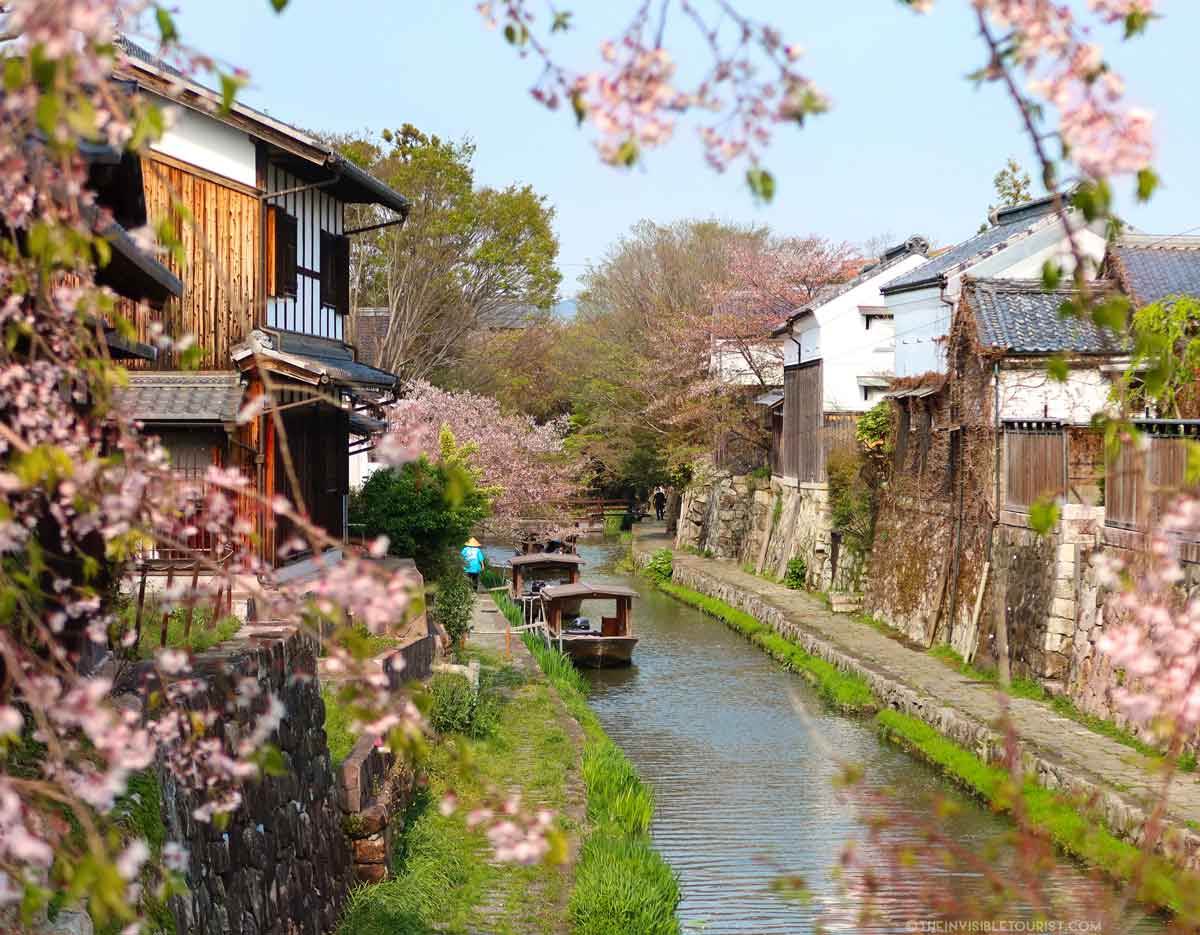
Known for its sightseeing boat rides along the picturesque canal and dating back to the 16th century, Omihachiman is one of my lesser-known Kyoto alternatives to enjoy a similar experience without the crowds.
Despite the headlines about overtourism, Kyoto remains my favourite city in the world. And for over a decade, I’ve been seeking out additional cities that embody the same old-world charm, sharing them on my Japan travel blog so you can “blend in” too.
As one of my favourite side trips from Kyoto in spring, I’ve put together my Omihachiman itinerary including things to do and how to get there to help you have an unforgettable day. Read on for more!
This post contains affiliate links, at no extra cost to you. I may earn a small commission if you click through and make a purchase.
NOTE: This Omihachiman day trip forms part of my larger guide to lesser-known alternatives to Kyoto without the crowds and my guide to day trips from Kyoto, so take a look once you’re done here.
Things to do in Omihachiman: One day itinerary
As the old town of Omihachiman 近江八幡 itself is quite compact, this day trip itinerary could be condensed into half a day and combined with Hikone Castle in the neighbouring area. I especially recommend this during spring for cherry blossoms without crowds.
But for any time of year, Omihachiman’s picturesque canals, ancient temples, shrines, hikes and lookout points can easily fill a leisurely day.
NOTE: To start, I recommend taking a taxi from Omihachiman Station as Hachimanbori (old town area) is 30 mins walk away. More details at this itinerary’s conclusion [down the page.
Here are the things to do in central Omihachiman.
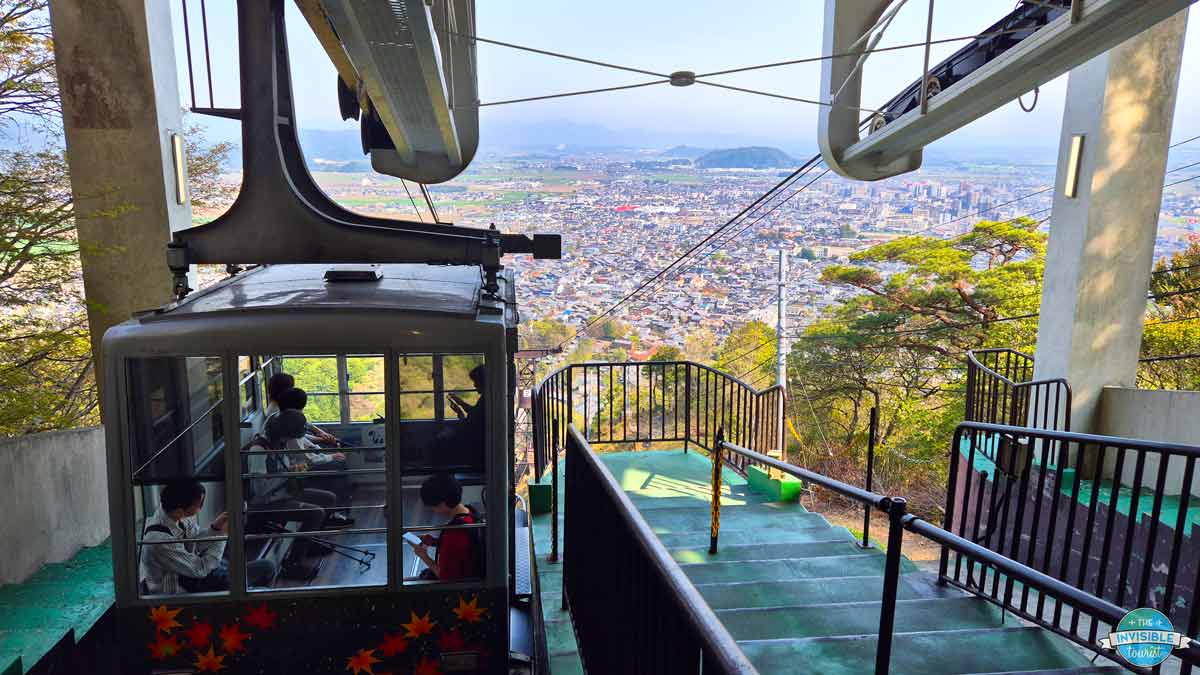
Hop on the Hachiman-yama Ropeway
First up, I recommend asking your taxi to drop you off at Hachimanyama Ropeway. Mornings are usually the clearest time, clouds tend to roll in during the afternoons. I learnt from experience taking these kinds of ropeways throughout Japan for over a decade!
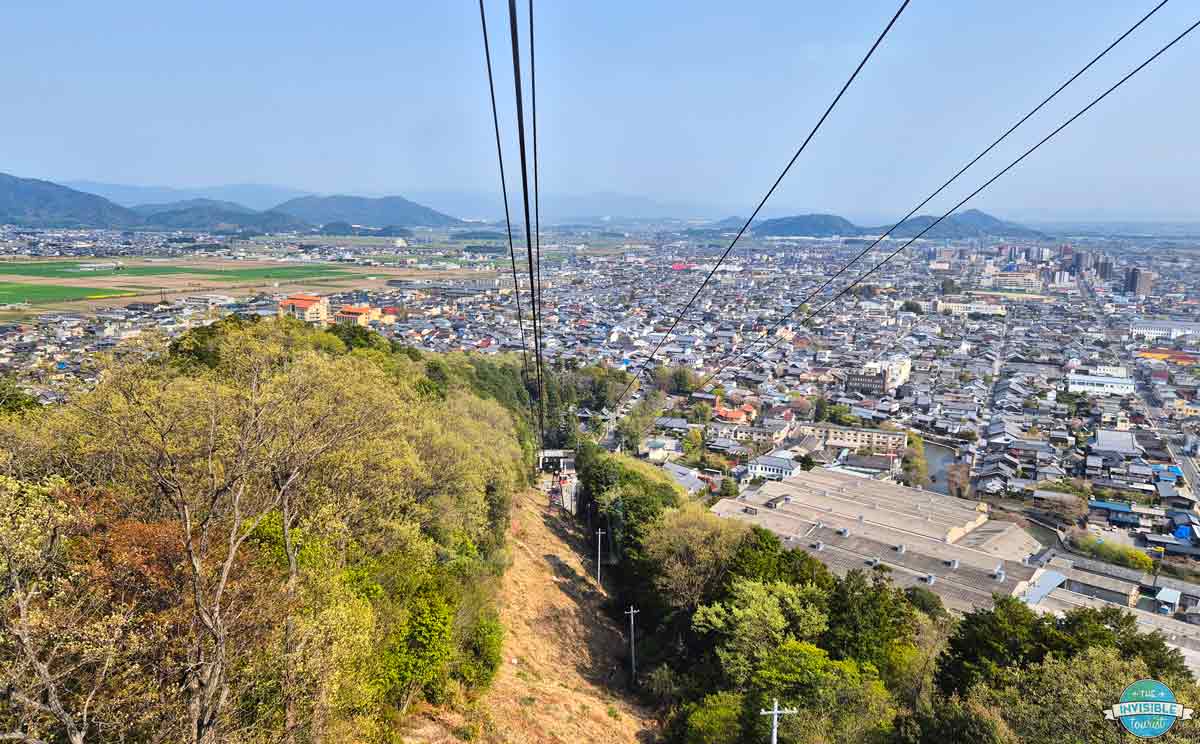
The 4 minute Omihachiman Ropeway ride takes us to spectacular lookouts over Lake Biwa and Lake Nishinoko.
- Hachimanyama Ropeway Cost: 950 yen roundtrip. It comes every 15mins. Follow the pathways to explore some amazing sights around the summit.
See the Hachimanyama Castle Ruins
Toyotomi Hideyoshi’s nephew built a castle here in the late 16th century. The town developed around it during the Edo Period (1603 – 1868), its strategic geographical location made its local merchants quite wealthy.
While the castle lies in ruins today, nature is reclaiming the stone walls that remain. Staring down at the incredibly steep mountainside, it made me wonder how anyone carried materials up here, let alone build an entire castle!

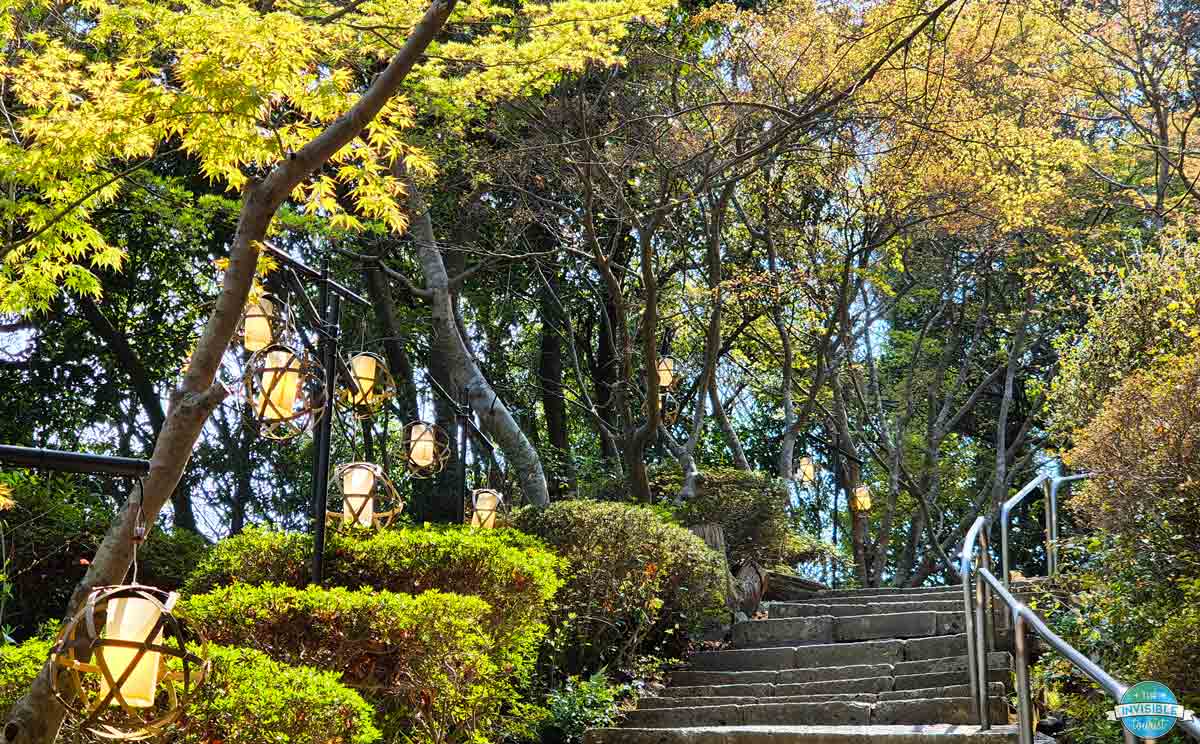
Take in the views from numerous lookout points
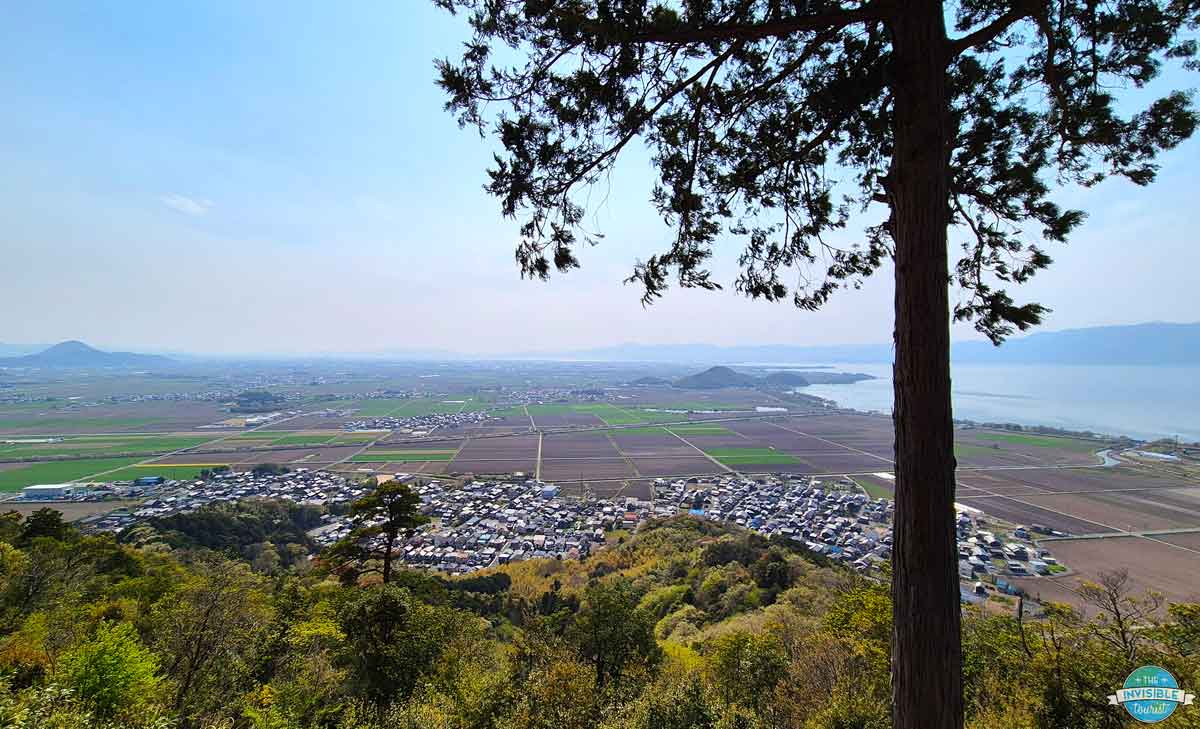
At the summit of Mt Hachiman (285.7 metres), there are marked pathways to lookout points and to undertake light hikes. I encountered a few day hikers at the following lookout areas, but they are not strenuous to reach.
Overlooking houses, fields and Lake Sainoko to the east is the Nishinomaru Ruins viewpoint, marked by the Heart Monument wire sculpture. Further afield lies Nishinoko & Suigo Riverside Observation Decks.
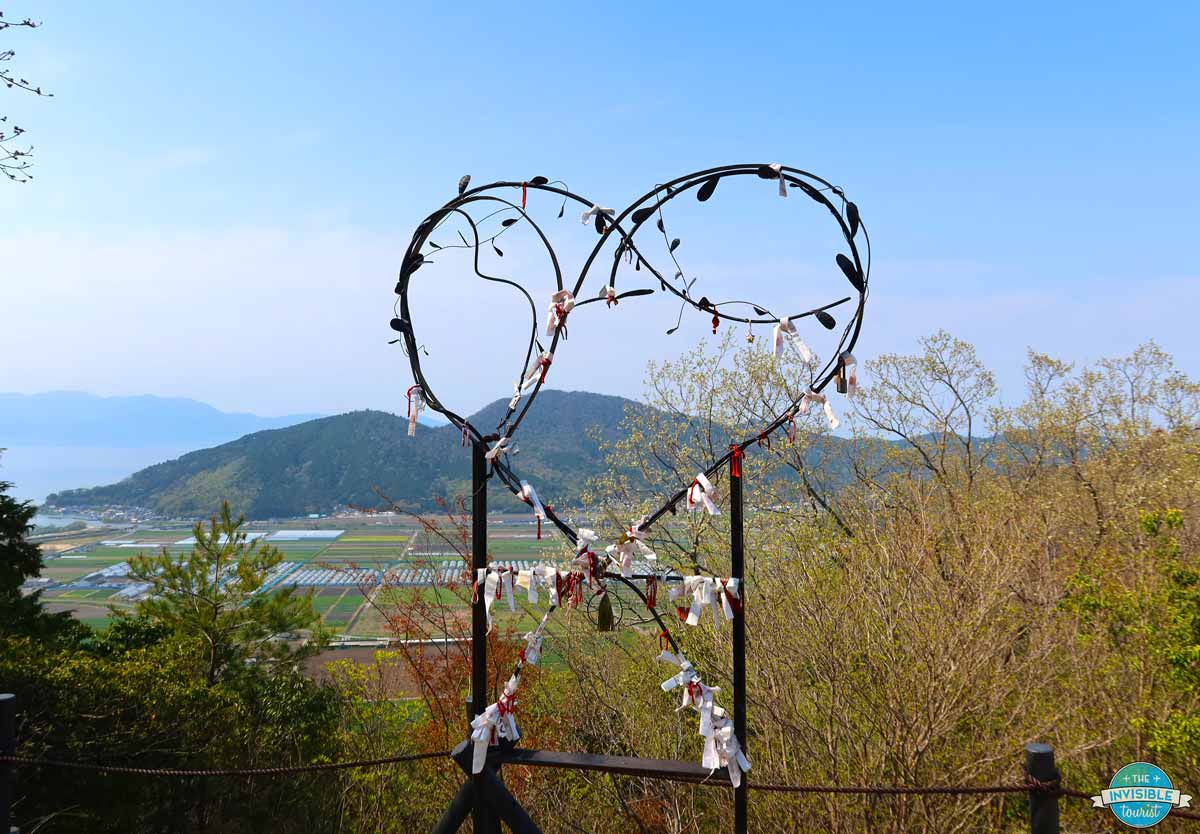
Visit Murakumogosho Zuiryu-ji Temple
Moved from Kyoto in 1961, this Buddhist temple honours Hideyoshi’s nephew, Toyotomi Hidetsugu. In his short 28 years, he ordered the building of Hachimanyama Castle and is credited for the town prospering around it.
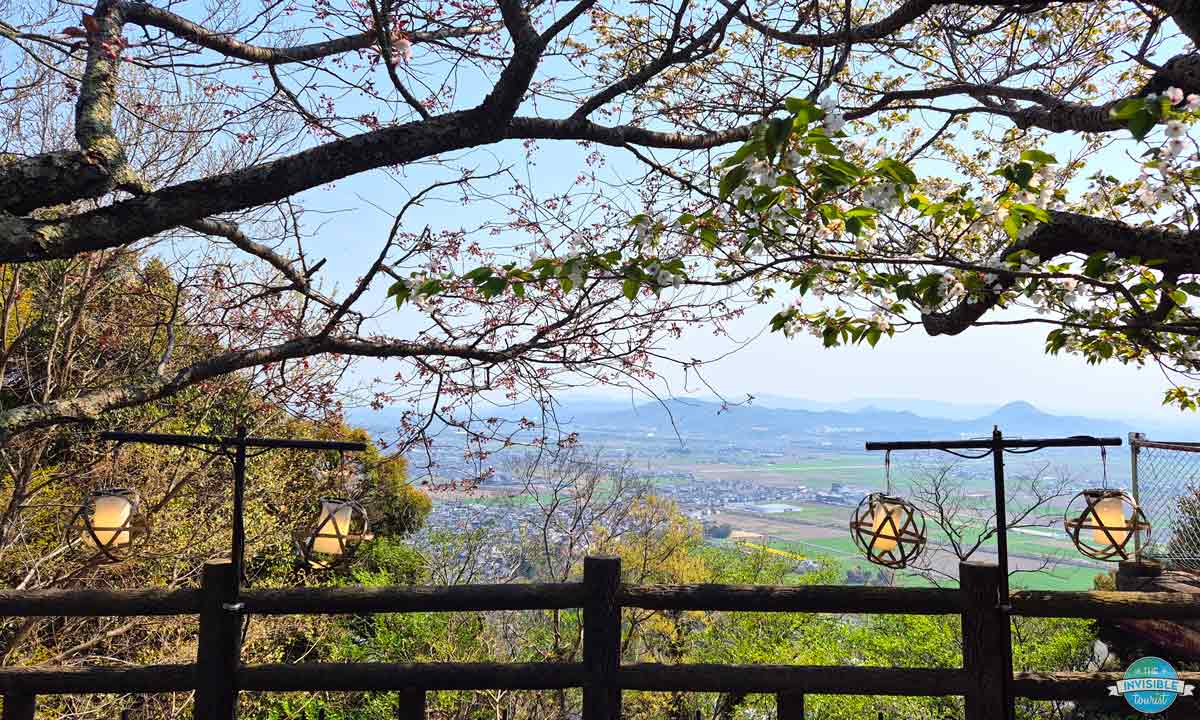
Enjoy a lovely view over Lake Biwa, Japan’s largest lake. The outlook offers a different perspective from the other vantage points, this time framed by cherry blossoms in spring or red autumn leaves of Japanese maples.
TIP: In June this temple holds its annual Hachimanyama Jizo festival.
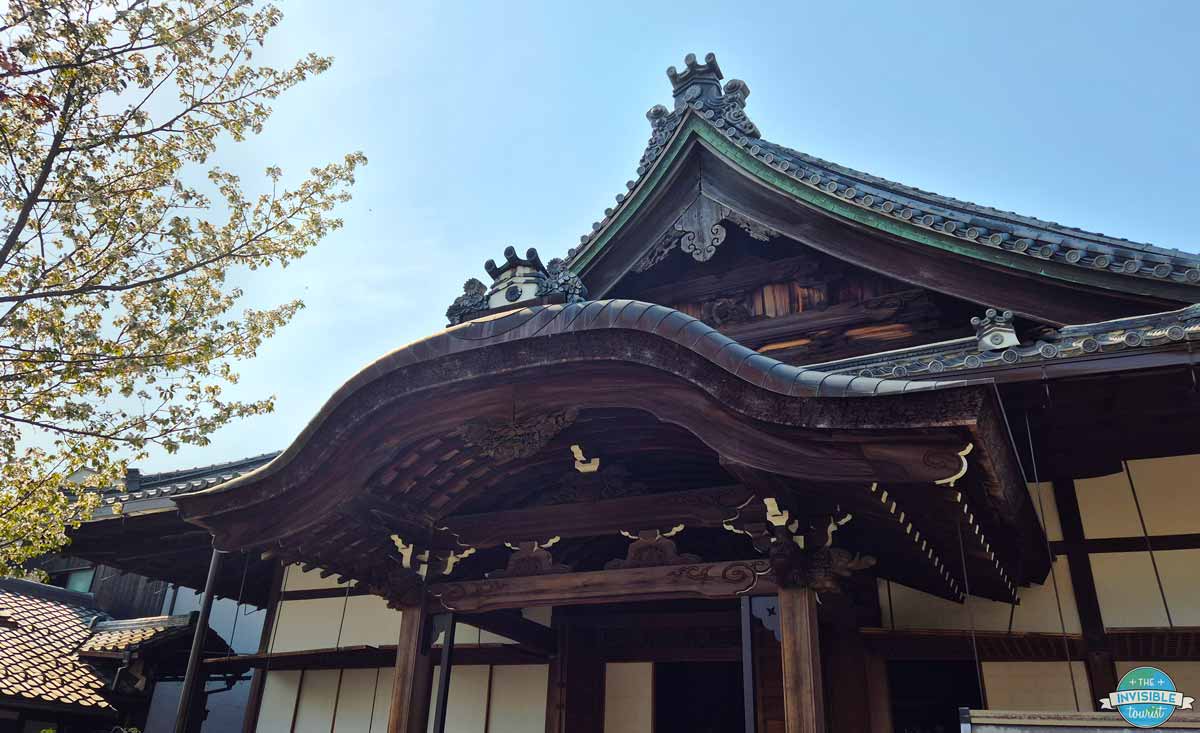
Buy an omamori at Himure Hachimangu Shrine
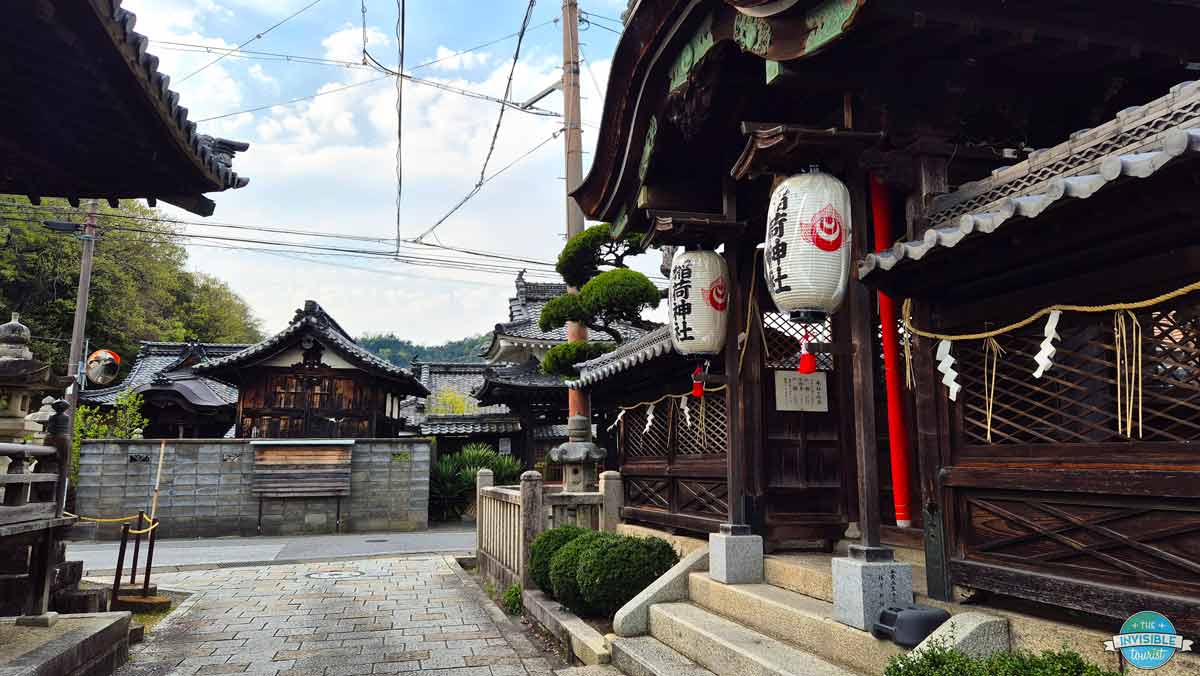
With a history dating back almost 1,900 years, Himure Hachimangu Shrine was my favourite shrine in Omihachiman and one of the region’s most important.
During the Edo Period, Omi merchants travelled as far as Hokkaido and even Annan (today’s Vietnam) for their business trips, and locals worshipped this shrine as their guardian deity.
It was even visited by Tokugawa Ieyasu after the Battle of Sekigahara in 1600 that unified Japan. I just loved the hanging golden lanterns, they are not dissimilar to the ones found at Kasuga Taisha in Nara.
Sitting at the foot of Mount Hachiman, its old wooden buildings are adorned with many ornate details amongst the tranquil atmosphere. I picked up a lovely omamori to remember my visit, one of y favourite little Japanese souvenirs.
TIP: The shrine’s Sagicho Matsuri bonfire festival in March and Hachiman Matsuri festival in April are designated Intangible Folk Culture Properties of Japan.
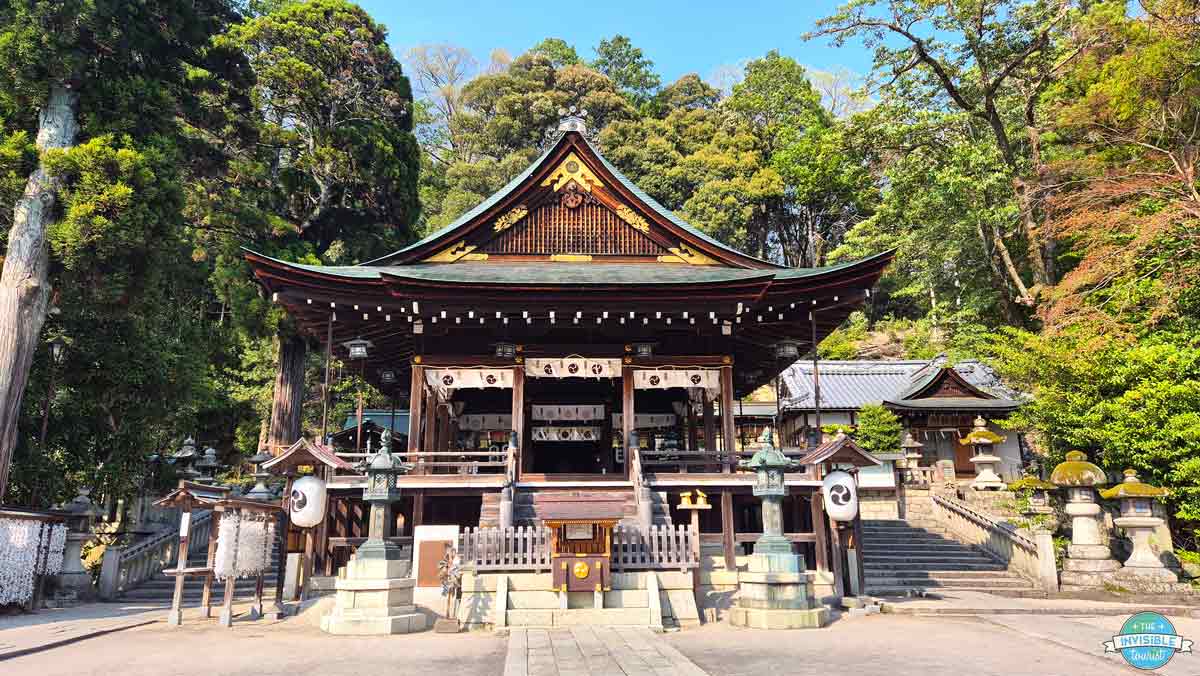
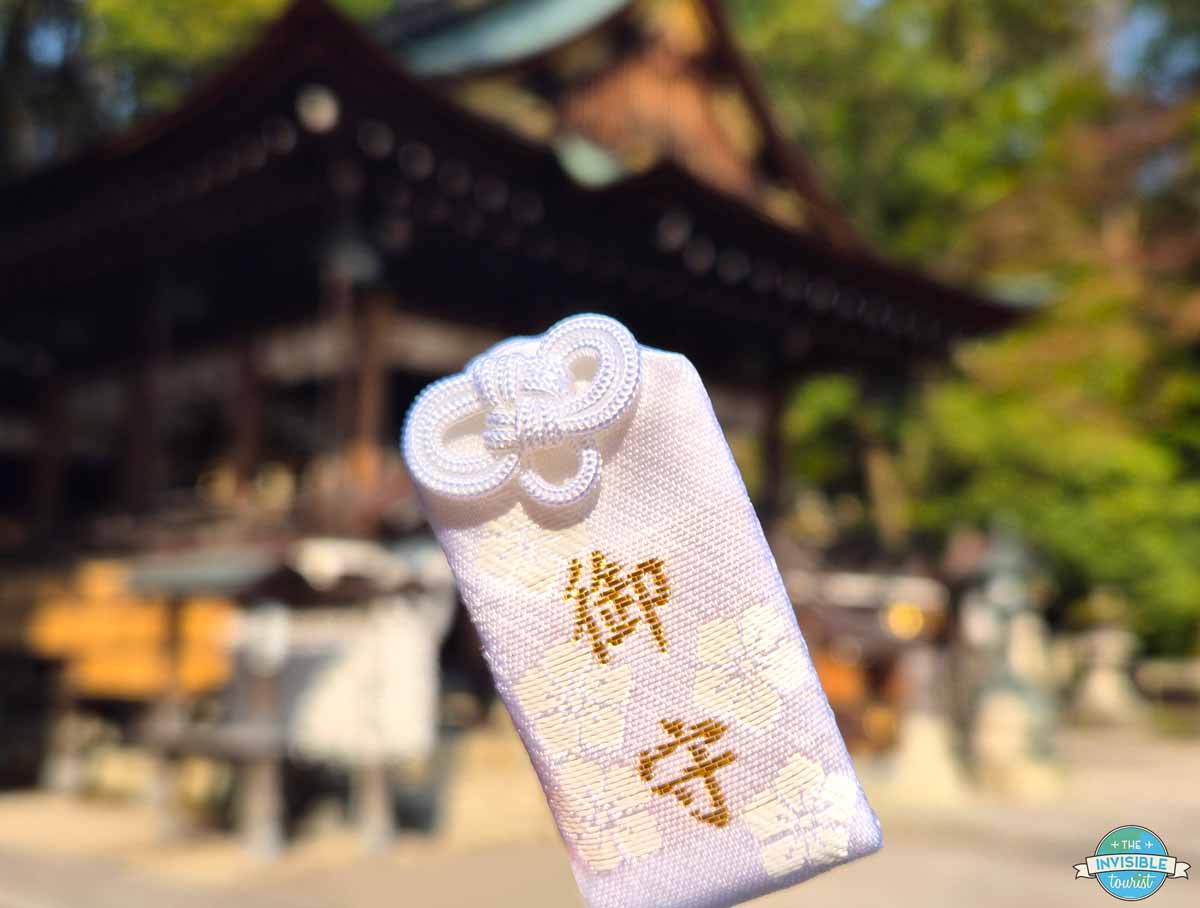

In the narrow winding streets behind Himura Hachimangu are some smaller temples and shrines to make wishes.
Enjoy a boat cruise along Hachiman-bori moat
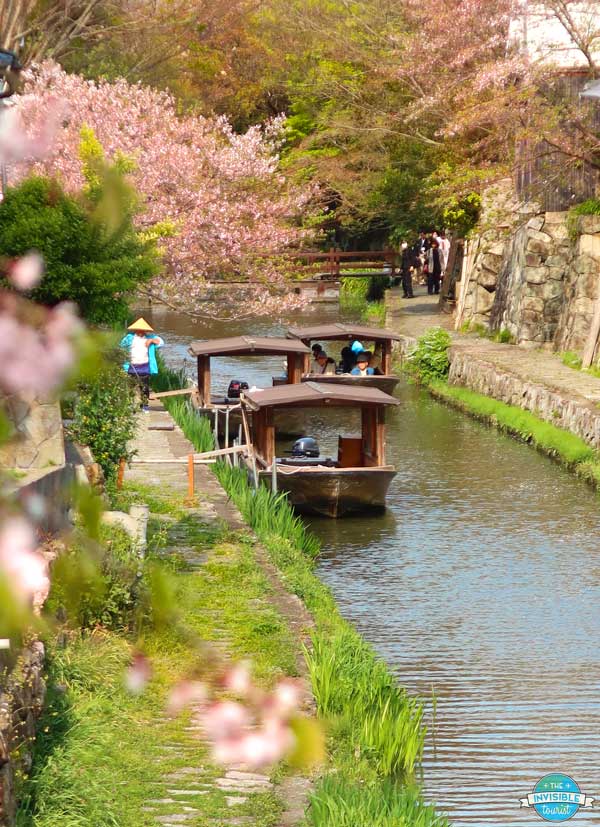
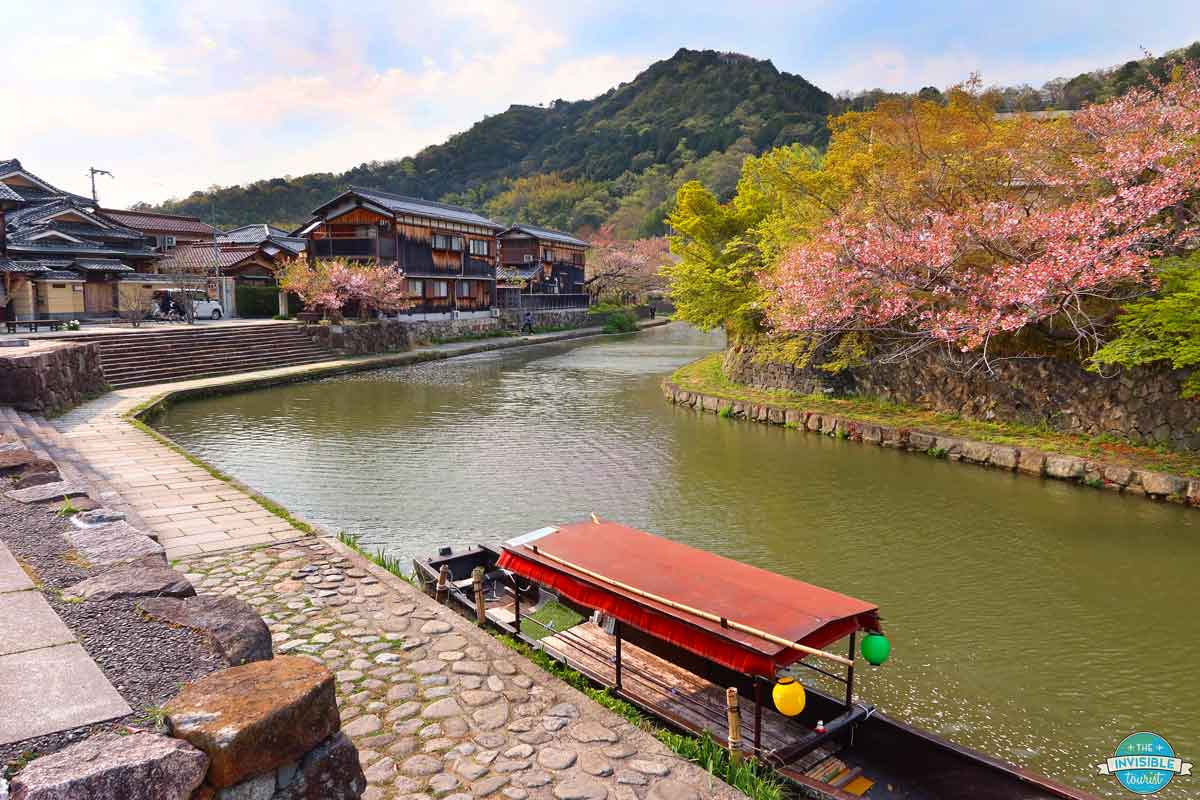
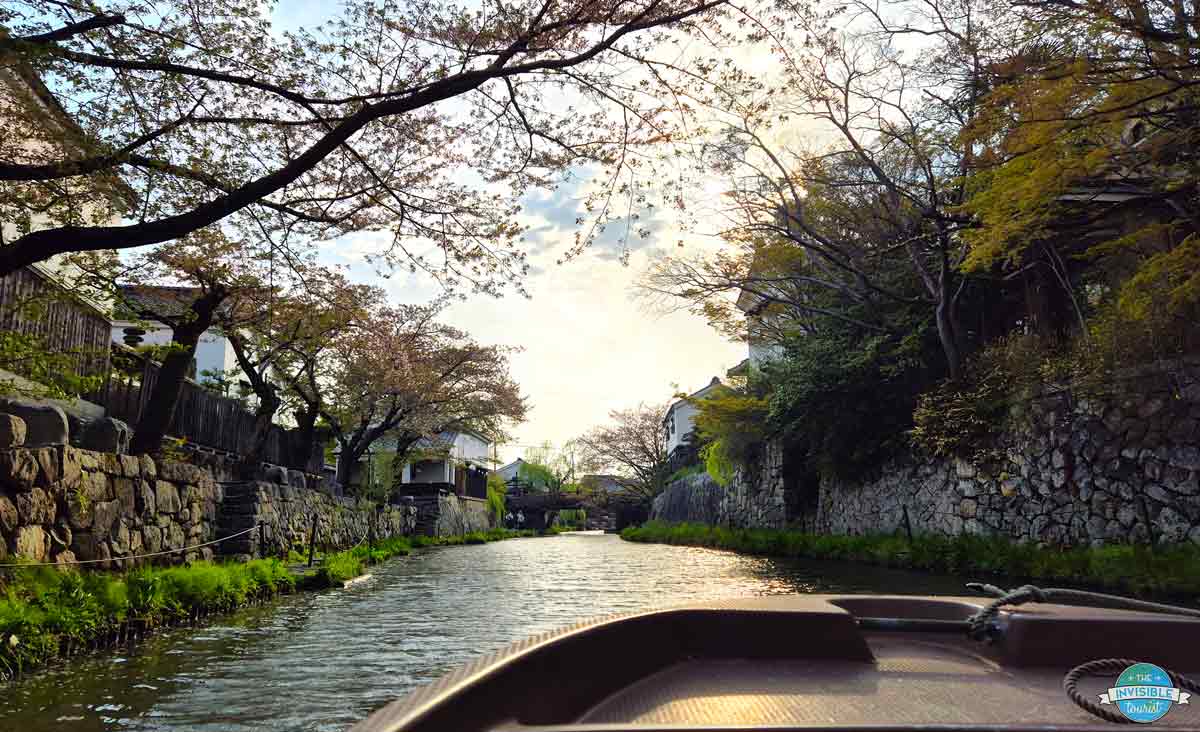
And now for one of the best parts of the day! These Omihachiman boat cruises are walk-in only, so I had to put my name on a waiting list. The boatmen then gave me a boarding time, in the meantime I could explore a little more and come back when it was my turn.
My boatman only spoke Japanese and pointed out a few landmarks along the way. Along with Yanagawa in Kyushu and Kurashiki in Okayama, these boat rides make Omihachiman a little “Venice of Japan.”
These traditional, small sightseeing boats are named jikkokubune in Japanese. Floating beneath the bridges and remaining cherry blossoms in the almost silent canal became such a special memory. I even recommend this experience in my Japan honeymoon itinerary!
- Omihachiman boat cruise cost: Towards the tail end of the blossoms it cost me 1500 yen for 30 mins. The cruises leave every 30 mins.
- TIP: Shoes off as you board, as the floor is tatami. There are cushions to sit on for comfort.
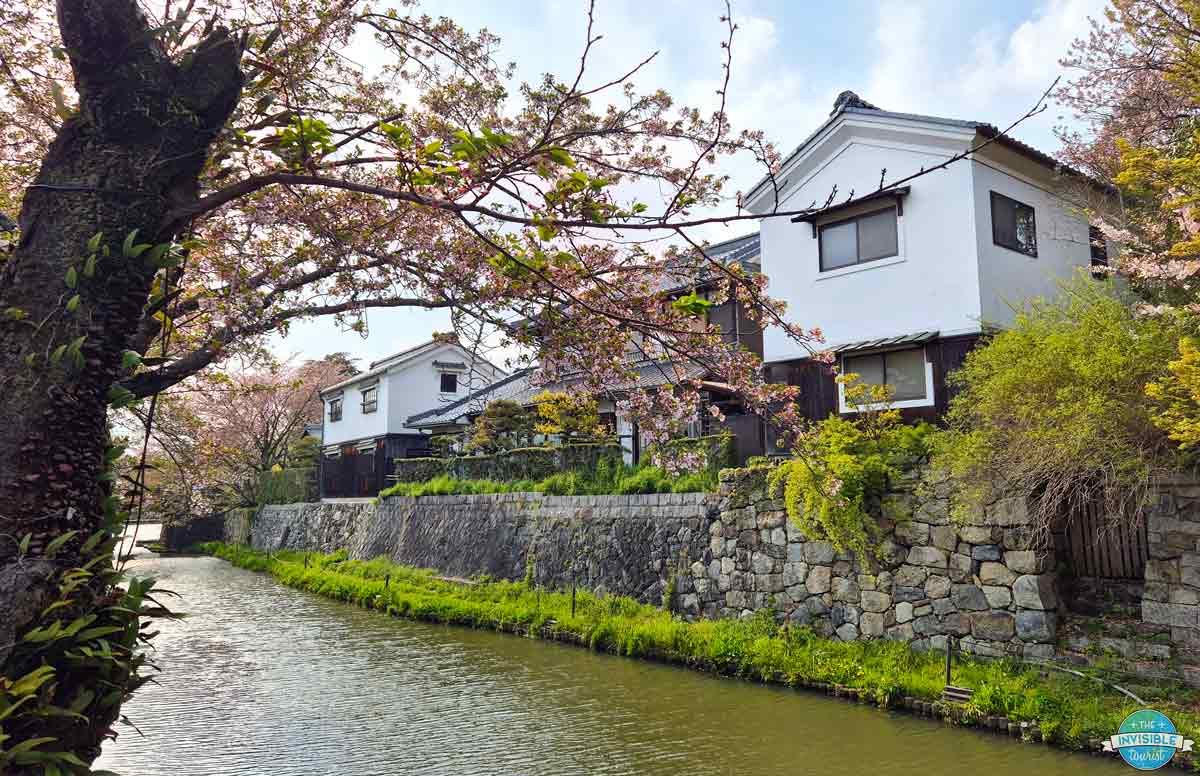
Stroll along the canal promenade
Once used as a transportation route from Omihachiman to Kyoto and beyond, this preserved area is so delightful it felt like a dream to me.
Old machiya (traditional Japanese buildings) line the canal on both sides, creating an aura that feels like Kyoto but on a much smaller scale.
While there is a main promenade pathway on either side of the canal, there are also little stepping stones amongst reeds that pass beneath the bridges for a nice perspective.
It’s difficult not to be in a good mood here, so wave at some of the boats cruising past!
Step back in time along Shinmachi Street
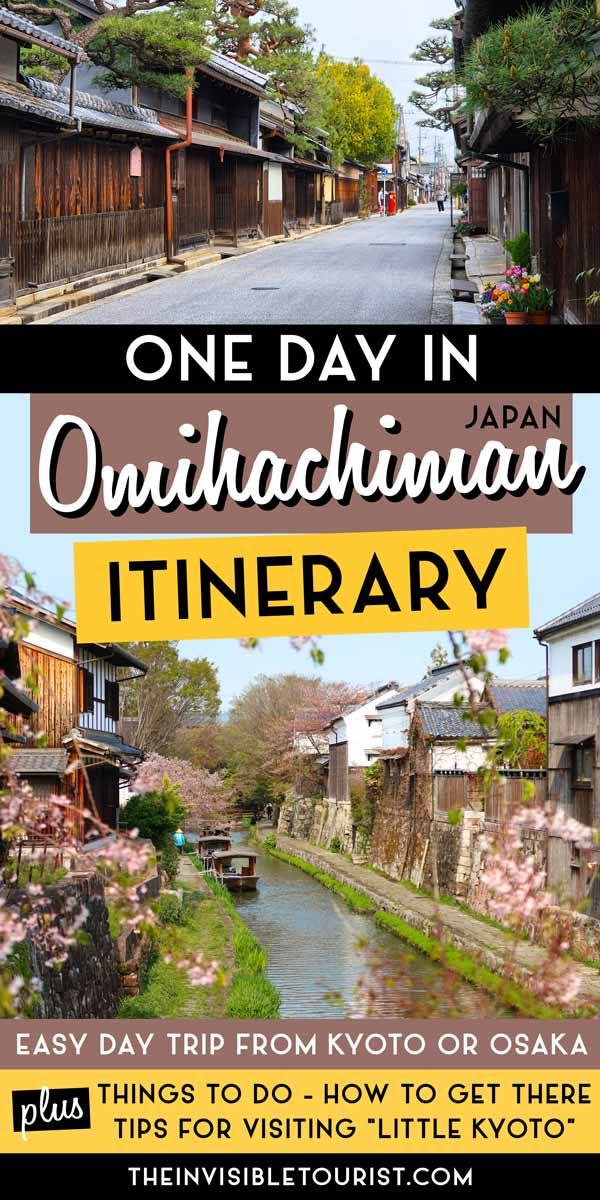
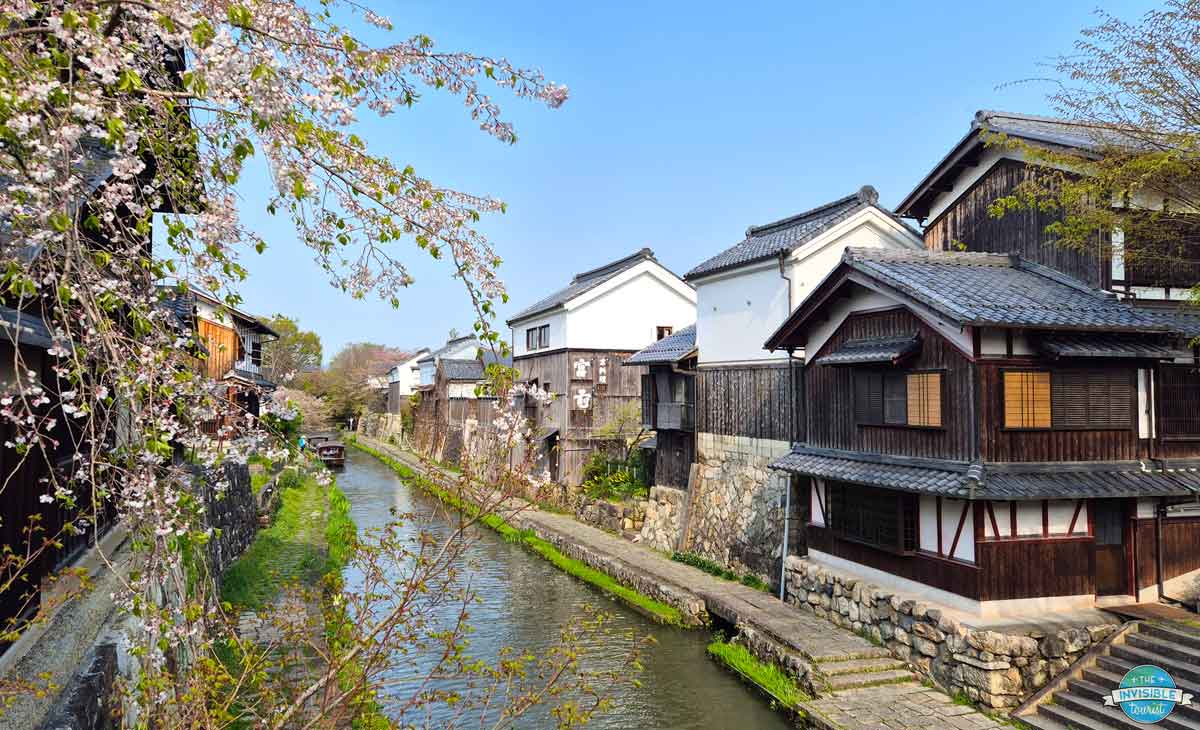
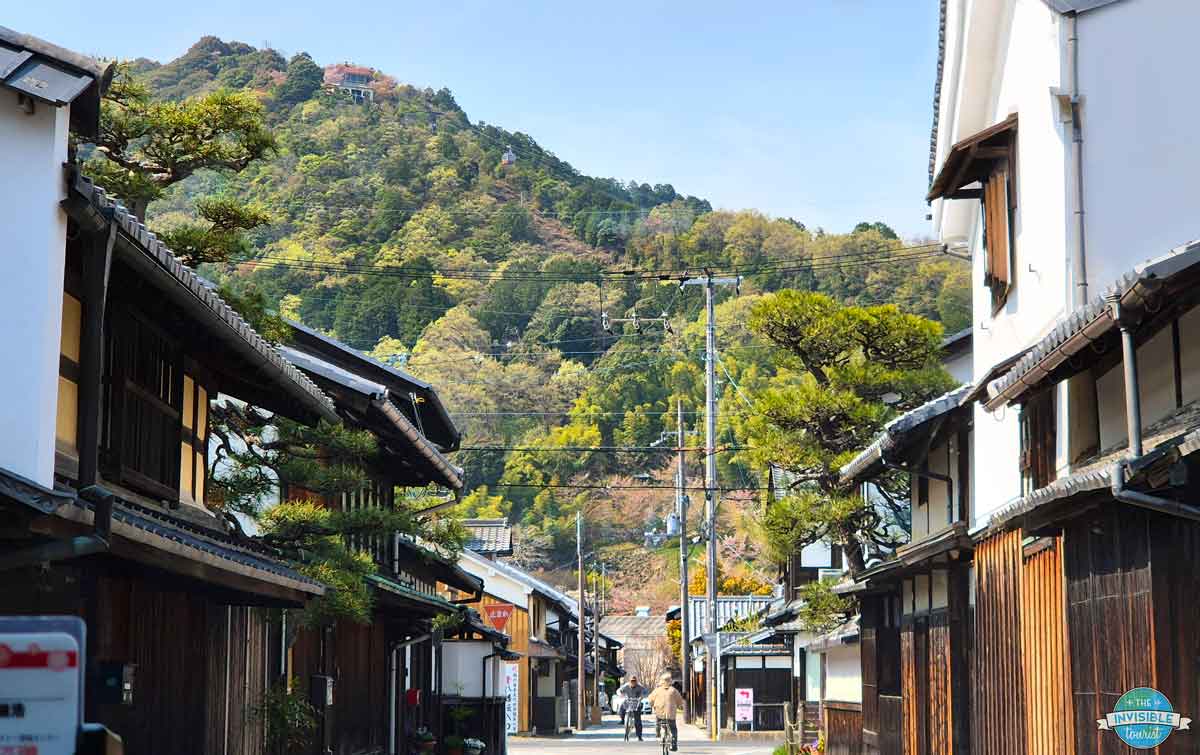
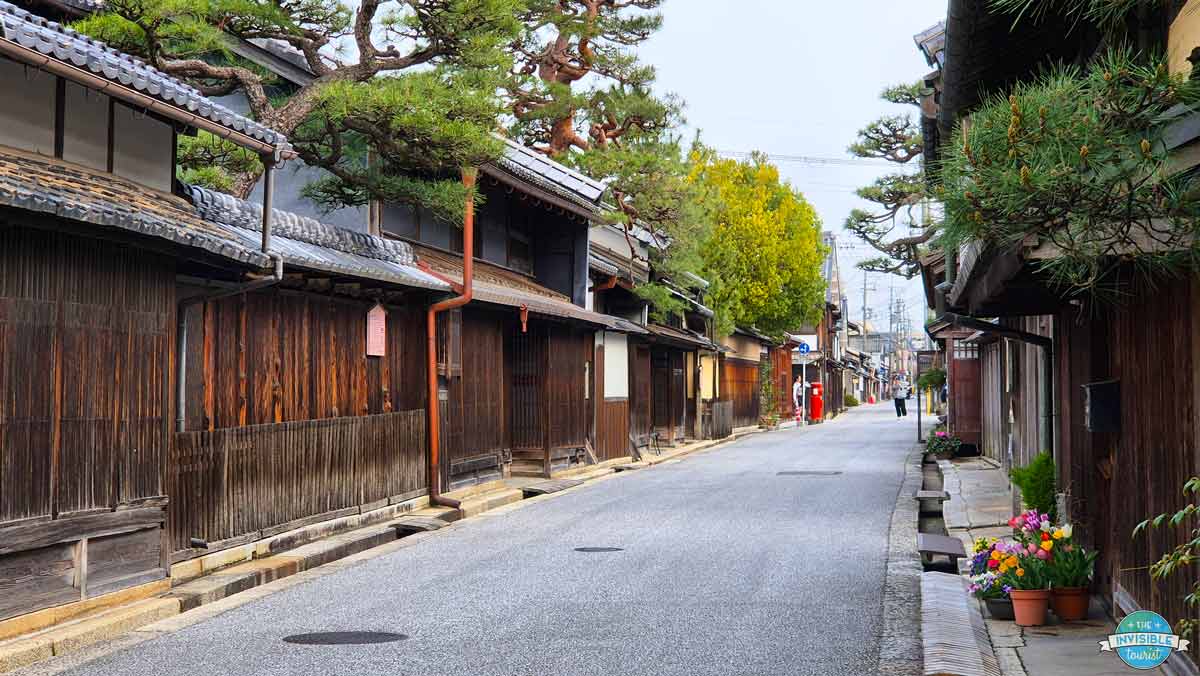
Omihachiman’s main merchant street, Shinmachi, is punctuated by pine trees growing through narrow gaps between the old machiya (traditional Japanese buildings).
Almost unchanged since its prime during the Edo Period, Shinmachi gained Important Traditional Building Preservation District status. Today these machiya are coffee shops, museums, residences and specialty stores, more info about the establishments along Shinmachi here.
This nostalgic street reminded me of Takayama’s Shinmachi Suji area, except here the Mount Hachiman backdrop features running cable cars to bring our minds back to modern times.
Cross the Haku’un-bashi bridge
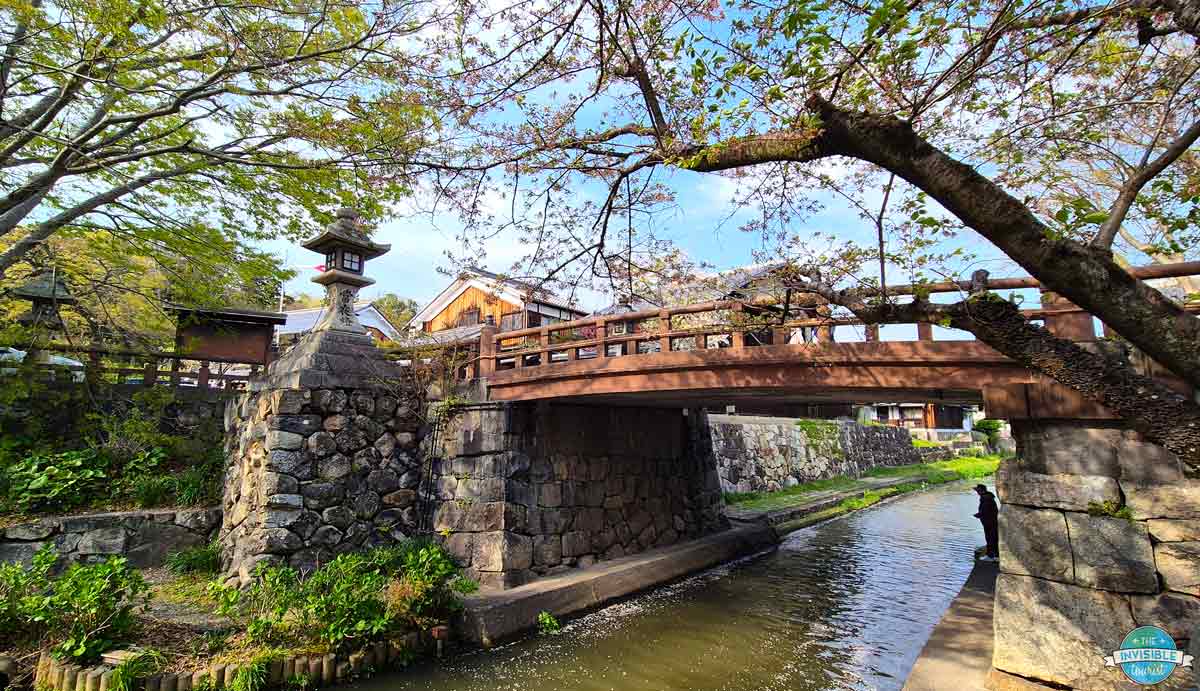
The wooden bridge with some of the most breathtaking views in Omihachiman, Haku’un-bashi is a must-see stop. Watch as the traditional boats cruise beneath it, don’t forget your camera!
Cherry blossoms frame the river in spring, and a giant wooden torii gate at one end marks the entrance to nearby Himure Hachimangu Shrine.
Visit the Kawara Museum
Have you ever thought much about the silver-like Japanese roof tiles decorating old traditional buildings and temples? The Kawara Museum is dedicated to them!
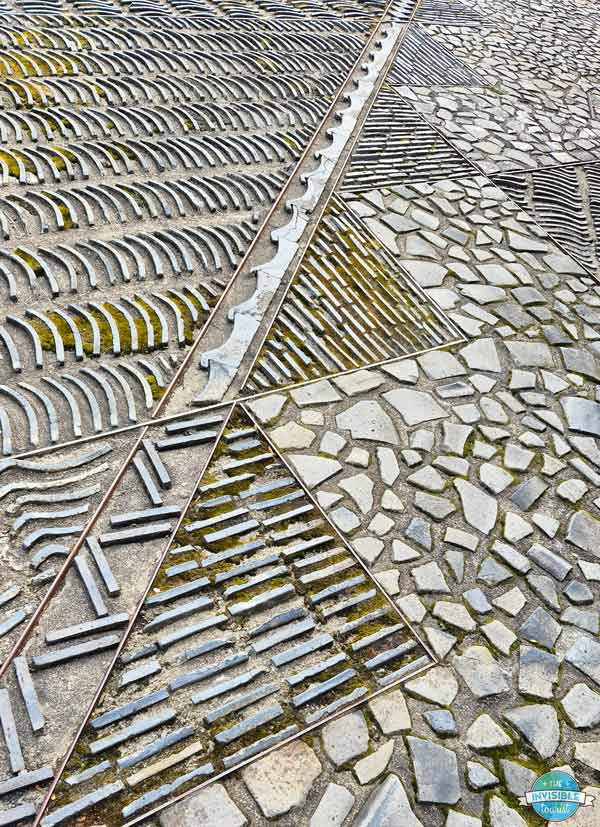
Learn about their history, how they’re created and how they are believed to ward off evil spirits. I loved the assortment of recycled roof tiles paving the museum’s pathway.
- Kawara museum is open everyday except Mondays, 09:00 – 17:00.
Try omi beef, the local specialty
Did you know Japan has three top wagyu brands? You’ve likely heard of Kobe beef, but did you know Omihachian is home to another, alongside Matsusaka beef?
Omi beef’s origins date back 400 years, making it the oldest in Japan. The delicate marbling of wagyu is just-melt-in-your-mouth.
While I ran out of time to try during my visit, I am a HUGE wagyu fan so I highly recommend you add it to your Omihachiman day trip itinerary if you are too!
Big thanks to Nobuharu san for letting me know about omi beef.
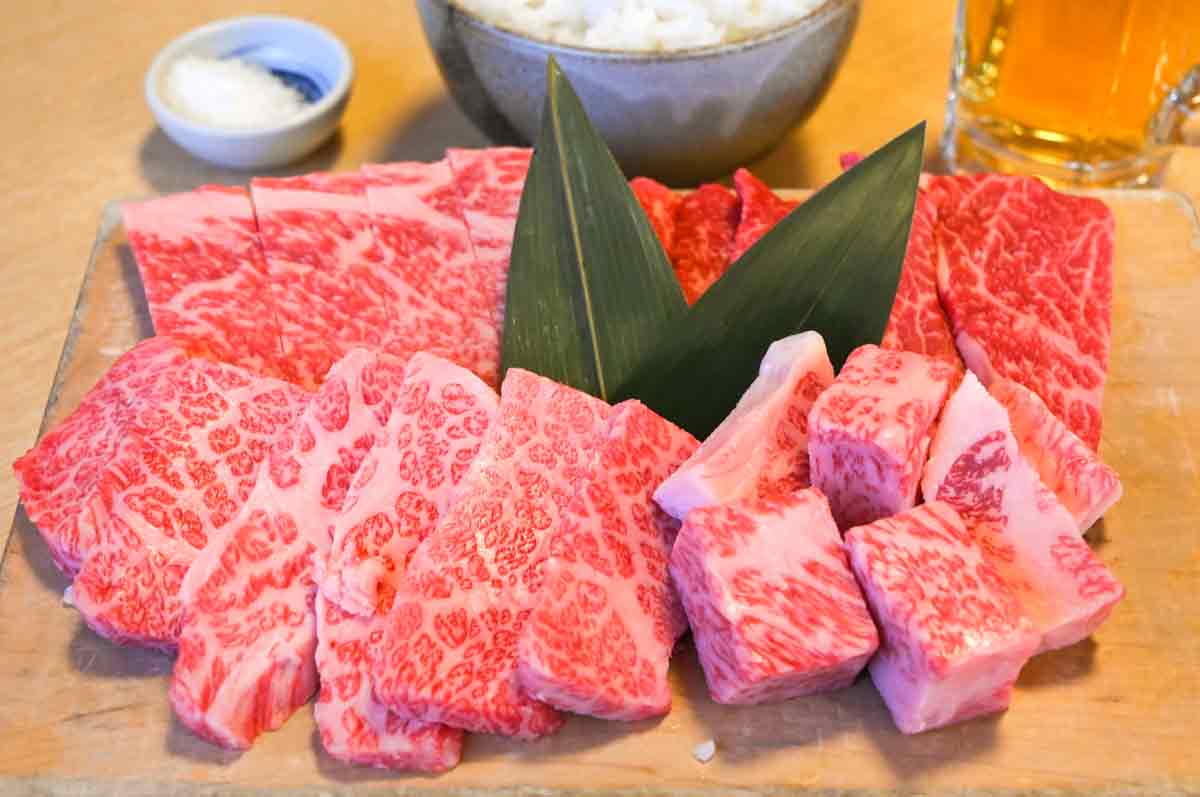
TIP: The restaurant Marutake Oumi Nishikawa まるたけ近江西川 specialises in Omi beef. Enjoy an early lunch or go for dinner to avoid any queues.
TIP: My taxi driver told me that Omihachiman is known for manufacturing Japan’s popular menthol lip balm, Omi Brotherhood Menturm! The brand was established in 1920.
TIP: If you have some extra time during your Omihachian day trip, venture to La Collina Omihachiman. At 15 mins walk away from the Omihachimanbori moat area, this confectionery shop and café features a grassy rooftop. Enjoy baumkuchen cake overlooking green fields.
How to get to Omihachiman from Kyoto or Osaka
Osaka or Kyoto to Omihachiman city
The easiest way from Kyoto or Osaka to Omihachiman is by train, both on the JR Tokaido-Sanyo Line Special Rapid services:
- Kyoto Station to Omihachiman Station can take 35 mins.
- Osaka Station to Omihachiman Station can take 65 mins.
From Omihachiman Station to the old town
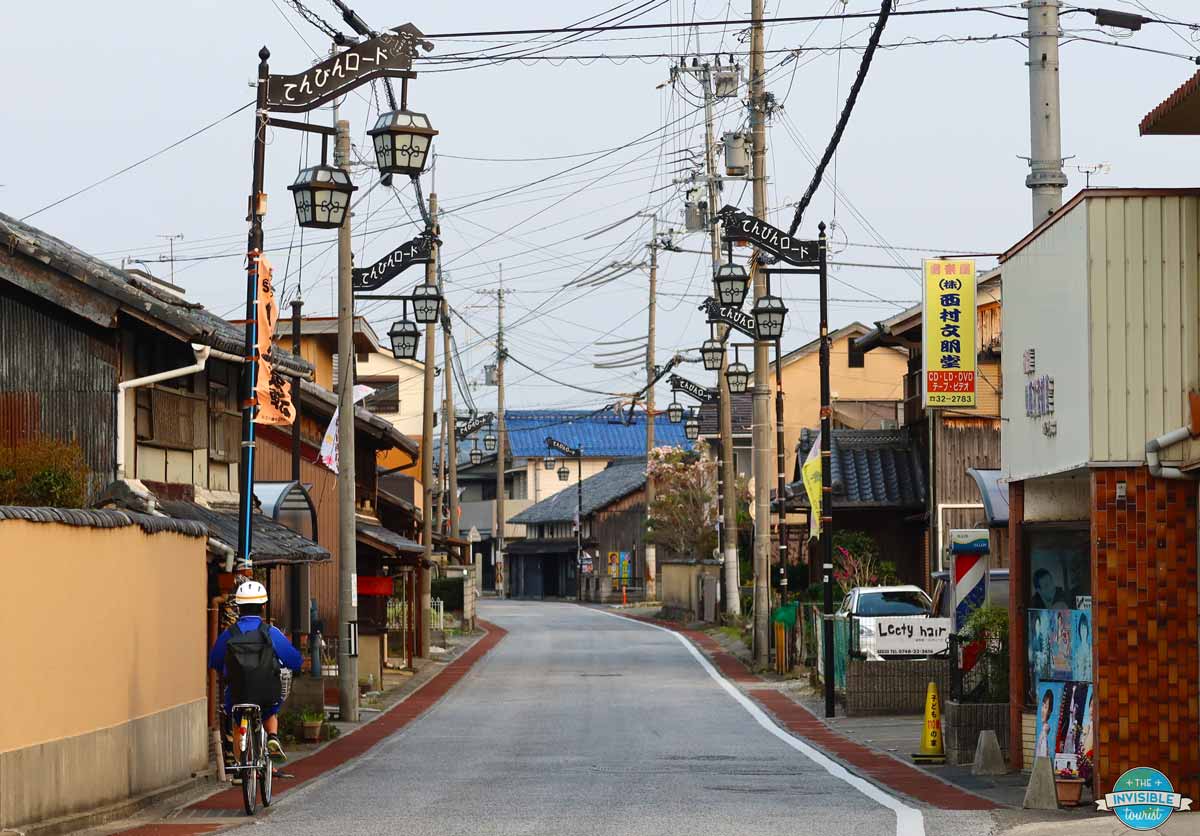
- Taxi: As mentioned earlier, Hachimanbori is around 30 mins walk from Omihachiman Station, or just 7 mins in a taxi. Taxis are actively waiting at the station. My 7 mins taxi ride cost 1400 yen in cash.
- Bus: There are 2 – 4 buses per hour from Bus Stop 6 to Hachimanbori (Osugicho).
- Bicycle rental: Use the station’s North Exit and head downstairs to the Omihachiman Tourism Information Centre. Beside it is the Ekirinkun bicycle rental shop, then cycle 10 mins to the Hachimanbori area.
- TIP: Although my taxi driver could not speak much English, he proudly pointed out a few landmarks along the way, as well as driving the scenic route down Shinmachi street.
- NOTE: The only issue I encountered with using the taxi was I could not find where to take one back from the old town to the station in the late afternoon. I was prepared to walk it, so that’s what I ended up doing.
Concluding this Omihachiman day trip
And this wraps up my Omihachiman day tour itinerary! I would say, the best time to visit Omihachiman depends on what seasonal beauty you wish to enjoy: Cherry blossoms in spring, lush greenery in summer, red foliage in autumn or snow in winter.
This charming town is sure to leave a mark on the heart of anyone who adores preserved towns, as I do! Now you know what to include on your Omi Hachiman day trip from Kyoto or Osaka to have a truly unforgettable experience without the crowds. It’s definitely one of my favourite lesser-known day trip destinations in the Kansai Region.
If you enjoyed my itinerary for Omihachiman Japan, take a look at these related articles:
- 4 days in Kyoto itinerary: Popular sights & hidden gems
- Kyoto hidden gems you won’t want to miss
- Gujo Hachiman day trip itinerary: Japan’s hidden water city
- Onomichi day trip itinerary: Overlooked port town
- Underrated things to do in Uji: Ancient home of matcha
- Kawagoe day trip itinerary from Tokyo
- Unforgettable things to do in Toyama: Overlooked gateway to the Alps
- Hida no Sato Folk Village: Takayama’s delightful gem
- Best Japan travel books for all kinds of travellers
- And more on my comprehensive Japan travel blog!
For more ideas to visiting lesser-known locations, my guide to exploring Japan off the beaten track is packed with ideas to inspire your next trip.
Feeling social? Explore beyond the main touristy sights with my dedicated Japan Off the Beaten Path Facebook Group or come and join me on Facebook, YouTube, Pinterest, TikTok and Instagram for more travel inspiration.
Until next time,

This guide to an Omihachiman day trip itinerary contains some affiliate links. I may earn a small commission if you decide to make a purchase and if you do, thanks for your support! This helps with the costs of running my blog so I can keep my content free for you. As always, I only recommend a product or service that I genuinely love and use myself!
Thanks so much for this detailed itinerary. I am going to try it out! I appreciate all the effort you put into this… exactly what I was looking for. I mostly travel alone, so this post feels just like a personal tour guide.
Hi Anita, your kind words are the ultimate compliment for me! I’m so delighted to hear that 😃
I hope you have a wonderful day in Omihachiman with my itinerary, enjoy!