
Overtourism: Did Japan Become a Victim of its Own Success?
“Overtourism in Japan has led the locals to coin a new phrase: kankō kōgai, or tourism pollution.” ~ Alyse.
What caused overtourism in Japan? How has it affected the local way of life?
Let’s talk about an elephant in the room. In recent years I’ve been questioning if people were beginning to travel backwards… By backwards I mean, would you visit a place to “say you’ve been” without actually knowing what’s there? Are you happy to be blissfully unaware of a culture different to your own? Unfamiliar with the awe-inspiring things to see and do at your destination?
Well, many travellers to Japan seemed to be planning their travels that way up until early 2020. After all, Japan was THE destination of the moment! You just needed to take a look at the images floating around on social media platforms to see this and the hype it created, urging more people to visit.
I first published this article in June 2018 before other major publications caught on to this worrying trend, and have updated it since. The issues I discuss below are not exclusive to the Land of the Rising Sun, but I wanted to highlight some major changes to tourism in Japan I’ve seen over the past decade.
After my multiple visits to Japan over the years, my observations have made it clear that we need more visitors to understand the traits of responsible tourism and how to avoid looking like a tourist to help curb some problems.
If you’re interested in learning how tourism pollution affected Japan, what happened when tourists stopped coming when Japan’s borders closed for 2.5 years, and how you can help avoid mistakes of the past when visiting in the future, read on for more!
This post contains affiliate links, at no extra cost to you. I may earn a small commission if you click through and make a purchase.

Why visit Japan?
In 2018, I noticed a disturbing trend sweeping online travel groups and forums: People were booking flights to Japan unaware of exactly WHY they want to go. What is Japan famous for, anyway?
Questions popping up in these groups frequently included, “Booked tickets! What things can I do there?” and “Going next week, what cities do I visit?” and this had me quite concerned. It seemed a bit backwards, considering the things to do and places to stay would normally be the huge drawcards to a destination.
I’m aware this is going to sound ironic coming from someone who shares itineraries to help others travel, but I do worry about overtourism in Japan.
The issue here is if these spontaneous ticket-bookers weren’t aware of simplistic things like attractions to see at their destination but are just going to say “I’ve been there!”, how can they be expected to know (or care) about more complex behaviours like customs and etiquette in a country that hold these things so dear?
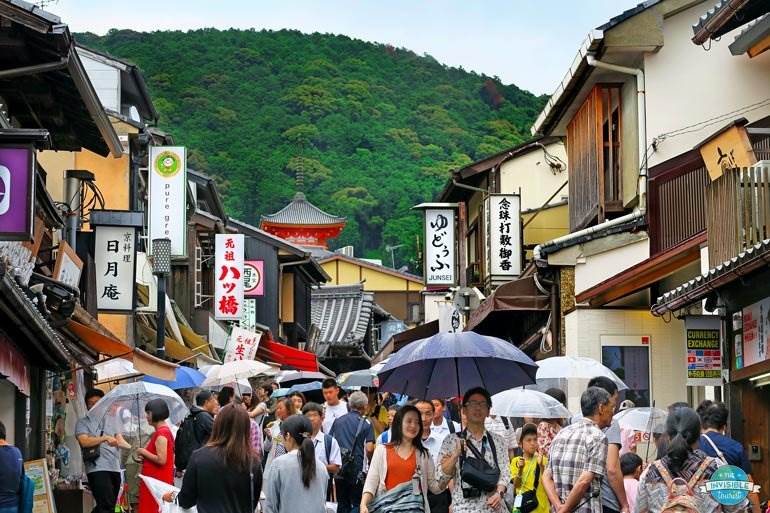
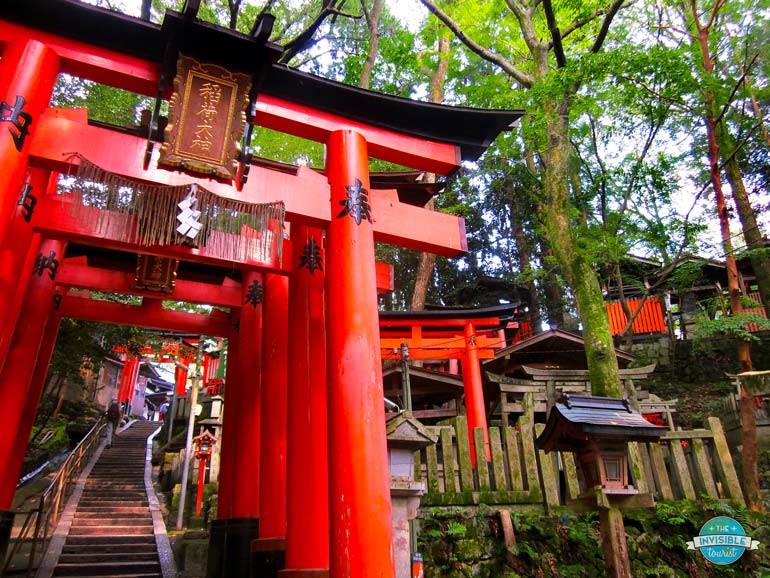
Concerns about overtourism in Japan
Overtourism in Japan has led the locals to coin a new phrase: kankō kōgai, or tourism pollution. This revelation spills over into me asking more questions:
Will Tokyo be the next Rome? Streets littered with rubbish and noisy tourists drowning out the local culture? A false backdrop to the famous buildings and structures that proudly adorn the streets and alleyways as a marker to their ancestors’ ingenuity, power and successes?
Will Kyoto be the next Taj Mahal? The peace and tranquility of this 17th century wonder stomped out by the busy hustle and bustle of large groups of people, the serenity and ambiance punctured by selfie-sticks?
It is no secret that Japan is a fiercely mono-ethnic nation, with incredibly low levels of immigration and external cultural influence. In response to an ageing population they are planning to use robots to fulfil the gaps in the labour market, not by bringing in outsiders.
Whether you agree or disagree with this general sentiment is not relevant, we can all agree on the fact that Japan has an extremely unique and rich cultural heritage and they are in no hurry to water this down, or blend it in any way.
It is also obvious that tourists are fascinated by this culture (despite not having much of an understanding about it) and flocked to the island nation in their millions. In 2014, Japan received over 13 million inbound visitors. That number skyrocketed to almost 32 million just five years later.
By 2020, the Japanese government hoped to welcome 40 million visitors for the Tokyo Olympics – that’s over 25% more tourists than the 28 million that visited the island nation in 2017 alone.
From what I can see Japan doesn’t need more tourists, it needs more mindful tourists.

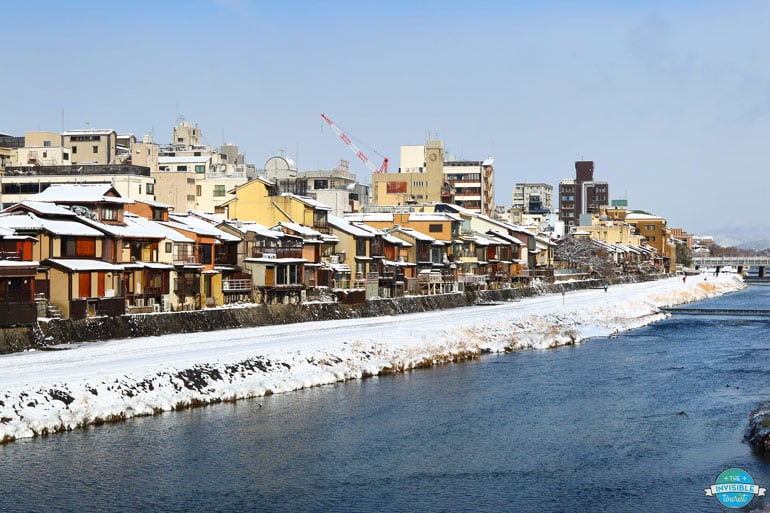

READ MORE:
3 Weeks in Japan Itinerary: Sights & Culture Off the Beaten Track
Why You Shouldn’t Use Airbnb: 8 Troubling Issues You Didn’t Know
Ethical Alternatives to Airbnb for Responsible Tourists
Examples of tourism pollution in Japan
With the influx of visitors to Japan since 2015, it became clear that a majority of tourists had no idea or respect for the local customs. It seemed many issues stemmed from tourists being disrespectful in order to gain validation on social media, which contributed to serious issues such as tourism pollution.
For instance, let’s look at some negative impacts of tourism in Japan.
Overtourism in Kyoto
- Maiko (geishas in training) were harassed by tourists for selfies whilst they were on their way to work, leaving them in tears.
- The wonderful Bamboo Groves in Arashiyama, a UNESCO World Heritage site, were defaced by tourists etching their names into the bamboo, much like leaving their mark akin to love locks in Paris.
- Restaurant owners were left disappointed and annoyed with social media hype. Inconsiderate tourists walked into restaurants just to take photos to post online, then left without ordering anything.
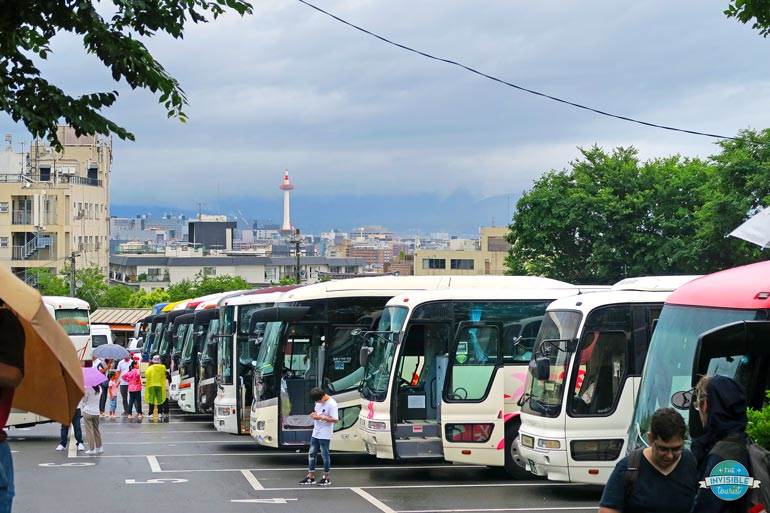
- Busloads of tourists visited Kyoto only for a day trip. During my summer trip to Japan in 2019, I noticed these twelve coaches parked in the image below near the small paved street of Sannenzaka. There is enough parking here for 42 coaches, so if we say 42 coaches times 50 people in each = 2,100 day trippers crammed into this relatively compact area of Kyoto at any given time (and that’s not including the spaces for regular cars and their passengers). These centuries-old streets were not designed to cope with that many people at once. Tourists were too busy trying to shuffle past one another that no one was venturing into the local businesses lined along the street.

- Another controversial event that happened in Kyoto was the building of the large hotel chain, Park Hyatt, suites in this area. 70 rooms became available from December 2019. During cherry blossom season, these rooms with a view over Gion were set to start from USD 2,000 per night. Sure, this created local construction jobs and at least the suites are trying to keep in with the traditional buildings surrounding them. But, can this area handle even more tourists?

Overtourism issues in other areas of Japan
- Tourists ended up nursing wounds from disgruntled sacred deer in locations like Nara and Miyajima from taunting them with food in order to get a selfie with them, as well as leaving foodscraps lying around that could make deer sick. One deer was found dead with four kilograms of plastic in its stomach.
- In Biei, Hokkaido, tourists trespassed on farmland and trampled on crops to get Instagram-worthy photos. One such popular spot was the famous Philosophy Tree. In an effort to deter tourists from trespassing on his property, one farmer was forced to cut down the tree in 2016. This didn’t stopped tourists from trespassing on farmland to find it, however. Sometimes, farmers could not use their tractors in the farming lanes due to illegally parked tourist cars.

- In June 2018, the Japanese government resorted to tightly clamping down on illegal Airbnb and similar unregulated homestay accommodations or minpaku across the country in response to an overwhelming number of complaints. These new laws aim to help ease the negative impacts on communities from the hoards of tourists disturbing locals at all hours in unregulated accommodation in unzoned areas.
- In Kamakura, one of the more popular day trips from Tokyo, about 50,000 – 60,000 tourists would visit Konmachi-dori shopping street each day (it’s only 350 metres long!) This led to crammed people eating and walking on the streets (a cultural faux pas Japan), leaving rubbish behind. Large tour buses would arrive at the Great Buddha, creating huge crowds and the local infrastructure such as the electric railway was struggling to cope. I leant this during my Kamakura day trip with a local guide.
- In Nagasaki, the priest of Watatsumi Shrine had become so fed up with the sharp increase in vandalism, theft of precious talismens and overall disrespectful behaviour, he announced a blanket ban on all foreign tourists. Receiving 30-40 large tour buses each day meant the priest was also subjected to aggression from tour guides when he asked large groups to not to block the sacred entryway for local worshippers. Thankfully I saw nothing like this during my 2 days in Nagasaki.
- At Shirakawa-go, another UNESCO World Heritage site, illegal parking in the small and remote village increased rapidly due to increasing tourist numbers.
- Overall throughout Japan, there was a boom in young tourists from Asia visiting locations featured in popular anime, wanting to capture shots for themselves.
- At one of Japan’s most visited attractions and another UNESCO World Heritage site, the Grand Torii Gate at Miyajima (pictured in the tweet below), came under threat. Tourists rammed coins into cracks forming in the timber for good luck, which over time would expand and compromise the stability of the structure. From June 2019 – December 2022, the Torii went under renovation work to repaint and repair the damage.
鳥居が倒壊する、おそれがあるので…RTwitterお願いします(^_^;)厳島に呼ばれた意味が、わかりました(^_^;)この硬貨をみてください(^_^;)ヒビにいれたら…サラにヒビがはいり…最悪倒壊します(^_^;)世界遺産の鳥居がなくなったらイヤになりますよ(^_^;)神社は、テーマパークでは、ありませんよ(^_^;) pic.twitter.com/JEC4jNLG1o
— 氣功師 黄龍 龍水 (@riyusuisuiriyu) February 3, 2018
Seriously. Rude much.
I could go on and on but by now I’m sure you understand what I’m getting at here. It is SO crucial to know the do’s and don’ts when visiting Japan to avoid contributing to the above problems.
What on Earth are these tourists doing except destroying the very things they love? Do they not realise their individual actions do have a huge impact?

READ MORE:
Here’s How to Spend 2 Weeks in Japan as an Invisible Tourist
Must-Have Snacks from Japan You Can’t Return Home Without
What happened when tourists stopped coming to Japan?
As we’ve examined above, overtourism can cause a number of issues for locals and significant attractions. But what happens when the tourists stop coming and the opposite – undertourism – occurs?
The below list doesn’t take into account the many small businesses who have faced hardship and involuntarily closed. While the following closures of well-known businesses may not be solely due to a lack of tourists, they have unfortunately all occurred since March 2020.
Closures of well-known businesses in Tokyo
- MariCar (StreetCart), a lack of tourists along with a lawsuit from Nintendo and a failed crowdfunding campaign forced the business to close (July 2020). But don’t worry, an official version will be at the new Super Nintendo World in Universal Studios, Osaka.
- SEGA Building Two, the popular red building a symbol of Akihabara (August 2020). The iconic “SEGA” signs were removed in April 2022.
- LABI Higashiguchi Building, a popular electronic department store in Shinjuku (October 2020).
- Silk Hat Video Game Arcade, Ikebukuro (January 2021).
- Kawaii Monster Cafe, Harajuku (February 2021).
- Robot Restaurant, Shinjuku – There has been no official announcement from the company of permanent closure, however locals began speculating when the iconic signage was removed from the front entrance (May 2021). However in June 2022, I spoke to a manager of the Robot Restaurant during my trip and he mentioned they are hoping to reopen in 2023.
- Odiaba Oedo Onsen Monogatari, a hot spring theme park (June 2021).
Other impacts due to a lack of tourists throughout Japan
- The sacred deer of Nara who were used to being fed crackers by tourists began to look malnourished and wandered north outside of Nara Deer Park in search of food (October 2020). However, with the absence of tourists and an easy food source, deer began to learn how to forage again and return to their natural nocturnal habits according to a report.
- Kyoto’s Maiko (trainee geisha) experienced hard times due to lack of gatherings and clients, forcing some girls to quit (June 2021).
- Beloved Studio Ghibli Museum in Tokyo asked for donations to help stay afloat (July 2021).
- Mayor of Kyoto announced Kyoto will face bankruptcy in a few years due to the extended lack of tourism (August 2021).
The negative impacts of a lack of tourists is beyond unfortunate for everyone. So, now international tourism has resumed in Japan, is there a way for visitors to strike a balance and avoid overtourism issues in future?
How to not look like a tourist in Japan: The bigger picture
Some people understand and respect the need to maintain the natural beauty of locations. This is why we have seen such a surge in eco-tourism in recent years. But what about the beauty and significance of the culture of a location? Have we been thinking enough about the impact that tourism has on this?
If we don’t, we run the risk of destroying the very reason people will want to visit (a direct parallel to the perils that eco-tourism strives to avoid).
This insight that I’ve had – that respecting cultural customs, peoples and communities, and in essence behaving like an “Invisible Tourist,” was one of the main drivers behind me starting this blog.
Seeing what unfolded in Japan was heartbreaking, as Japanese people have the highest level of respect towards one another and the natural world. Respect is beautifully intertwined within all aspects of their lives.
As a child I remember learning, “look but don’t touch” when exploring ancient stalagmites in a cave. “But Dad, what does it matter if I just touch it once?” I recall asking. “If everyone did that, there would be no stalagmite for you to look at now” he replied.
This is a lesson I have tried to apply to the way we approach tourism in general – blend in, show respect, learn their language (to the extent you can) and understand the way the people there live. If we do that, we won’t destroy it for the next generation.
This why I am super passionate about being “invisible” and encouraging others to do so, much like the “Leave No Trace” ethics that promote conservation when travelling outdoors. I’ve even dedicated an entire article about how we can still travel and avoid contributing to overtourism issues to try and help spread the word about sustainable travel.


READ MORE:
Amazing Kyoto Hidden Gems You Won’t Want to Miss
Ways to avoid contributing to overtourism in Japan
I’m in no way suggesting that everyone should just stay home and never bother seeing our wonderful world, as this will not really benefit anyone.
We can, however, be more mindful about how (and why) we travel and try to do our absolute best to minimise our tourist footprint on local communities of the places we visit. Here are a few ways:
- Just be prepared and research, research, research! Know what vibrant cities there are to visit at a destination and how to get around in each. Also note the cheapest option may not be the most sustainable.
- Learn about expectations regarding local Japanese etiquette and the significance of attractions to make our visits more meaningful. There isn’t much point getting a photo at a temple if we don’t know much about its history and why it’s an important part of Japanese culture.
- Get out of the main touristy areas! Wander off the beaten path, discover some hidden gems, get lost in some backstreets. There’s much more to a destination than what’s limited to the photos we see on social media. This also helps to dilute tourists from the most heavily visited areas. For Japan, this means exploring beyond the usual Tokyo-Kyoto-Osaka route.
- Avoid travelling as part of large groups on a package tour. There is anonymity in travelling in this way where large groups of 50+ people aren’t held accountable for their negative impacts. If you want to be part of a tour, consider companies such as InsideJapan who travel in small, sustainable groups of no more than 14 people. Alternatively, join a small local tour that specialises in Japanese cultural experiences in various cities such as Arigato Japan Food Tours and MagicalTrip.
- Give back to locals instead of making their lives more difficult, like avoiding Airbnbs and enjoying some cultural experiences to better understand their way of life.
- Travel during the off-peak periods, both daily and seasonally. Go visit during summer in Japan or winter in Japan as I have, there are fewer crowds! Use the metro and public transport outside of rush hour each day if you can, and avoid travelling during major holidays like Golden Week.
- Spend longer at your destination. I realise this sounds counter-intuitive, but by spreading your travels out over a few days rather than rushing around in a day is a more sustainable, enjoyable way to see a destination. This means you’ll be able to visit the popular tourist spots during off-peak times to lessen negative impacts.
- And, it’s not necessary to share EVERYTHING we do on social media as it happens. Be in the moment. Sometimes it’s about the memories we make that we keep to ourselves that are the best ones!
- My full guide on how to avoid contributing to overtourism anywhere is also full of ideas to ease the burden. I’ve also literally written the book about ways you can unlock your hidden power as a tourist to use for further good. Includes my personal blueprint for planning a stress-free trip every time, too!
If people spent as much time researching their travels as they did posting endlessly on social media about what they ate for lunch or without really knowing about what it is they’re sharing, tourism pollution would be on its way to being a thing of the past.
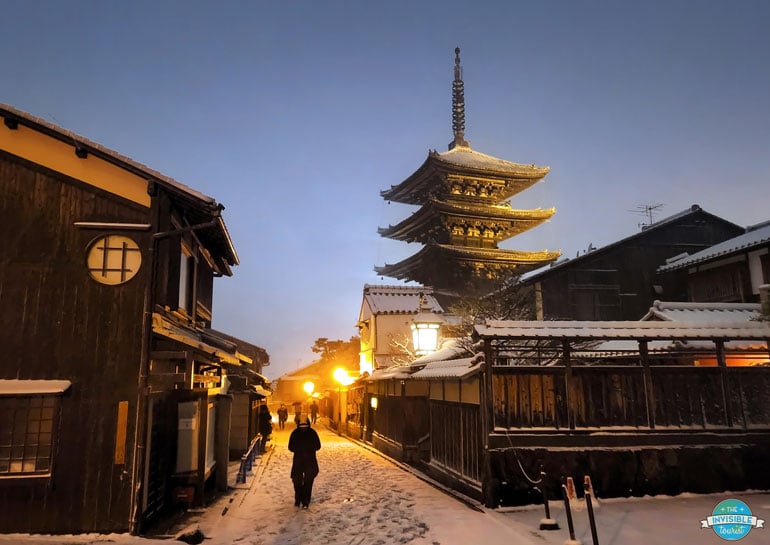

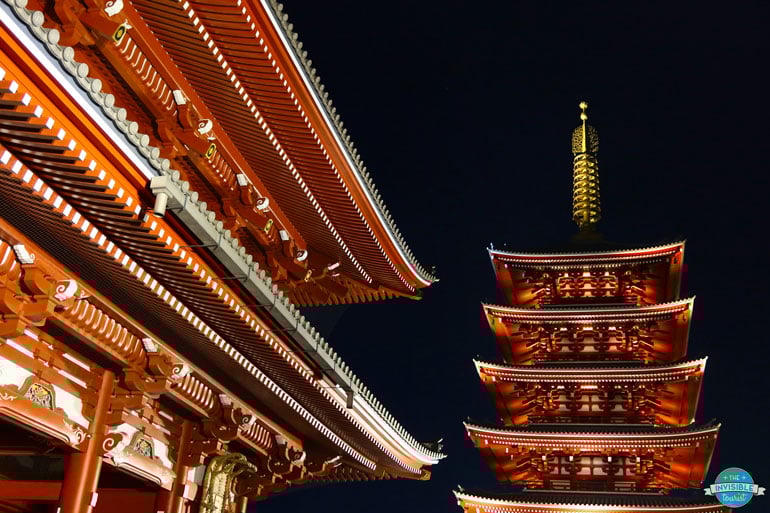
Travelling opens our minds to new ideas, cultures, beliefs, and ways of doing things. In saying that, what is acceptable to do at home may not be acceptable to do in a foreign place. Even something like walking the streets of Tokyo chowing down on some sushi will be frowned upon.
Remember when travelling in Japan (or anywhere), we are guests and it’s important to respect our host and their home. Be a rebel by travelling in a way the majority aren’t! It’s all about having respect and being prepared before you go.
What are your thoughts on this? Is Japan’s strong sense of cultural identity slowly being eroded away by overtourism? Have you seen tourists behaving badly in Japan or elsewhere? Is tourism pollution affecting your local community? Let me know!
If you’d like to learn how to be an Invisible Tourist in Japan (or anywhere in the world!), take a look at my travel guides and itineraries that are tailored to specifically to help you do so 🙂
Help to spread the word by sharing this with anyone you know visiting Japan and join me on Facebook, YouTube, Pinterest, TikTok and Instagram for more!
Until next time,

Read my Tokyo Treat review and get popular Japanese snacks delivered here, or read my Sakuraco review and get traditional Japanese sweets delivered here!
Like it? Pin it! 📌


This guide to overtourism in Japan may contain affiliate links, at no extra cost to you. I may make a commission if you decide to make a purchase through these links and if you do, thanks for your support! This goes towards the costs of running my blog so I can keep my content free for you. As always, I only recommend products and services that I genuinely love and use myself!
Like what you see? ✅ Sign up for my latest updates!
I agree entirely and sadly, don’t think that this is restricted to Japan. Look at Venice closing itself off and other European nations officially saying no stag dos. We need to reconsider how tourism works. I spend a lot of time worrying about this, I’m a travel writer and am acutely aware that we might be part of the problem, but how, then , to fix it? YES to responsible tourism.
You’re so right that it’s not just Japan, Cassie. The list is growing by the day with travel becoming accessible to more and more people. I think alot of the problem is people have anonymity in a new city and do things there they may not necessarily do at home. Tourists need to be held accountable for their actions and the message about responsible, sustainable tourism needs to be spread. Thanks for commenting!
Really interesting read and some valid points! I haven’t been to Japan but I’ve seen this in many places. Thanks for sharing <3
So glad you thought so, thanks Sandy!
Well this I think is an issue not only in Japan but many parts of the world and it’s really important that tourist become little responsible and mature so as not to disturb the equilibrium of the place. Many places in India I see people scratching their names in the historical and heritage sights. I think there should be a collective effort. Thanks for throwing little on a very important issue
Oh Madhu, etching names is incredibly disrespectful. So sorry to hear it’s also happening in India. I fail to see what that achieves for the perpetrator? Can’t they just grab a souvenir from the gift shop or something? The mind boggles!
A brilliantly written article and important point! It makes me so sad, as japan is a place I would love to go and I’ve spent so much time reading books and blogs about it, but won’t be able to afford the actual trip anytime soon. I really hope Tokyo hasn’t turned into the next Rome by the time i get there! I actually live in Italy and I think we need to start using the term ‘tourism poillution’ here as that’s what it is – neon signs, selfie sticks and plastic tat cluttering up beautiful places. I wish more travellers were as thoughtful as you!
I hope you get the chance to visit Japan sooner than you think, Clare. It’s such a shame to hear this is happening in Italy as well, so much so that Venice has been installing barriers to divert tourists down less crowded streets and alleyways to lessen the load on popular areas. It must be so difficult on the locals!
Yes, I think this is really important, and it’s an issue in many parts of the world. I have also noticed that people are just booking tickets because they are cheap, and that is a big part of the problem of overtourism: discounted flights entice people just to go somewhere without any real attempt to understand the place/s. It is the opposite of mindful travel. Great post and great website, I love your concept of being an invisible tourist.
Oh gosh Emma, you’re spot on there! I get that many people wants to spend as little as possible when travelling however I feel in turn this places emphasis on the wrong sorts of things, as you suggest. Lisbon is a good example of that – with all the cheap Airbnbs and vacation rentals combined with discounted flights, to be honest it attracts a certain type of visitor who, in most cases, is not mindful. Lisbon is facing some very serious overtourism issues right now and it’s devastating the local community. Thanks for your comment!
Overtourism is a salient issue in the travel industry as a whole and not just in Japan. The points you have raised can be applied to many places and I’m glad to see you have tackled this thorny issue. The over-emphasis on the visual in the blogging world has left a knowledge gap regarding cultural and historical issues. Image is now everything which is disappointing because I always thought travel was supposed to be transformative and enlightening. It’s now turned into a fashion show. Keep up the good work.
Totally agree, Hazel! Iceland is another example of many. Tourism there has absolutely exploded in recent years, too with people lusting after that perfect image for Instagram. The knowledge gap about cultural and historical issues is huge. I’ve heard of people at Ankgor Wat in Cambodia simply going to take a selfie out the front then leaving without ever going inside to explore how incredible it is. Quite sad! Thanks for your comment 🙂
You make a great point and it applies to more than just Japan. My husband and I are planning to visit Japan in the next year or so and I’ll definitely be taking into consideration your comments. We’re always watching NHK so there’s so much I’m looking forward to experiencing and exploring — in the right, respectful way.
You’re so right Corinne, this issue definitely extends far beyond Japan unfortunately. I’m sure you’ll have a much more fulfilling experience in Japan if you’re planning on being respectful 🙂
I had goosebumps when I read your post. Fantastic article and unfortunately very worrying indeed. I noticed the Geisha photo hype and thought it was awful. I loved my time in Japan but the crowds were unbelievable. Your father taught you well – what a lovely example. I will remember this.
Thanks so much, Nicola! Yes, it is pretty worrying. I’d never even dream of pestering a geisha for a selfie!
Well, risking sounding like a middle-age “get off my lawn” type: we (my family and i) were at Fushimi Inari earlier this month (June 2018). My youngest son is in a wheelchair so, naturally, we took an alternate route (as there are heaps of stairs going the traditional path). As we were walking we paused for a heavily made-up, blown-out hair, mid-20s Caucasian woman’s glamour photo shoot (her white male companion was taking fancy pics) — we always are respectful if we see someone is taking a photo. They thanked us and explained it’s for their travel blog.
My equally middle-age husband and I both quietly barfed in our mouths, tasting Los Angeles Dodgers Hot Dogs we’d eaten in 1979 (okay, that part was just me). A GLAMOUR PHOTO SHOOT at Fushimi Inari? Seriously? What’s next? A fashion show at Hiroshima’s cenotaph?
I hadn’t been west of Tokyo in 25 years, and back then the travelers I encountered were similarly earnest, deeply curious young people (like I was then, the young part), wealthy older tourists, and middle schoolers from around Japan.
This time there were heaps, scores of mainland Chinese mass tourist groups. The Chinese having a) disposable income and b) the wherewithal to travel is relatively new. I lived / worked in Beijing in the 1990s and I still speak some Mandarin, so I’d like to think I have some understanding of and respect for that culture. (I also lived and worked in Tokyo in the 90s.)
But for the massive tour groups, I don’t, not really. Earlier this calendar year we spent a long weekend in Seattle, Washington (USA), outside of which we went on a tour of the Boeing plant, something I’ve wanted to do since I was a teenager. There were a few of these enormous Chinese groups there as well and if there was a Don’t Touch sign, they touched; if the tour guide asked for quiet so she could explain, they spoke amongst themselves, loudly; when we were told to queue the folks in the tour group pushed ahead (admittedly, this is an unfortunate Japanese characteristic, too — pushing ahead of others already in line, and as a fiercely protective wheelchair mama you can imagine this gets me going!
Through Pinterest I have been exposed to many, many travel blogs, most of which I find deeply embarrassing (on behalf of the vacuous bloggers). Maybe because I’m older (48), came of age before the necessary selfie, the loud, public navel gazing, the internet, or maybe because I’m curious, a polyglot, I simply don’t get those who do something merely for the sake of being able to boast, either on their mirrored blog or to the company they keep. It smacks of solipsistic entitlement.
But who knows? Maybe if I were from that generation I might be just like them, scratching things off some internet-ordained list. Groupthink.
Next year, for my 50th birthday (!), I am taking our family to Egypt. I’ve always wanted to see their pyramids. My perfect youngest son, who is multiply, profoundly disabled, medically fragile / complex, cortical vision impairment, severe I/DD, Sensory Processing Disorder, etc., will LOVE getting to rub his left palm along the pyramids’ exterior as we s-l-o-w-l-y push him past, will love getting to run his fingers through a camel’s fur. My eldest will love joining a pick-up game of soccer in Al-Azhar, catching the sunrise over the Valley of the Kings in a hot air balloon. My husband, who is just like water — fits in every- and any- where — will love eating his way through Egypt and schmoozing over sidewalk games with the locals. I have been studying Egyptian Arabic so hopefully I’ll do okay, because I love chatting with everyone I meet (and I do mean everyone, to the consternation of my eldest ).
I wish that as more and more people are able to and do see the rest of the world, they actually SAW it and absorbed part of it. I wish this abundant access to travel were making the world a smaller, more connected, more tolerant place. I wish people were respectful of the local customs and mores.
In the Shin-Osaka eki a Muslim family we met were so surprised when they learned we are American: they thought all Americans hate Muslims. THAT’S why being mindful and present in travel can be so important.
Fascinating post of yours. Thank you.
Thanks for your thoughtful comment, dux! I actually fall into the millennial category you described doing the fashion shoot as Fushimi-Inari, yet I agree with many of your sentiments. Just in the last 10 years I’ve seen the types of tourists change and expand to include people from many countries that previously didn’t typically have tourists, and how the rise of social media has changed how people travel. With the low barrier to entry to blogging, I’ve also seen bad advice out there – one in particular for Japan stated something to the effect of “After visiting Fushimi Inari I wasted most of my day flipping through my Lonely Planet guidebook and deciding what else I should do”. Seriously. I’d think that would be something to research beforehand… When did travel become just about the photos rather than about the experiences?
I agree, Japan is just about everywhere at the moment and it does seem like cause for concern! I can’t imagine visiting somewhere without having at least the slightest bit of interest in it. And I remember reading that article bamboo groves (which I think you shared?) and just being really shocked that people would even CONSIDER doing that… let alone actually do it!
Exactly, LC! I guess I’ll never understand why people book a ticket someplace almost for the sake of it. As a fellow Aussie, did your parents ever scowl at you when you wanted to follow the lead of the bad influence kids at school, “If they all jumped off the Harbour Bridge, would you too?” Haha we don’t have to be a sheeple and just do something just because everyone else is. Do something for your own reasons! And yes, it was that article about Kyoto that inspired me to write this post as I was so annoyed to learn about what tourists are doing there. I can’t fathom it, either! Thanks for your comment 🙂