
Should We Use Airbnb? 8 Troubling Problems You Didn’t Know
What are the troubling, lesser-known problems with Airbnb and similar platforms? Here on my blog I always say, “As Invisible Tourists, we want to support locals of the places we visit, not make their lives more difficult.”
In recent years, the use of home-stay accommodation has exploded internationally. Sitting on the sidelines with one watchful eye monitoring this trend, as usual I decided to be a bit of a skeptic before jumping on the bandwagon and investigate the little-known facts about using a service like Airbnb for myself.
Despite its growing popularity there are some pretty troubling issues with Airbnb and their similar counterparts, leading many to ask if there are any ethical alternatives to Airbnb? Here I’ll reveal what it’s like to lift the lid on the hidden Pandora’s box of this craze – the results may surprise you, as they did me!
Yes, loads of people use Airbnb all the time without issues and that’s fine. Different people prioritise different things because there are different types of travellers. Many of my fellow travel bloggers could get you discounts on your first Airbnb booking and that’s fine, too.
In saying that, there is a time and a place for these services so I’d rather speak about the unpopular truths buried under the discount codes that are worth considering before booking a stay with a homestyle accommodation service like Airbnb.
NOTE: I first published this article in March 2018 and have updated it since to reflect more recent events. It was regarded as an unpopular opinion at the time. Be sure to read my concluding comments for my overall thoughts on short-term homestay services.

Airbnb problems: Important reasons to reconsider using these services
I can totally hear people questioning my logic… They’re thinking, “But, aren’t you all about travelling like a local and helping people learn how to not look like a tourist? Then what’s wrong with renting a local’s place on Airbnb? It’s harmless and it’s cheaper than hotels, right?”
Ermm, not exactly.
There’s a saying, “Don’t knock it ‘til you’ve tried it” so truth be told, I have stayed in an Airbnb before. I was with a group for a girls’ getaway and my friend had booked the accommodation on our group’s behalf.
The place was fine (although I prefer to have my own bed rather than share with a friend!) However due to the facts I discuss below, it just wasn’t for me and may not be for others as well.
Let’s start with a few questions:
- Do you value your precious travel time, hate inconveniences and prefer to play it safe with accommodation rather than put yourself in a position that could have been avoided when you travel?
- Do you also prefer to enjoying everything a city has to offer without feeling like you’re getting in the way of locals going about their daily lives?
If you answered yes to these questions, you’re likely to prefer hotels and other forms of traditional accommodation. If you answered no, the below facts may give you reason to reconsider using homestay accommodation services like Airbnb for your next trip.
While Airbnb’s slogan is “travel like a local,” there are some dark truths that actually make life more difficult for the locals they claim to support.
Let’s get into it!

1. Airbnb could be illegal in the city you’re visiting
This is a pretty surprising and very important point. Just because there are listings for a destination doesn’t mean the host and Airbnb are abiding by the local laws. For instance, here are some facts that might make us think twice about using Airbnb and similar services in the below major cities.
These are just a few examples and definitely not the only places where Airbnb is problematic. I highly advise doing some research into the destination if considering using Airbnb for accommodation:
Airbnb problems in New York City, United States
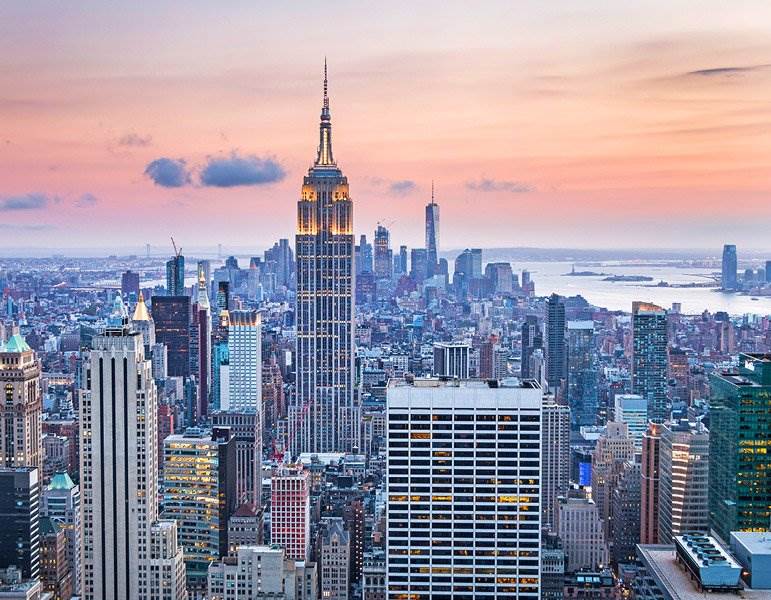
Did you know in 2014 that 72% of reservations made in New York City were illegal?
The New York state attorney general’s office released a report on Airbnb listings that revealed this unfortunate fact. Local laws in New York make it illegal to rent an entire apartment on Airbnb for less than 30 days, as this helps to keep the long-term supply of property available to locals. Despite this, New York City is one of Airbnb’s biggest markets where listings under 30 days are available to tourists.
“Airbnb consistently undermines the City’s efforts to preserve affordable housing, and regularly attempts to thwart regulations put in place to protect New York City residents.” ~ statement from NYC Council members Helen Rosenthal and Jumaane Williams.
Airbnb problems in Barcelona, Spain
What are the Airbnb in Spain problems? Almost half of holiday rentals in the country’s second-largest city of Barcelona are unlicensed according to the council, which makes them illegal.
In 2016 Barcelona fined Airbnb €600,000 for refusing to adhere to local laws by continuing to advertise unlicensed properties. As a result, Catalonia’s capital has a team of inspectors who wander the streets sniffing out illegal rentals using designated apps that cross-reference licences with advertised properties. This helps to identify illegal properties and gives authorities the power close down the premises, boot out occupants and fine the owner €60,000.
“Barcelona exists for its people. The priority is it’s a place to live.” ~ Janet Sanz, Barcelona Housing Councillor.
TIP: Read my crucial Barcelona travel tips to not look like a tourist when visiting.

Airbnb problems in Paris, France
In 2015, 44% of advertised properties on Airbnb were permanently available for rental, despite laws in France’s capital stating that holiday rentals are capped at only being available for 120 days of the year.
The survey that revealed this disturbing fact triggered raids across Paris and fines of up to €25,000 for hosts. However, the authorities are now looking to increase this fine to €100,000 like Berlin (see below). It is now necessary for hosts to obtain a registration number from the Town Hall so authorities can monitor the 120 day cap is not exceeded and so hosts cannot avoid paying taxes.
Airbnb problems in Mexico City, Mexico
Due to Mexico’s lax travel regulations during the pandemic, Mexico City saw an influx of remote workers (known as “digital nomads”) in addition to tourists.
This surge in visitor numbers in need of accommodation caused a 40% increase in rent prices in popular neighbourhoods, pushing out long-term locals and small businesses in favour of more profitable short-term Airbnb rentals.
It also caused a change in the social fabric of some communities, where trendy coffee shops popped up to cater to their new American or European guests.
Additionally, the local local government has recently signed an initiative with Airbnb to continue to boost remote worker numbers in the city, which in turn will add to the housing crisis.
Airbnb problems in Japan
The recent explosion of visitors to Japan looking to travel on the cheap meant Airbnb’s started popping up in unzoned areas to capitalise on the new demand.
Being an ultra-conservative country, locals filed an overwhelming number of “tourist pollution” complaints: unruly tourists coming and going at all hours, hosting noisy parties in otherwise quiet neighbourhoods and disrespecting local customs.
In June 2018 the Japanese government resorted to tackling illegal Airbnb and similar homestay accommodations across the country (known as “minpaku”) by requiring hosts in legally zoned areas to obtain a minpaku license, placing 180-day quotas on when properties can be available to rent and shutting down those who did not comply. This crackdown is said to have cost Airbnb $10 million.
READ MORE:
Crucial Paris Travel tips to Not look Like a Tourist
4 Days in Paris Itinerary: Complete Guide for First-Timers
Issues with Airbnb in Berlin, Germany
Germany’s capital got so tired of Airbnb creating a rental property shortage for locals they created a law entitled “Zweckentfremdungsverbot”…
A bit of a tongue-twister, right? Roughly translating to “Anti-Airbnb” this law bans short-term leasing of properties to tourists without a city permit. Hosts in Berlin can be fined up to €100,000 for disobeying this law and you could be left without accommodation if your host is busted.
Airbnb issues throughout Europe
In 2019, ten European cities banded together and sent a joint letter to the European Commission highlighting the flaws of services like Airbnb. Cities who suffered from “explosive growth” of short-term Airbnb listings – Amsterdam, Barcelona, Berlin, Bordeaux, Brussels, Krakow, Munich, Paris, Valencia and Vienna – demanded the Commission address this issue during their next agenda.
Many Other Destinations: Illegal Subletting
Another disturbing trend with unregulated accommodation is illegal subletting. Did you know recent statistics in Australia revealed that 35% of Airbnb listings are by people who don’t even own the property, and do so without the knowledge of their landlord?
“Think of what you’d say to a neighbour if they were to ask who you are and why you’re staying there… Awkward.” ~ Alyse.
While tenants may not see an issue with secretly renting out their spare room on Airbnb for extra cash, there are risks involved for both the tenant and property owner. What the tenant fails realise is they could actually be in breach of their leasing agreement by having additional people reside in the property.
This leads to exceeding the number of people residing on the premises, handing out security keys without authorisation, no applicable insurance for issues related to subleasing, more issues regarding illegal subletting here. A tenant subletting without the permission of the property owner can result in eviction.

2. Airbnb can have negative impacts on locals’ quality of life
This is one of the lesser-known Airbnb problems. Tourists hiring a place on Airbnb to enjoy a “cheaper” holiday actually pushes rent prices up for locals who need to live in the city. Tourists are visitors competing with locals for accommodation. The only difference is locals need it long-term, but hosts can charge tourists more for short-term stays so this is way more appealing to some.
For instance in 2018 on the Spanish island of Palma de Mallorca, tourist lets sharply increased by 50% due to demand, which in turn lead to residential rents rising by 40%. This made housing unaffordable for most local residents and pushed them out. As a result the island voted to ban Airbnb listings to make housing affordable for residents who needed to live and work.
Making the conscious decision to save a few bucks on a trip should not come at the expense of an actual local’s way of life. As invisible tourists we want to support locals of the places we visit, not make their lives more difficult!
Residents are also concerned raised Airbnb complaints about the constant stream of different tourists bumping their luggage up and down stairs in apartment blocks as well as coming and going at all hours. For long-term residents it’s easy to empathise that all the thumping and noise is bound to get annoying.
As someone who lives in a city where over 200,000 properties sit vacant due to landlords not renting them to locals (or anyone at all), I’ve seen first-hand how this has negatively impacted the rental market by causing prices to skyrocket as long-term rentals for locals become scarce. It isn’t really fair (or arguably ethical) on the local population trying to get by.
It’s also becoming known that some Airbnb hosts are treating their rentals as businesses. Padlocks or combination touchpads on doors rather than keys, instructions stuck around the property and “No Smoking” signs are dead giveaways that the Airbnb is being treated as a permanent holiday rental, which I mentioned previously under point #1 is probably an illegal listing. What happened to just renting out a spare room?
3. Privacy is never guaranteed
So, your host has also allowed friends to crash at their place during a stay and failed to mention it at any point. This may put a damper on the romantic weekend away planned with a partner, as the intimate moments they were hoping for may not be so intimate after all!
Recently, some stories have emerged about Airbnb hosts using sneaky hidden cameras in the bedrooms of their rentals. If that oddly-placed object or random smoke alarm appears to have a little webcam lens on closer inspection, that thing could be hooked up to the internet and the host is watching guests’ every move.
This became such a huge problem for guests, in March 2024 it led Airbnb to announce the ban of indoor security cameras for properties listed on their platform. Airbnb hosts found violating this policy would be permanently removed.
Alternatively, in a hotel we aren’t going to be left surprised with an unexpected stranger when returning to our room after a long day of sight-seeing. The likelihood of being spied on in a hotel room is much less of a risk. A hotel doesn’t need to spy on guests because they have insurance cover. It’s never ok to film someone without their consent.

4. You’re at the complete mercy of the host
One of the common Airbnb host problems? Even if a room is showing available, the host has the right to change their mind and cancel a booking at a moment’s notice. Personally, I prefer to be prepared and organised, and being left in limbo a few days before a trip – with all other accommodation in the area being sold out – literally sounds like my idea of a nightmare.
In another example, imagine arriving at an Airbnb only to find two people already there hanging curtains, a TV left face-down on the lounge and a strong dog odour throughout. Animal fur, hair and dust were all over the house, it clearly hadn’t been cleaned in very long time, mouse droppings were in the kitchen and other accommodation options nearby were all sold out. Here’s how Airbnb treated these guests in this actual situation.
Airbnb have thousands of complaints about how they can’t really do anything to assist guests who are left stranded. In contrast, hotels have a lot to lose from this and will find guests a room or compensate somehow if they’ve taken their money.
Let’s not forget the potential issue of a host running late to meet a guest to exchange keys. This unaccounted-for delay could seriously affect the guest’s travel plans and may lead to missing a crucial flight or train to their next destination. With a hotel, checking in and out times are made clear. During that period there is always someone at the front desk when we need to leave, so it’s simple to plan our journeys.
There isn’t always time to wait around for someone to race from one side of the city to the other to collect keys!
With many Airbnbs, hosts require guests to do the washing up, take out the rubbish and may leave them with other obligations they need to fulfil before checking out. We do all that at home, sometimes it’s nice to forget about that during a holiday.
READ MORE:
How to NOT Look Like a Tourist in New York City
7 Completely Annoying Reasons Why Mykonos is Overrated
Tourist vs Traveller: Why Invisible Tourist (Not Invisible Traveller?)
5. Lack of safety and security regulations
Consistent standards and regulations are lacking across Airbnb rentals as they are basically private properties. Due to this hosts don’t have to follow the same strict regulations that hotels do like fire, security and safety. What fire and other types of hazards are there in a rental? Can we tell from the photos?
As mentioned earlier, illegal subletting sees a tenant distribute unauthorised copied keys to short-term visitors, resulting in unknown people in a residential block having access to building amenities. This can be a major security concern for other residents in the building who are there legally.
People who list on Airbnb also don’t have to pay for the same insurances that hotels do, therefore if anything were to happen Airbnb may not cover guests at all. This also includes theft of cash/valuables from the property, whether it was from the host, other guests or as a result of a break-in. Is there even a safe or secure place to store our valuables during your stay?
Additionally, some of the properties may not be very child friendly which is sometimes only possible to be discovered on arrival.

6. Bait and switch
This is one of the most annoying Airbnb problems. If you’re not familiar with this sneaky tactic, bait and switch refers to the generally illegal act of “baiting” a guest into paying for a rental that is substituted for an inferior one later down the track. The intent is never to provide the rental in the great location with amazing photos the guest paid for.
If a host is being a bit shady, they may contact the guest close to their arrival date to inform them of the change. As it’s so late-minute, the guest may be left with no other option but to accept the sub-standard accommodation they offer instead, sometimes even for more money! Know your rights if this happens to you.
You’re not obligated to accept their new offer. If your host is asking you to switch without officially changing the reservation on Airbnb, you’ll need to ask the host to cancel your reservation so you can get a full refund. If you have further issues, you’ll need to immediately call Airbnb so they can resolve the problem for you or find another place to stay, which may prove difficult if all other accommodation in the area is sold out at the time.
This fraudulent trend is becoming more and more common with Airbnb. Sure it’s also possible this can happen with smaller hotels as well, but is less likely as hotels have much more to lose by participating in this dirty practice.
You can read some Airbnb bait and switch stories here and here to give you an idea of what could happen.

7. There’s no reception, housekeeping or room service
While this may not be a deal-breaker for some, there are unseen benefits. Hotels employ dozens of locals to take care of things like housekeeping, reception, concierge services, kitchenhands and the like to keep the place running smoothly. To me, providing locals with jobs is quite important and staying in a hotel supports this cause.
Additionally, the lack of a reception area with an Airbnb means checking in and out with a host may not be flexible enough to suit a guest’s travel plans. I was unbelievably annoyed when arriving at what was listed as a hotel in Onomichi Japan with rooms only to discover it was an Airbnb…
There was nowhere to leave luggage, no one to help in an emergency (the phone number provided had no English speakers — which is fine, if I was expecting it), a combination lock on the door that other people could know…
This was several years after I had first written this article and I reserved it through booking.com. The listing was so deceptive it even fooled me, it never mentioned any of these things. I would never have booked it otherwise.

8. Do tourists really need an entire kitchen (and house)?
A lot of the time tourists don’t really need an entire house or apartment with a kitchen when they’re travelling short-term. Isn’t visiting a new place all about getting out there and experiencing local, authentic food? In turn this helps to support local jobs and businesses.
If not supporting locals in other ways through cultural experiences and spending, cooking some noodles in an Airbnb in an effort to save money doesn’t really help anyone. Hotels, aparthotels and other traditional forms of accommodation can also provide the basic amenities needed for a stay.
Additionally, booking an entire apartment or house on Airbnb means tourists could be inadvertently taking away long-term accommodation from a local. If the rental is being run as a business by a company who has multiple property listings, it’s usually wise to steer away from it as it goes against the original idea that Airbnb was founded on — a property owner renting out a spare room.

What a lack of tourism does to neighbourhoods overrun with Airbnb listings
Now for the hidden Airbnb controversy. As we all know, in 2020 tourism completely ground to a halt due to a global event that shall not be named. This helped to starkly amplify the issues caused by short-term rentals for even the most stubborn of deniers.
When it comes to the often unseen disadvantages of Airbnb, let’s examine the knock-on effects caused by the absence of tourism in destinations that had high percentages of unregulated accommodation listings.
Airbnb issues in Lisbon, Portugal
In the early months of 2020, there were 22,000 Airbnb listings in Lisbon. A sudden lack of tourists meant the majority of these sat empty for months.
Urban geographer Luís Mendes from Living in Lisbon stated, “[2020] has helped expose the negative aspects of Portugal’s recovery from the financial crisis, which was driven by real estate and tourism rather than a focus on the basic needs of local people.”
This excellent article about overtourism in Lisbon, Portugal highlights the need and urgency for sustainable cultural tourism if you’re interested in learning more about the topic. Unfortunately, this issue is not unique to Lisbon and is further proof of why being an invisible tourist whilst travelling is win-win for everyone.
Airbnb issues in Barcelona, Spain
Local authorities are seeking to repossess empty short-terms rentals. If vacant properties don’t re-enter the long-term rental market for local residents, new legislation allows authorities to purchase them outright at 50% of the market value.
The plan for seized properties is to be rented by the city as public and subsidised housing, while potentially fining the owners from €90,000- €900,000 for properties left vacant for 2 years.
Airbnb issues in Athens, Greece
According to local residents in Kaisariani, Athens, their neighbourhood actually became a “tourist hotbed” full of Airbnbs rather than a residential area.
Airbnb issues in Paris, France
As one of Airbnb’s top destinations globally, tourism to Paris took a huge hit. According to the Deputy Mayor of Paris, the city “needs to use the pandemic to address affordable housing and supply.
In the four central arrondissements of Paris, a quarter of all properties are now no longer homes but purely short-term rentals for tourists. As a result the city is planning to hold a referendum on the future of Airbnb listings.
Airbnb issues in Dublin, Ireland
One of my Ireland travel tips for tourists is to avoid unregulated accommodation such as Airbnb. Due to increased demand in short-term listings from tourists and limited supply, Dublin saw rents for local residents skyrocket and more than double from 2011 – 2019.
The sudden lack of tourists in 2020 meant 64% of short-term Airbnb listings in Dublin rushed to enter the long-term rental market instead. Great news for locals, at least!

Concluding why we should reconsider services like Airbnb
Sure, there certainly are benefits of using Airbnb if it’s done in an ethical and legal manner.
Thousands of travellers use the platform without ever having an issue. I’m not here to dispute that and I’m certainly not saying ALL hosts are bad – it’s neither fair nor accurate to paint everyone with the same brush. Besides, this opinion piece is not about that. It’s about questioning whether a service like this should be allowed to continue unregulated.
There is a time and a place for homestay accommodation. For instance, in rural areas where accommodation choices are slim services like Airbnb can actually help locals. In major cities where there already is plenty of regulated accommodation, whole property rentals by hosts listing multiple properties should be avoided in order to help preserve local life and their culture.
If short-term rentals have taught us anything, it’s now very clear that they create the likes of a horizontal hotel that spans the breadth of a city, pushing out local residents.

I do think that initially the idea of Airbnb was fantastic a few years ago, where hosts would share a room of their home with a visitor who wished to experience the city like a local. Unfortunately, there are always people looking to make a quick buck, exploit the system and ruin the experience for everyone.
On an interesting (and maybe ironic) note, in the summer of 2023 Airbnb launched a new “Airbnb Rooms” initiative. Deciding to get back to their founding roots, this service allows travellers to rent out spare rooms rather than whole properties to save money. Do you agree with their reasoning?
As someone who values time more than anything else when travelling, the explosion of illegal listings, risks and ethical issues associated with Airbnb and the like do not outweigh the benefits of staying in a hotel for me personally. Considering that a pair of YouTubers also pranked Airbnb by listing a dollhouse and made $3,000 worth of bookings, it really begs the question of how much listings are actually checked.
By ignoring local laws, causing negative impacts on locals’ quality of life and lack of consistent standards, I believe unregulated homestay accommodation is unethical and I’m sorry to say for these reasons cannot support it.
What are your thoughts on these Airbnb problems? Do you feel the same? Let me know in the comments below! If you found this article helpful or you learnt something new, please share it or take a look at my popular travel guides and itineraries and my book for more ways to help you NOT look like a tourist on your next trip.
Alternatively, I’d love if you could join me on Facebook, Pinterest, and Instagram and TikTok for more travel tips and inspiration!
Until next time,

Like it? Pin it! 📌

Featured image & New York pin image credit: Unsplash
Paris pin image credit: Chris Karidis
Airbnb logo used under Wikimedia Commons
Like what you see? ✅ Sign up for my latest updates!

I’m torn every time we book an Airbnb. As a matter of fact, I published a very similar article some 4 years ago. If it wouldn’t be for cooking facilities we would prefer most likely hotels or real B&Bs.
But once you have special dietary needs an Airbnb is often the easiest and best option! We are vegetarians and, to make matters worse, I have a garlic allergy. Can you imagine how frustrating the search for a suitable restaurant can become in countries where garlic is a traditional part of the cuisine? Or in Australia in the meantime, as it has become oh so fashionable and simply is part of every prepared ingredient our chefs rely on.
So often that we stumble hungry from one restaurant to the next during daytime excursions. So often that I am forced to order something I really don’t feel like eating.
If I could find more easily apart hotels with a decently equipped kitchen (not only a kettle, toaster, and a microwave!), I would love it. And I’d give Airbnb a miss.
Our home is in Byron Bay, so we have the first-hand experience of how intrusive and disruptive any holiday let can be…
You make some very valid points Juergen, especially regarding allergies. Haha I have to agree here in Australia we love our garlic! But I can understand how difficult it can be for you. Although, if you don’t mind me asking, what did you used to do before Airbnb and other homestay options became mainstream? 🙂
I have an Airbnb apartment with over 150 positive reviews.
Many of my guests are families and prefer the home from home feel and more importantly it is far cheaper than staying in a hotel.
The guests help to support the local bars, restaurants and local shops.
If I didn’t use Airbnb it would be someone else or even advertise myself.
The point is my apartment will always be a holiday let for as long as I own it.
So in summary I don’t think comparing a Airbnb property with a hotel is valid.
The customer has a choice and will base it on what suits their particular needs.
I don’t think a hotel would like wet suits drying on a hanger in the room or suite.
Cheers Alan
To many of the commenters here: it is not only about whether your AirBnB experiences have been “good ones”. It is about the adverse effects on the local people. But some people are hopelessly unable to contemplate anything but their own selves. Greed and profiteering have taken over AirBNB. I have no problem at all with people who actually live in a house to rent out a room, and that’s how airBnB likes to portray itself, but that is a crock. A large amount of listings are whole houses, whole apartments rented out to short term visitors all year round, often by out of town companies. This takes a lot of housing stock off the market and drives rent up for people who actually live there. This is a huge problem in popular tourist markets already strapped for housing/ affordable housing like New Orleans where I live.
Well said, Kim! So glad you share the same opinion regarding the negative impacts of Airbnb and similar homestay accommodations on local communities. It’s the whole houses and apartments people use for short stays that are the biggest concern. Thanks for your comment!
I completely agree with Kim. I hate airbnb exactly for this reason, that it not only contributes to the deterioration of the community but also to an increase in rents and decrease in available housing for people that actually live there.
Spot on, Rob 🙂
Everything has a beginning, middle and end. This certainly looks like it could be the beginning of the end of the Airbnb phenomenon. I loved the idea of someone sharing their residence and local knowledge with a stranger who might actually become a friend. In cities where rent is unmanageable for the young and middle class, having a chance to earn some money to “make” the rent sounded brilliant. I also think kindly of older folks who can remain in their larger homes who generously provide a room and local expertise to travelers.
The, to put it generously, entrepreneurial spirit, or more cynically, greed has rapidly replaced the original good intentions of the founders. The founders are now also victims of their own success. As a host, I receive advice from Airbnb on how to maximize profits. It is obvious that Airbnb is promoting a less personal, more hotel like, experience than a friendly local willing to share a spare room. It has reversed it’s original position. Now they want the host to just disappear. Here are a few for the suggestions a host will receive:
Provide easy anonymous access with a keypad or coded key box. That room for two could become party central when 6 people arrive.
Eliminate, or reduce, the evidence that you actually live there. For example you are encouraged to provide the tiny disposable toiletries one typically finds in hotels. (Just check eBay for how other industries respond to the Airbnb phenomenon).
The host is now regarded as a bother or impediment to the guest’s experience instead of a valuable resource, unless they are selling “an experience”.
Airbnb makes it easy to mange multiple properties. Management companies have sprung up to service the properties. (One might argue that does support local employment, but still runs counter to the Airbnb origins)
I believe there is a big difference between the urban and rural Airbnb experience. In the rural area where I live Airbnb’s have sprung up everywhere tourists would like to visit. We are not at the point of “over tourism”, and we might actually be helping the local economy because the hotels are running at capacity during the brief peak period. People are building units for the sole purpose of renting on Airbnb. The look of Airbnb’s is so uniform that they may as well be chain motel units.
I rent my retirement cabin as a way of maintaining and improving the property. I also insist on meeting my guests to explain the house rules, offer suggestions and answer questions. I enjoy meeting new people and learning a little bit about them. Even still, I have had a few guests who felt it was unnecessary to meet me and preferred to figure things out for themselves. I suspect they have had that type of Airbnb experience previously and that’s how they thought it was intended to be.
In the end I think local governments will come to grips with the phenomenon and either regulate or ignore it depending on how the money flows.
Kris Gage has lots of hotel and Airbnb experience and has some really strong (expletive laced) feelings about each.
The fact that Airbnb hosts are receiving advice on how to be vacant in a sense is definitely a backflip on their previous stances and founding idea. What a shame to hear that, John. The toiletry thing is a bit laughable as I was under the impression you were meant to be staying with a local in their home; not in a hotel. I also agree that governments will either regulate or ignore depending on what’s more profitable for them. It’s an annoying situation, isn’t it! Thanks for your comment 🙂
We just arrived home (USA) from nearly a month in Japan; it was our first and likely our last time using airbnb. I chose that because, as a family of four traveling for an extended period, I really wanted to be able to do frequent laundry. I did not want to haul laundry around a neighborhood to get to a laundromat, nor did I want to spend Y600 for the hotel to wash one pair of underpants. Additionally, our youngest child is profoundly disabled, medically fragile and complex, so I like the idea of separation for him to sleep, adequate refrigeration for his meds, and ease of making snacks for him and his teenage brother. Many of our good friends, also families, have successfully used airbnb around the world.
In a word, it sucked. The first one, in Tokyo, was hands down the best of the four. The host had shared so much information both about how to use everything in the apartment and also about the neighborhood. However, even though I only searched for wheelchair accessible homes, this wasn’t. (Had a step up into the apartment, another step up from the genkan, etc.)
The second had a steep flight of stairs to access the elevator. Kinda defeats the purpose. I immediately contacted the host, saying it’s a severe problem; he promised to bring a ramp … and never did. I reported it to Airbnb.
Neither the second nor third properties left any information, instructions on how to use the Japanese appliances.
The fourth did the bait and switch by canceling days before we were due to arrive, then “magically” having another unit for more money, of course. It did not have many of the promised amenities, like a clothes dryer, plus it was filthy. My favorites were that host’s signs: 1) leave her a 5-star review and she’ll refund you Y1000, and 2) if the police or local government come by, tell them we’re friends of hers (host), visiting. I took photos and submitted to airbnb’s customer service.
While the ryokans and hotels in which we also stayed were fine, terrifically positioned, and had small regrigerators, I still couldn’t do nightly laundry. I need a better mousetrap!
Thank you for this post.
Oh goodness, I am sorry to hear of your bad experiences, dux! I hope your tainted accommodation didn’t have negative impact on your overall trip. Japan has just introduced strict regulations on Airbnbs and other homestay accommodations (called “minpaku” in Japanese) to help curb some of the issues you had. Airbnb hosts in Japan now need to show guests a Minpaku License which demonstrates that they have registered their residence with the government. Perhaps the fourth Airbnb you stayed in was denied her license and therefore operating illegally. Thank you for your comment and I hope you don’t have issues on your next trip 🙂
Nice blog!
I used to be a big fan of Airbnb, but recently decided to no longer use them. I strongly agree that short term rentals cause problems for local communities, but my reasons extend even beyond that.
In my experience, the places have gotten worse over the years. There are so many people who either buy or rent a property, throw in a few pieces of cheap furniture, and put in on Airbnb. I find a lot of the places to be sterile and depressing—even more so than a hotel.
I also find that interaction with the hosts has changed. I rarely meet them now whereas in the past it felt more like a friendly community.
Finally, when booking in New York, I’ve been asked to tell any neighbors who ask that I’m a friend of the resident. Lying like that makes me uncomfortable.
Thanks so much, Marianne! I have heard this as well regarding the standards of Airbnb accommodation. Some hosts’ (definitely not all!) only priority seems to be about making a quick buck by taking advantage of the system, which is a real shame. It would be also unnerving having to lie to neighbours about why you’re there. That in itself should be enough evidence that it’s not the right thing to do :/
PS. Part of my husband’s enjoyment on holiday is having time to cook, have in house cooking lessons and using local ingredients. Pretty much impossible to do that in hotel/motel/efficieny units.
Hi Sandy, I certainly agree with you that staying away from home is never the same as home. It’s great your husband enjoys cooking whilst on holiday. However I disagree that cooking is impossible without using an Airbnb – there are serviced apartments to fulfil this need.
I am a big Airbnb user and have had 99% positive experiences.
Agree there are risks but also benefits – important to do your due diligence.
If hotels provided things like windows that open and usable kitchens and space to relax outside Id be more inclined.
I travel a lot for work and tend to get sick each time I stay in a hotel. Despite all of my strategies!!!!
Staying away from home is never the same as home. Do your research and figure out what your comfort zone is!
Me? I have always loved hotels– to me, it seems like a luxury even a simple motel of the type I used many years ago, that is clean, well-kept, and has hot water, I also like to splurge on room service once in a while. The thought of a kitchen when traveling for fun turns me off. IT’S MY VACATION TIME for fun and pleasure, a get-away– no housework, no hassles. So now that you have called to my attention to what that system does to the local economy vis-à-vis labor and housing? all more reasons for me never to use Airbnb.
I cannot agree with you more, Maryhelen! Amongst many other benefits holidays to me are about getting out there and enjoying locally-cooked food without having to clean dishes afterwards ? It doesn’t need to be 5 star – as you say, just clean and well-kept. Thanks for your comment 🙂
There is a marketplace for both hotels and AirBnB’s. I have stayed all over the world in both hotels and AirBnBs and I enjoy the offerings and personable aspect of Air BnB. Hotels do not often offer the modern basics for free-wifi, snacks, netflix, etc….
Hotels will offer a room and what you see is generally what you get. They charge much higher due to staff to pay for (that you rarely need anyways) as well as many other overheads.When you order breakfast-it can be very expensive for room service.
Air BnB ideally, is great for people who want to have the best of both worlds. A host who has a decent knowledge of the local area, recommendations for sight seeing, restaurants, a nice clean room with enough privacy and leave themselves open and flexible for communication. Likewise, some hosts leave a simple breakfast for guests (others do not) and some like myself provide a more elaborate breakfast experience for an additional fee-which is much cheaper than a hotel, yet providing just as good (if not better) product because I do not have staff to pay and everything is made with very high quality ingredients and freshly brought from the kitchen to your door (or to your native garden view verandah which most hotels do not have).
All in all, most people have great experiences at both hotels and AirBnB’s…but some have negative experiences at both. With both however, you will want to do your own due diligence before making a booking and ideally with Air BnB you can ask the host anything and they will have an answer as nobody knows their own property like the host.
Thanks for your thoughtful comment, Russell! I do agree that there’s a marketplace for both hotels and Airbnb’s. In terms of snacks, wifi and Netflix, I can do that at home and would rather spend that time out of my hotel room enjoying local food when on holiday but each to their own 😉 As I mentioned in a few of these comments Airbnbs are fine IF they are following local laws, which in many instances they aren’t unfortunately. But yes, there can be positive and negative experiences with both but it’s less likely if travellers do their research first to avoid any nasty surprises!
Hi Alyse – interesting article (I actually came here scooping out hints on how to write blogs!) It certainly seems a lot of effort to respond to every individual comment but I guess that is part and parcel of the whole thing.
In terms of AirBnB it’s not the company itself but the platform upon which it is based. Instantaneous communication between supply and demand and a method of wide market reach with minimal barriers to entry. I am a town planner in a tourism reliant area and can attest to the home rental market putting significant artificial accommodation pressure on our locality.
As AirBnb is a market, opposed to a provider of accommodation, its strength is in the diversity of its traders (such as Doug) who position themselves in the market as they see fit and may take the criticism of airbnb as a criticism of their particular business.
In the focus area of my municipality there are more houses than permanent residents and proximity to a major city results in many of these houses being business concerns of those in the city with the added advantage that they can be used as personal holiday homes when desired. Similarly – air bnb hubs will be created with a product aimed at particular market segments just like a hotel would divide its room rates.
The systemic issues which are created are housing shortages in tourism areas which can result in a number of symptoms such as poor offseason economic activity, vehicle congestion, infrastructure strain during peak seasons and cultural stagnation. In the most general sense – this would be the homogenisation of tourism destinations that we see world over.
Interesting in the long/term vs short term rental situation discussion
A holiday house is maintained for a market position/advertising and review
A long term rental is a home – even if for a limited time, the same standards of clinical presentation are not usually applied to some ones home and is another difference for the discerning customer on whether or not they are actually receiving a homestay experience as airbnb tries to market its offering or are just occupying a serviced apartment.
In terms of the subletting discussion – many renters sublet rooms to cushion the rents, and ironically if they do this – the airbnb experience would be truest to form.
It is my opinion that there is little social or economic benefit to the host communities in which airbnb hubs occur (that is a significant number of holiday focussed dwellings) and in these circumstances differ very little from a hotel – infact they may be owned by a hotel via an agent. However; if your host resides onsite (see profile) you are likely to have a unique and personable experience (good or bad).
cheers
Thanks for your thoughtful comment, Lachlan! I do agree with many of your points, especially how some have unfortunately seen my criticism of Airbnb as a direct attack on their small business. That was not the intention of this article and should not be taken to heart on a personal level by any Airbnb host. And I definitely agree that if the Airbnb host resides on site (and is there during your stay) the guests are very likely to have a unique an personable experience as you say 🙂